What was a city worth before it became a city? Not the value of a plot of land, the price of an apartment or the market value of a tower, but the value of the city itself.
It was a question at the heart of Eko Atlantic, one of Nigeria’s most ambitious urban development projects. When the first financial models for the city were developed, much of the land did not exist. It was still beneath the Atlantic Ocean. Yet someone had to put numbers to the vision, estimate the cost of reclaiming land, building infrastructure and protecting the coastline, while answering the question investors always asked: if billions of dollars were committed, what could the place become decades later?
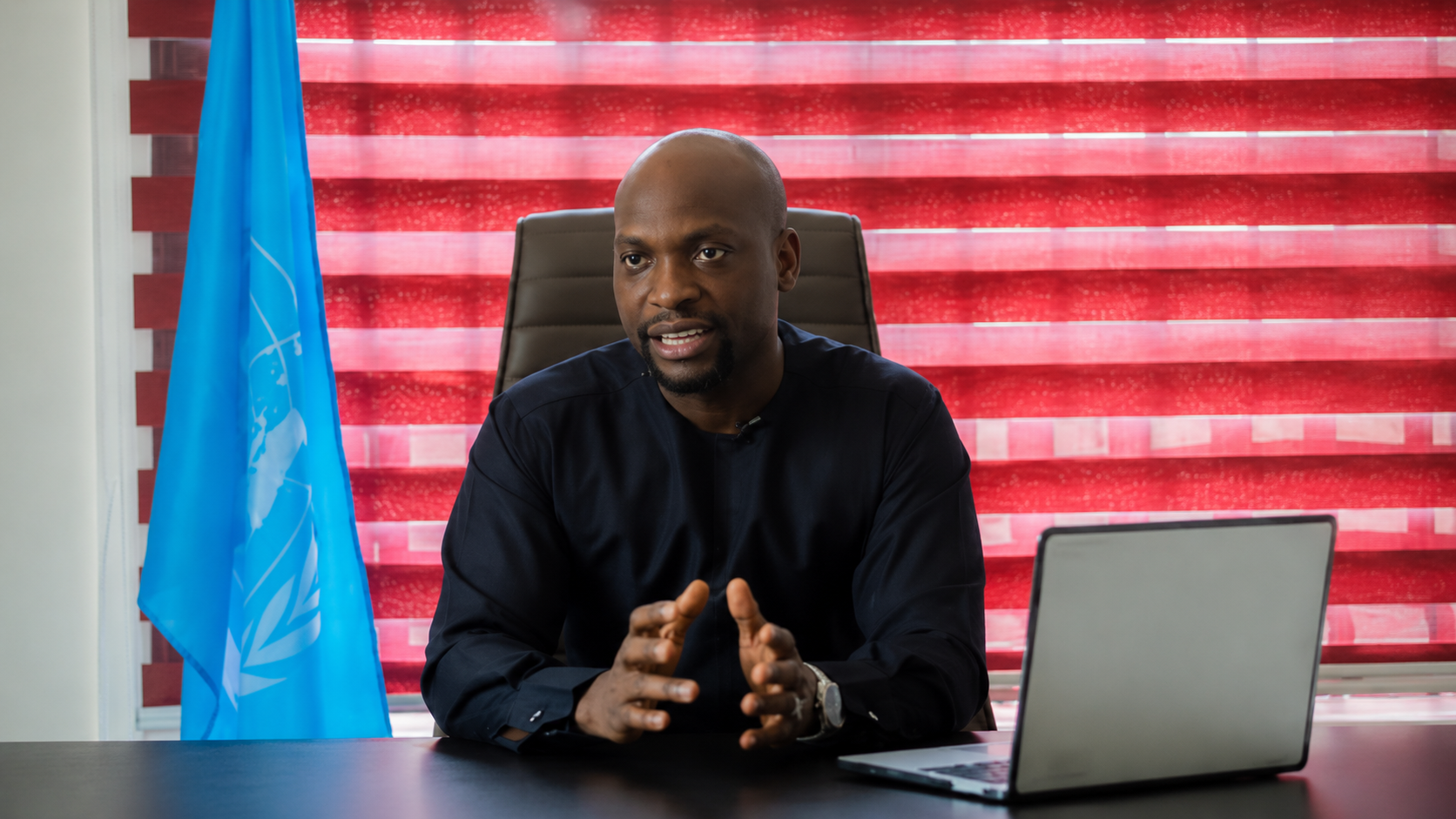
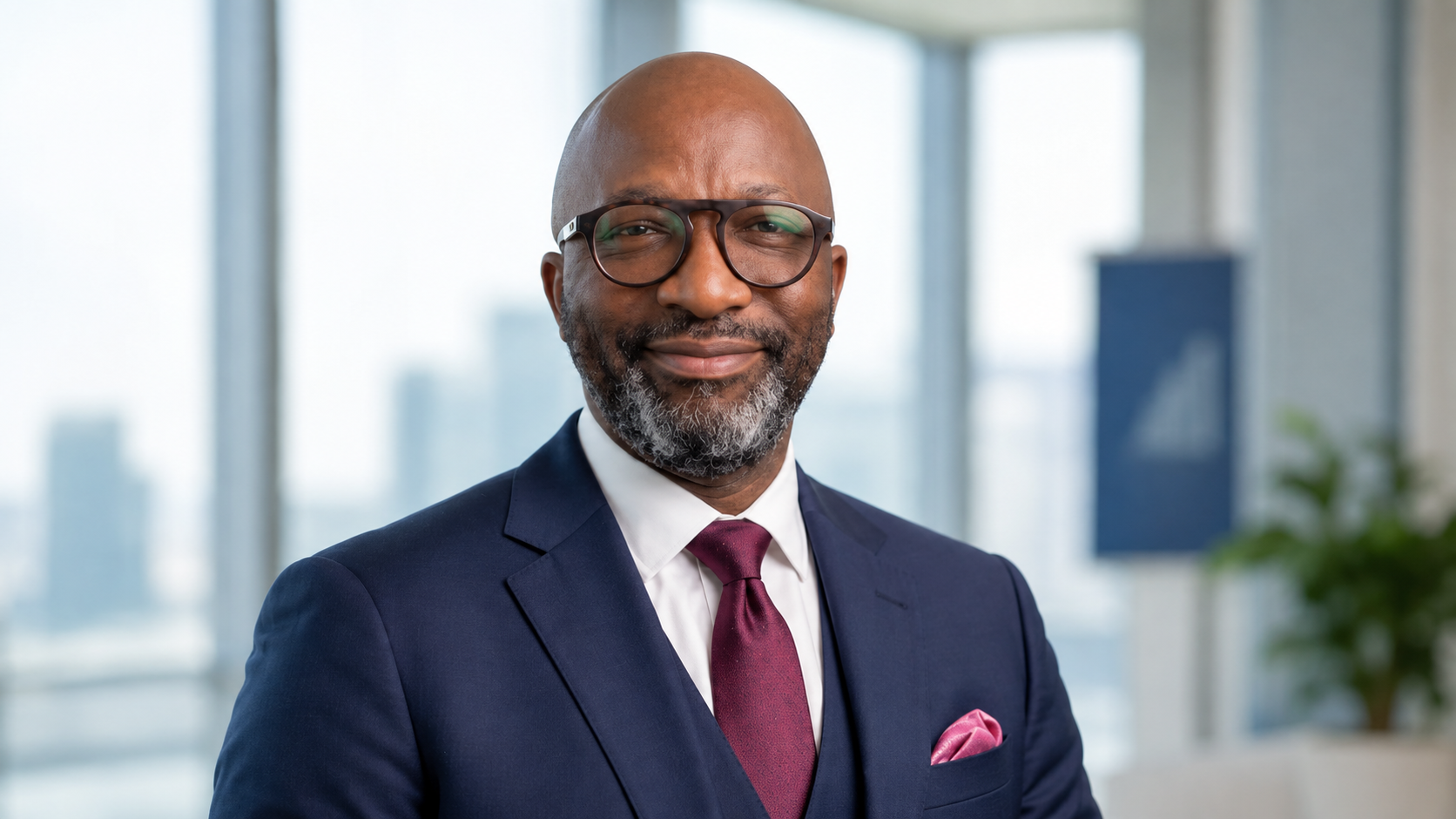
For Olawale Opayinka, that challenge became one of the defining assignments of his career. Speaking on The Coffee Table, Opayinka took viewers inside the economics, assumptions and risks behind the financial modelling of Eko Atlantic, while offering a broader view of why some of Nigeria’s biggest projects succeeded, why others stalled and why the country could be sitting on opportunities it had yet to fully understand.
His story moved from actuarial science to real estate, from his first £1.3 million at the age of 34 to the challenge of building generational wealth, and from the Atlantic coastline to an ambitious proposed carbon-neutral city and the economic potential of the Lagos–Calabar Coastal Highway. At the centre of it all was one idea: the future had to be planned for before it arrived.
By 2011, Eko Atlantic was still more vision than city. The project was being developed on reclaimed land along the Lagos coastline, in an area associated with coastal erosion and concerns over the vulnerability of Victoria Island. Creating a financial model for such a project presented an unusual problem: how did one value something that did not yet exist?
YOU CAN ALSO READ: NESG Sets Agenda for ‘Growth That Works’ as Nigeria Seeks Broader Economic Gains
Opayinka, whose background was in actuarial science, said the discipline was built around making financial sense of the future. The first step was not simply calculating the value of land, but understanding the people behind the project, their track record and their capacity to deliver something of such scale. Demand also had to be modelled. Who would buy into the city? How many people could afford its homes, offices and commercial properties? How quickly could that market grow?
According to Opayinka, the city could not simply be built all at once. Land reclamation, infrastructure and development had to be staged, while capital requirements had to be matched with realistic timelines and the pace of development aligned with demand. Using bespoke models, he began by examining a smaller portion of the project and extrapolating the potential across the wider city.
His calculations at the time suggested that one million square metres of development could eventually support assets with an enterprise value of around $19 billion under the assumptions used in the model. The figure was not a prediction that every square metre would immediately generate that value, but part of a long-term exercise in understanding what could happen when infrastructure, capital, development and demand came together over decades.
For Opayinka, Eko Atlantic was not an investment designed solely for the people living at the time. It was a long-duration bet on the future of Lagos. He pointed to infrastructure projects built generations earlier that were still serving Nigerians. The people who invested in them did not necessarily build them for immediate returns; they built foundations that later generations inherited.
But building the future was never simply about optimism. Risk sat beneath every financial model, construction schedule and development plan. For Opayinka, the key question was not whether risks existed—they always did—but whether they had been identified early enough and whether decision-makers understood what happened when things went wrong.
His experience with the development of Azuri Towers in Eko Atlantic reinforced that lesson. The project faced economic difficulties, rising costs and the disruption caused by COVID-19. At one point, the consequences of further delays were potentially severe because debt costs continued to accumulate. A project could survive a difficult year, but a delayed year could also become extremely expensive.
Opayinka explained that a development financed with costly debt could not treat time as an unlimited resource. Every additional month could increase financing costs, delay revenue and weaken the economics of the project. Sometimes, the most important decisions were made before a crisis fully arrived.
During the COVID-19 disruption, he said one key risk was identified: the timely procurement of lifts. Without them, the completion of the building could have been pushed back significantly. The decision to secure them quickly helped protect the construction timetable.
It was a lesson he believed many developers overlooked. A variation during construction might appear to be a simple design change, but the real cost could go far beyond the price of new materials or additional work. A change could extend a project by six or nine months, creating additional financing costs, disrupting contractual obligations and undermining expected returns. In other words, a N20 million variation could eventually cost far more than N20 million.
That helped explain one of the persistent problems in Nigeria’s real estate sector: projects that began with ambitious timelines but took years longer than expected to finish. Hotels were a particularly revealing example. According to Opayinka, some developers made the mistake of deciding to build a hotel before fully understanding how it would operate.
They might begin construction and only later seek an operator. But hotel operators often had specific requirements for room layouts, facilities, building orientation and operational systems. By the time those requirements emerged, expensive changes might be needed, while the project could already have accumulated significant debt.
The result could be a development caught between rising costs, delayed completion and a business model that had not been properly aligned from the beginning. His argument was simple: planning could not be treated as a formality. Developers had to understand the risks before committing capital and, where they lacked expertise, bring in people capable of identifying those risks independently.
That independence, he said, was particularly important when advising investors. His development advisory business, Makaya Consult, positioned itself as an owner-side, fee-based adviser rather than a firm dependent on commissions from contractors or suppliers. The objective, he said, was to protect capital—a discipline that could be especially important in a country where capital was scarce and expensive.
Opayinka’s views on capital were also shaped by his personal journey. He said he earned his first £1.3 million at the age of 34 after building a successful actuarial consulting business in the United Kingdom. But the experience led him to think beyond personal wealth.
His goal became less about accumulating money for himself and more about creating a structure capable of supporting future generations. For him, generational wealth was not simply leaving money to children; it was about creating enough capital that future generations could pursue ideas without beginning from zero every time.
That, he argued, was one of the structural challenges facing many Nigerians and Africans. Each generation was often required to rebuild. People accumulated resources, supported extended families, paid for education and responded to emergencies. By the time they began to create meaningful capital, much of it had already been absorbed by immediate needs, and the cycle began again.
Breaking that cycle required a longer view. Instead of thinking only about what wealth could buy at the time, Opayinka believed more attention should be given to what capital could make possible for people decades later.
For all its challenges, he saw Nigeria’s rapidly growing population as one of its greatest economic opportunities. A country with hundreds of millions of consumers created demand for food, housing, transportation, education, healthcare, technology and almost every other product or service imaginable.
The opportunity, he argued, lay in scale. A business did not always need huge profit margins to become valuable. Small margins multiplied across millions of customers could create substantial wealth. But population growth also created an infrastructure challenge, requiring cities, schools, roads, housing, energy systems and businesses to expand.
The danger was that Nigeria’s population could grow faster than its ability to build the infrastructure required to support it. Yet Opayinka saw opportunity inside that pressure. The same population that created demand for more cities also created the market needed to sustain them. The question was whether Nigeria could plan early enough.
For many Nigerians, one question about Eko Atlantic remained unavoidable: what would happen if the ocean became the threat again? Could a city built on reclaimed land withstand major coastal risks, including extreme flooding or even a tsunami?
Opayinka argued that the development’s infrastructure gave it a significant level of protection compared with many surrounding areas. He pointed to its elevation, drainage systems, underground utilities and coastal defences, including the massive sea wall popularly known as the Great Wall of Lagos. But the larger point was that climate risk could not be ignored.
The value of modern infrastructure was not only in what people could see. Roads, drainage, sewage systems, electricity networks and coastal protection all contributed to the resilience of an urban environment. That was part of what made valuing a city so complicated: its worth was not simply in the buildings standing at the time, but also in the infrastructure that made future development possible.
Opayinka was also looking beyond Lagos. One of the projects discussed during the interview was Araba City, a planned conservation-led and carbon-neutral community. The proposed development was designed around a smaller model than Eko Atlantic, with about 200 homes alongside existing and upgraded social infrastructure.
The vision included green development, responsible energy use and a stronger connection between investment and the surrounding community. For Opayinka, the project reflected a broader belief that change had to be demonstrated rather than merely discussed. A new model of living, he argued, had to show people what was possible.
Perhaps the boldest figure discussed during the conversation concerned the Lagos–Calabar Coastal Highway. Opayinka argued that the corridor could potentially generate between $1.4 trillion and $14 trillion in long-term economic value over about 50 years, depending on the scale and quality of development along the route.
The figure naturally raised questions. Nigeria’s economy was nowhere near $14 trillion in annual size, so how could one highway corridor create that amount of value? Opayinka’s explanation was based on long-term enterprise value and development potential rather than a single year’s economic output.
The corridor stretched across hundreds of kilometres. If governments protected land, regulated development and attracted industrial, commercial and residential investment, the road could unlock substantial amounts of currently underdeveloped economic space. The calculation, however, depended heavily on assumptions.
What percentage of land would be developed? What type of development would be allowed? What infrastructure would support it? How much would assets appreciate over decades? Those assumptions determined whether the opportunity remained a highway—or became an economic corridor.
And that was perhaps the larger lesson behind his argument. Infrastructure alone did not create prosperity. What mattered was what happened around it.
Opayinka’s journey from actuarial science into real estate and infrastructure offered an unconventional answer to a familiar Nigerian problem. Nigeria had no shortage of ideas. What it often lacked was the ability to properly model risks, finance the long term and protect capital from poor decisions.
YOU CAN ALSO READ: Meta Faces $18 Billion Bill in Landmark Child Safety Settlement
He believed actuaries had an important role to play beyond insurance. Their ability to analyse uncertainty, assess long-term risks and put financial values on future possibilities could be applied to infrastructure, government, project development and other sectors.
Because, in the end, the most valuable opportunities often began as abstract ideas: a city beneath the ocean, a road stretching across the coastline, a carbon-neutral community or a tower that appeared unlikely to survive an economic crisis.
The numbers did not remove uncertainty, and neither did a financial model guarantee success. But they forced difficult questions to be asked before billions were committed. Who would buy? How long would it take? What could go wrong? What would happen if the project was delayed? How much capital would be required? And perhaps most importantly: what could it become if it succeeded?
Fifteen years after he was asked to help build a financial model for a city that did not yet exist, Eko Atlantic stood as a physical reminder that the future could sometimes be planned before it became visible. Its ultimate value would continue to evolve, as would the arguments about its investment potential, environmental resilience and place in the future of Lagos.
But the deeper lesson was perhaps simpler. The biggest investments were not always about what they were worth at the time. Sometimes, their real value lay in what they made possible for the generations that came after.