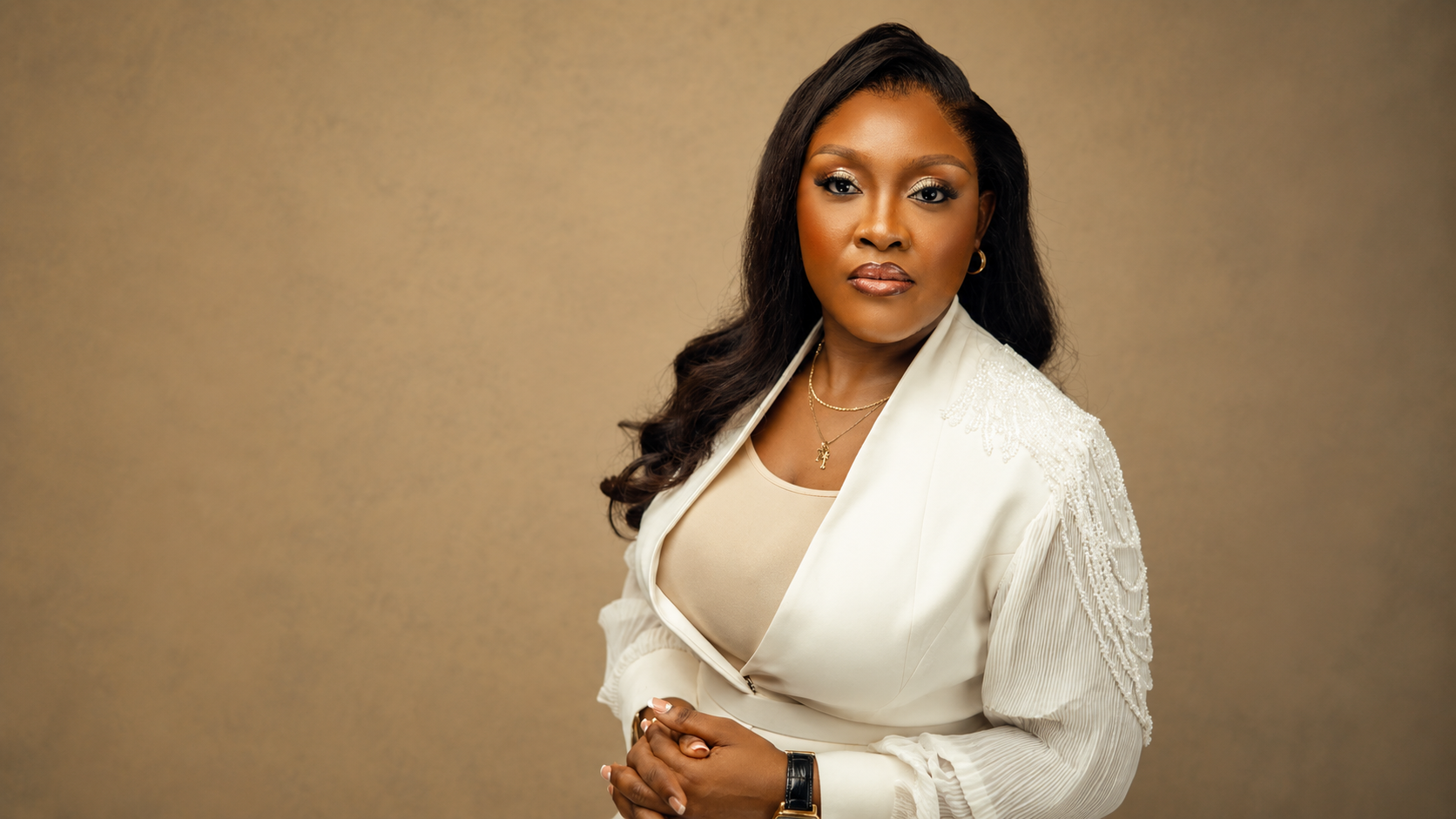
Tiwa Savage did not arrive at the summit of African pop culture by accident. Her story is not one of sudden fame or convenient timing, but of precision, reinvention, and a quiet, unshakeable belief in her own trajectory. Long before the sold-out arenas, global collaborations, and cultural influence, there was a young woman lending her voice to others, refining her craft in the background while the world looked elsewhere.
Today, she stands as one of the defining architects of Afrobeats’ global ascent, a figure whose career has stretched across continents and eras, adapting without ever losing its core identity. Yet beneath the spectacle of chart-topping records and international acclaim lies something far more compelling: a deliberate life, shaped by intention and sustained by resilience.
YOU CAN ALSO READ: Can Kemi Badenoch’s Economic Strategy Restore Britain’s Momentum?
Her journey began in the shadows of greatness. As a backup vocalist, Tiwa Savage worked alongside some of the most iconic names in global music including Mary J. Blige, George Michael, and Whitney Houston. These were not just career milestones, but formative experiences that sharpened her discipline and expanded her understanding of what music could be. It was during this period, in a chance encounter with legendary producer Babyface in Los Angeles, that the seed of a different future was planted. African music, he told her, was on the brink of something significant. She listened.
At the time, her heart leaned toward R&B. It was the sound she understood, the lane she had prepared for. But something shifted. Watching the early movements of Afrobeats from afar, she noticed a gap, particularly for women. Where there was abundance among male artists, there was space, even silence, for female voices. That absence became her invitation.
Returning to Nigeria was not a triumphant homecoming, but a recalibration. The industry she stepped into demanded more than talent, it required adaptability, cultural fluency, and an appetite for risk. What followed was not a seamless transition but a transformation. Under the mentorship of Don Jazzy at Mavin Records, she was pushed beyond her comfort zone, encouraged to experiment with sounds, languages, and identities that felt at first unfamiliar. Yoruba, Igbo, Pidgin, street-hop influences, each became part of her evolving artistry.
There were moments of resistance. Songs she doubted, directions she questioned. Yet those same risks would later define her reach. “Eminado,” once uncertain in her mind, would go on to become a pan-African anthem, cementing her place at the centre of a rapidly expanding musical movement.
Longevity in an industry defined by trends is no small feat, and for Tiwa Savage it has never been anchored solely in strategy. There is, as she often alludes, something deeper at play, a conviction that resists limitation. While the public narrative might frame her through familiar lenses, a woman, a mother, an artist navigating a demanding industry, her internal narrative tells a different story. One where those labels are not constraints but context.
She speaks openly about starting her mainstream career in her thirties, an unconventional timeline in a youth-obsessed industry. Yet rather than hinder her, it sharpened her sense of purpose. There is no urgency to prove, only a steady commitment to evolve. Age in her world is not a countdown but an expansion.
Still, her success exists within a broader imbalance. The disparity between male and female artists in Afrobeats remains stark, a reflection, she argues, of societal structures that extend far beyond music. In Nigeria and across much of Africa, women continue to navigate systems that question their authority and limit their opportunities. The music industry, for all its glamour, mirrors these realities. From subtle biases to more overt barriers, the path is rarely equal.
Yet change, she believes, is not only possible, it is already underway. Each milestone achieved by women in the industry chips away at long-standing assumptions, creating new reference points for what is possible.
If the first phase of her career was defined by personal ascent, the next is marked by something more expansive, legacy. Not the abstract kind often spoken about in passing, but a tangible, structured effort to reshape the ecosystem that sustained her.
Through the Tiwa Savage Music Foundation, she is turning her attention to the often overlooked architecture of the industry, the producers, engineers, technicians, and creatives who exist behind the spotlight. For her, the future of Afrobeats depends not just on its stars but on the strength of its foundation.
The initiative has already begun to make its mark. In a recent programme, thousands applied, hundreds were shortlisted, and a select group of young talents were awarded fully funded opportunities to study music at Berklee College of Music. The investment is significant, not just financially but symbolically. It signals a shift from individual success to collective advancement.
Her vision extends even further. She imagines an Africa where world-class arenas are not destinations abroad but fixtures at home, where artists do not have to leave the continent to experience global standards, and where innovation in music technology can emerge locally rather than be imported.
YOU CAN ALSO READ: Seplat Boosts Dividend as Profit Surges in Q1 2026
This is not a departure from music but an expansion of it. Even as she builds, she continues to create. New projects are on the horizon, collaborations that promise to stretch her sound even further. Retirement, by her own admission, is not a consideration. If anything, she sees herself performing well into the later decades of her life, sustained by the same passion that first carried her onto a stage.
What makes Tiwa Savage compelling is not simply her success, but the way she inhabits it. There is an ease to her confidence, a sense that she is not chasing relevance but defining it on her own terms. She understands the weight of her influence but wears it lightly, choosing intention over noise, substance over spectacle.
In many ways, her story is still unfolding. Each chapter builds on the last, not in repetition but in reinvention. And if there is a thread that runs consistently through it all, it is this: a refusal to be confined by expectation.
In an industry that often rewards immediacy, Tiwa Savage has chosen endurance. In a culture that can be quick to define, she continues to redefine herself. And in doing so, she offers more than music, she offers a blueprint.