Ice cream may seem like one of the happiest businesses in the world, associated with joy, nostalgia, celebration, and comfort. But behind every scoop lies a difficult operational reality few customers ever see. Products melt, transportation is expensive, storage is complicated, and every stage of the process depends on maintaining one critical condition: everything must stay frozen. For entrepreneurs, that challenge alone can make ice cream one of the toughest sectors in food retail.
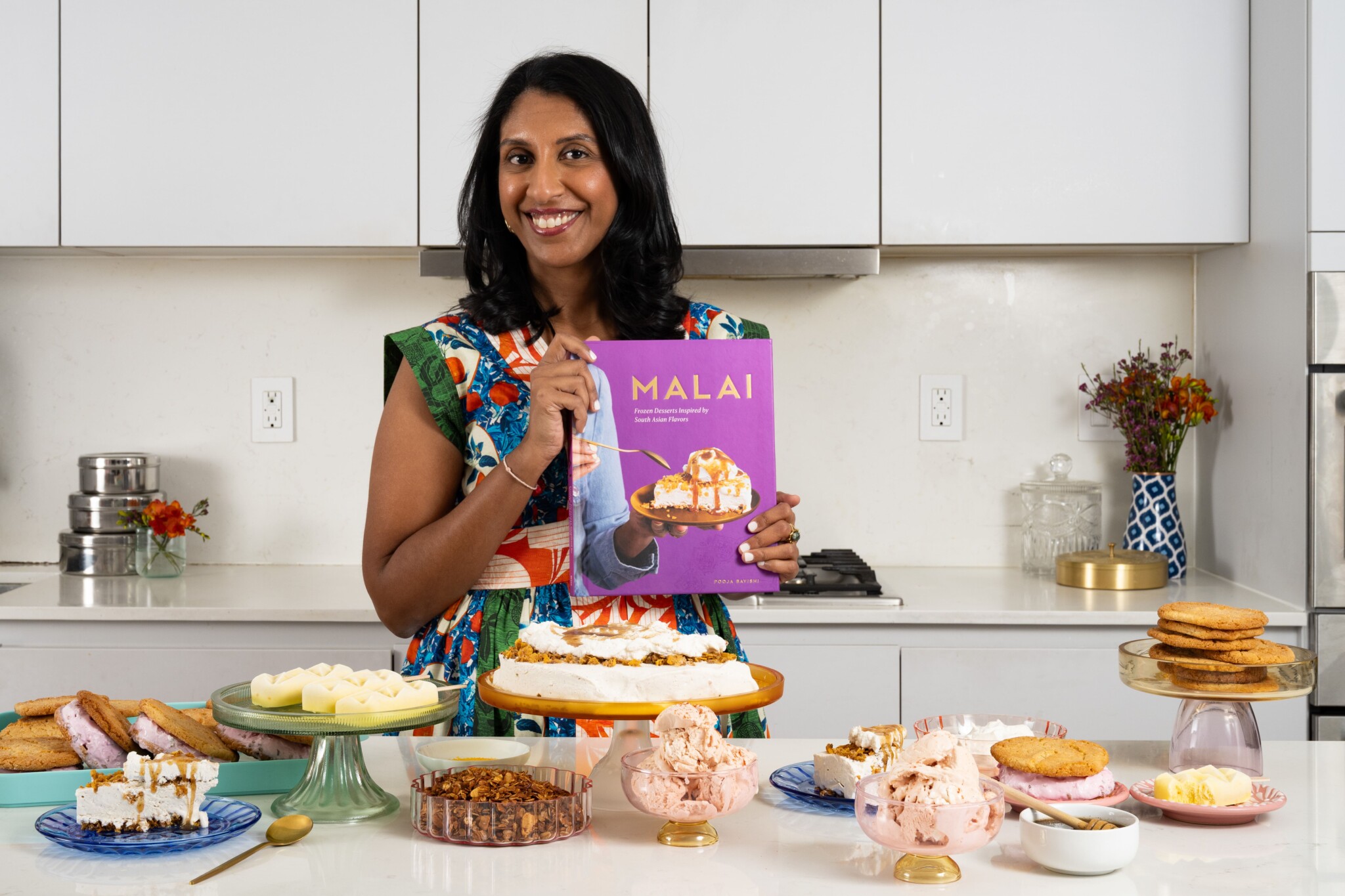
Yet for Pooja Bavishi, founder and CEO of New York-based ice cream company Malai, complexity became part of a larger mission. Rather than simply selling dessert, she set out to introduce South Asian flavors into the mainstream American experience and prove that cultural storytelling could become a thriving business. Today, that vision has grown into a company generating nearly $3 million annually, with four brick-and-mortar locations across New York, Philadelphia, and Washington, D.C., alongside expanding wholesale, catering, and e-commerce operations.
YOU CAN ALSO READ: Vori’s $22M Bet on the Future of Grocery Technology
Malai’s journey did not begin in a commercial kitchen or investor meeting. It began at a Friendsgiving dinner. For years, Bavishi had dreamed of building a dessert business. The appeal was never only about food. Desserts represented joy, memories, and moments of connection. Then in 2014, while hosting friends, she experimented with ginger and star anise in an ice cream base. The reaction was immediate. Friends told her they had never tasted anything like it before, and the response sparked an idea that soon became impossible to ignore.
At the time, Bavishi had no experience in the food industry. There were doubts and uncertainties, but once the concept for Malai formed during business school, she says the direction felt inevitable. Just months after that gathering, the company was born.
The name itself carried personal significance. Malai, a word used in North Indian languages like Hindi and Gujarati, means cream, but figuratively translates to “the cream of the crop.” For Bavishi, whose family roots trace back to Gujarat in northwestern India, it represented both heritage and aspiration.
From the beginning, Malai aimed to challenge assumptions about flavor. Instead of relying solely on familiar staples, the company introduced ingredients like cardamom, rose, saffron, chai spices, pistachio, and mango into products designed for broader audiences. The goal was never novelty. For Bavishi, these flavors are not trends or experiments. They have been enjoyed by billions of people for generations. What felt revolutionary was not inventing something new but bringing long-celebrated flavors into mainstream visibility.
Today, Malai’s menu reflects that philosophy. Products range from rose with cinnamon-roasted almonds to cardamom pistachio crumble and mango cream varieties. The company also produces kulfi pops, ice cream sandwiches, cakes, and other specialty products inspired by South Asian traditions. Kulfi itself stands apart from traditional ice cream because of its denser, chewier texture, creating an entirely different dessert experience.
As Malai expanded, growth brought another reality into focus: scaling ice cream is extraordinarily difficult. Unlike many food products, frozen desserts come with unique logistical burdens. Transportation requires specialized systems, products must remain frozen throughout delivery, overnight shipping often becomes necessary, and dry ice and storage fees create additional expenses. Rising inflation, tariffs, and supply chain pressures only add more strain.
At the same time, Malai prioritizes premium ingredients, including sustainably sourced dairy and spices. That quality comes with higher costs, often requiring Bavishi and her team to explain why their products carry higher prices than customers historically associate with ice cream. Still, broader shifts in the industry created new opportunities. Brands like Jeni’s and Van Leeuwen helped redefine premium ice cream through craftsmanship and ingredient quality, creating room for smaller companies like Malai to compete.
Today, approximately 80 percent of Malai’s revenue comes from its scoop shops, while wholesale partnerships, catering, and e-commerce generate the remainder. But the company’s growth journey was far from smooth. During its earliest days, Bavishi operated with almost no outside funding, even using her grocery budget to make ice cream. She focused obsessively on understanding customer behavior. Every market became research and every sale became a lesson.
Then an unexpected breakthrough arrived. A food writer from The New York Times discovered Malai during one of its early summers, generating press that immediately created momentum and opened doors for growth opportunities.
Bavishi eventually raised a friends-and-family funding round intended for a future brick-and-mortar location. But business rarely follows a straight path. Instead, those funds supported working capital, pop-ups, and expansion opportunities while the search for a permanent space continued.
When Malai finally prepared to open its first Brooklyn location in 2019, another challenge emerged. Traditional financing options were unavailable due to limited business credit history. With few alternatives, Bavishi turned to credit cards. The company opened its first permanent location carrying nearly $200,000 in credit card debt. The decision was risky, but growth required investment, and she knew reaching the next stage demanded bold choices.
Even then, financial sacrifice remained part of daily life. For years, payroll often came with uncertainty over whether she could consistently pay herself. It was not until recently that taking a regular salary became possible. That moment represented more than financial stability. It symbolized years of persistence finally producing tangible rewards.
YOU CAN ALSO READ: Leadership Is Responsibility, Not Privilege, – Ajay Banga
In 2024, Malai achieved profitability for the first time. The milestone marked a significant turning point because profitability and aggressive expansion often move in opposite directions. Building both simultaneously remains one of entrepreneurship’s greatest challenges. So far, Malai has raised approximately $1.8 million while giving up equity to support growth.
Looking back, Bavishi reflects on how little she knew at the beginning. There was no roadmap and no industry experience, only passion, instinct, and determination. Years later, those instincts have evolved into a growing company helping redefine how Americans experience frozen desserts.
Yet for Bavishi, Malai’s impact reaches beyond revenue. South Asian flavors have long been part of daily life for generations across the world. Bringing them into mainstream American culture is not simply product innovation. It is cultural translation. And as Bavishi says, they are still just getting started.