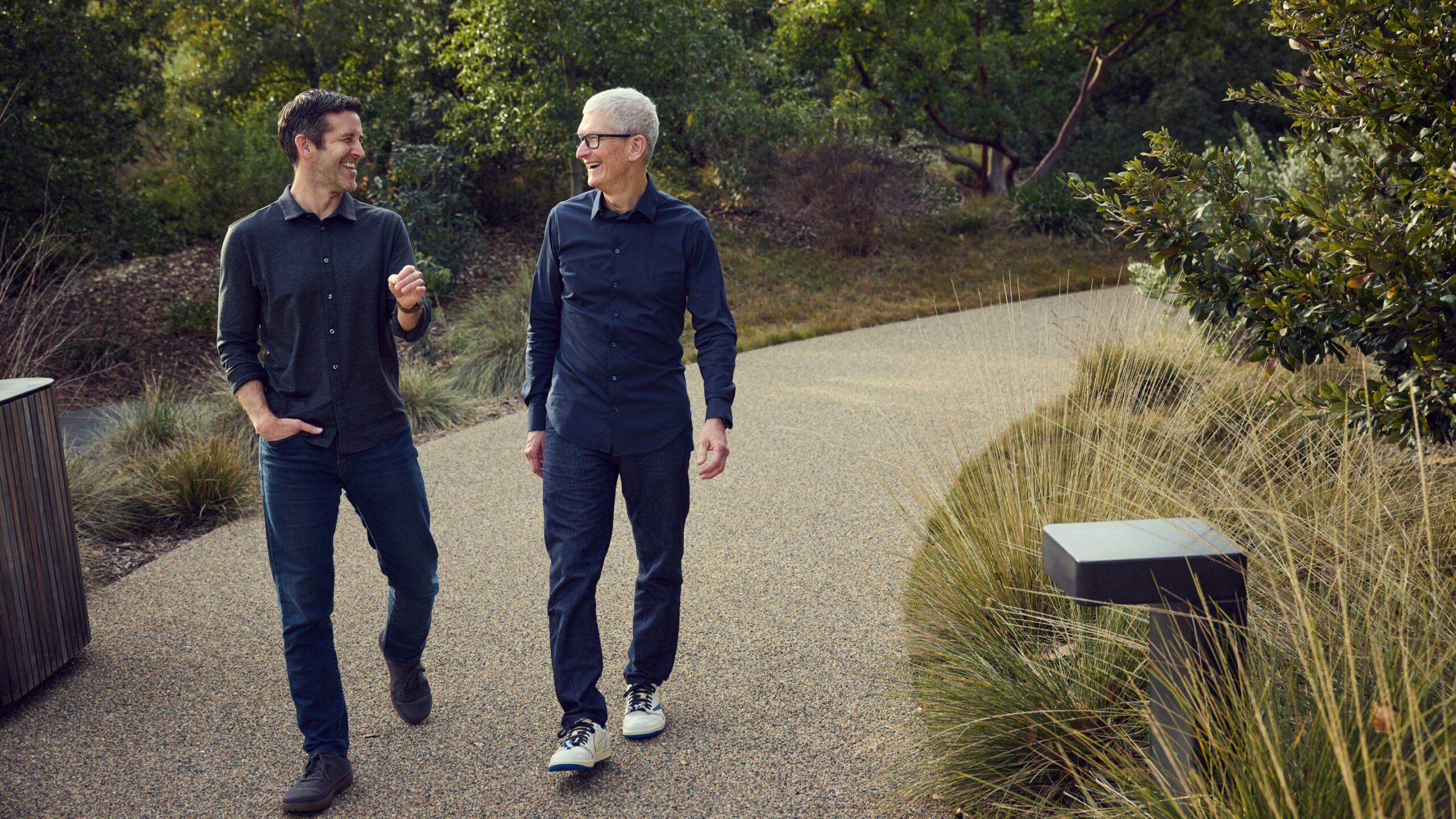
Apple has announced a major leadership transition that will reshape the company’s future at the highest level of its executive structure. Effective September 1, 2026, Tim Cook will step into the role of executive chairman of Apple’s board of directors, while John Ternus, senior vice president of Hardware Engineering, will become Apple’s next chief executive officer. The transition, unanimously approved by Apple’s Board of Directors, follows what the company describes as a deliberate, long-term succession planning process designed to ensure continuity at one of the world’s most influential technology companies.
Under the arrangement, Cook will remain CEO through the summer, working closely with Ternus to ensure a seamless handover of leadership responsibilities. As executive chairman, Cook will continue to support Apple in select strategic areas, including engagement with policymakers globally, reflecting his long-standing role in shaping Apple’s international relationships and regulatory dialogue.
In a reflective statement, Cook described leading Apple as “the greatest privilege” of his life, emphasizing the depth of the company’s culture and the people behind it. He credited Apple’s teams for their ingenuity, creativity, and commitment to building products that enrich users’ lives. Speaking about his successor, Cook offered strong endorsement of Ternus, describing him as an engineer at heart, an innovator by instinct, and a leader defined by integrity and vision. After more than 25 years at Apple, Ternus, he said, is “without question the right person to lead Apple into the future.”
Ternus, in his own statement, expressed gratitude and humility in stepping into the role. Reflecting on a career that began nearly entirely within Apple, he acknowledged the influence of Steve Jobs and Tim Cook, both of whom shaped his leadership journey. He described Apple as a place defined by extraordinary talent and a shared mission to build products that meaningfully connect people to the world and to each other. Looking ahead, Ternus said he is “filled with optimism” about Apple’s future and committed to leading with the values and vision that have defined the company for decades.
Apple also announced that Arthur Levinson, who has served as non-executive chairman for 15 years, will transition to lead independent director. Ternus will also join Apple’s board of directors, further embedding the incoming CEO into the company’s governance structure ahead of the transition.
Levinson praised both Cook and Ternus, calling Cook’s leadership transformational in elevating Apple into what he described as the world’s leading company. He highlighted Cook’s role in introducing landmark product categories and embedding values such as privacy, accessibility, and environmental responsibility into Apple’s core identity. Levinson also expressed strong confidence in Ternus, citing his technical expertise, leadership depth, and long-standing commitment to Apple’s product vision.
Cook’s tenure as CEO, which began in 2011 after joining Apple in 1998, has been marked by extraordinary expansion and reinvention. Under his leadership, Apple has evolved from a company valued at roughly 350 billion dollars into a global technology powerhouse with a market capitalization approaching 4 trillion dollars. Revenue has nearly quadrupled over the period, rising from 108 billion dollars in fiscal 2011 to more than 416 billion dollars in fiscal 2025.
During this era, Apple significantly expanded its product ecosystem, introducing major new categories such as Apple Watch, AirPods, and Apple Vision Pro, while scaling services including iCloud, Apple Pay, Apple Music, and Apple TV. The company also deepened its hardware portfolio, strengthened its global retail presence with more than 500 stores, and expanded its footprint across more than 200 countries and territories.
A defining feature of Cook’s leadership has been the rapid growth of Apple’s Services division, now exceeding 100 billion dollars in annual revenue. He also played a central role in creating and scaling the wearables category, which has become one of Apple’s most influential product segments. Under his direction, Apple transitioned to Apple-designed silicon, a strategic shift that significantly improved performance and energy efficiency across its devices.
Beyond financial and product milestones, Cook’s tenure has also emphasized values-driven leadership. Apple reduced its carbon footprint by more than 60 percent compared to 2015 levels, even as revenue nearly doubled. Privacy and security were elevated as foundational principles of product design, while accessibility initiatives were expanded to ensure Apple products serve a broader global user base. Cook also strengthened Apple’s focus on inclusion, positioning the company as a workplace defined by dignity, respect, and belonging.
John Ternus, who joined Apple’s product design team in 2001 and rose to vice president of Hardware Engineering in 2013 before joining the executive team in 2021, has been central to Apple’s hardware evolution. His leadership has spanned key innovations across iPhone, iPad, Mac, Apple Watch, and AirPods, as well as the introduction of new product lines that helped define Apple’s modern ecosystem.
Under his guidance, the Mac lineup reached new heights in performance and global adoption, while recent product launches have showcased advancements in design, durability, and user experience across Apple’s devices. Ternus has also been instrumental in driving innovation in materials engineering, sustainability, and product longevity, including the use of recycled aluminum, titanium-based manufacturing techniques, and improved repairability standards.
His influence extends into Apple’s health, audio, and wearable technologies, where engineering advances have transformed AirPods into a category-leading product and expanded Apple Watch into a platform for health and safety features used by millions worldwide.
With this transition, Apple is signaling both continuity and evolution. Cook’s move to executive chairman ensures institutional stability and strategic continuity, while Ternus’s elevation represents a generational shift toward an engineering-led future. The company enters this new chapter with its leadership transition carefully structured, its governance aligned, and its long-term trajectory firmly anchored in a blend of innovation, scale, and disciplined execution.