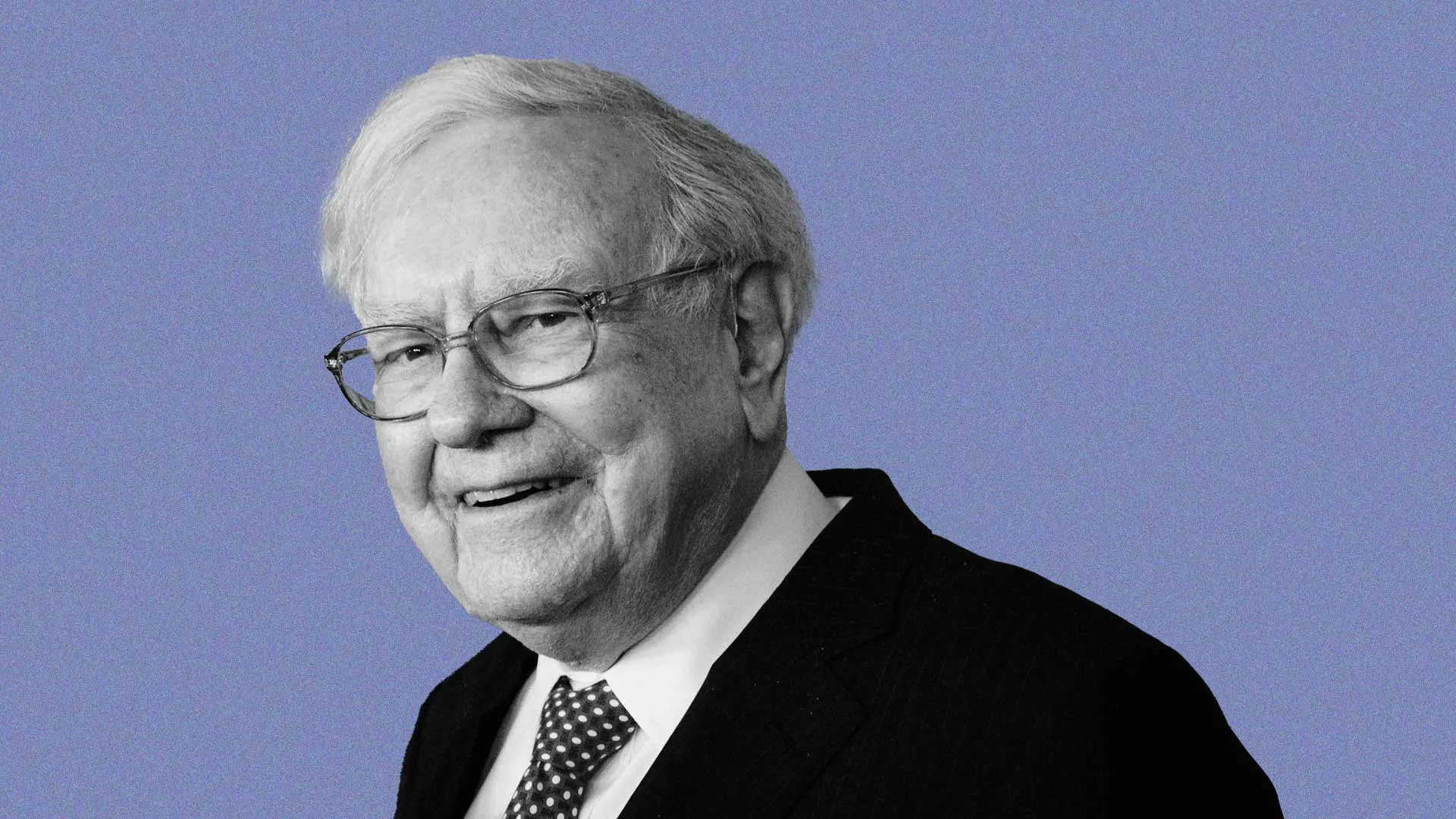
Warren Buffett no longer sits at the center of the stage, but nothing about his presence suggests retreat. At 95, the chairman of Berkshire Hathaway has shifted from performer to observer, watching the spectacle he helped build from the audience for the first time in six decades. The annual ritual continues without him in the spotlight, yet his imprint lingers in every pause, every principle, every measured decision that defines the Berkshire ethos.
There is something fitting about this quiet transition. Buffett has always believed that the most powerful moves in business are often the ones not made. Now, as he reflects on a year removed from his decision to step down as CEO, his tone carries neither nostalgia nor uncertainty. Instead, there is a calm assurance, the kind forged over a lifetime of disciplined restraint. “It’s all working,” he says simply, as though describing not a corporate empire but a well tuned instrument.
YOU CAN ALSO READ: Can Kemi Badenoch’s Economic Strategy Restore Britain’s Momentum?
Yet even Buffett admits the environment is far from ideal. Berkshire sits on a mountain of cash, hundreds of billions of dollars waiting, watching, resisting the urge to act. In an age defined by urgency, Buffett’s patience feels almost radical. Where others see inactivity, he sees control. The ability to do nothing, he suggests, is not a weakness but a form of strength, an advantage that allows Berkshire to move only when the odds tilt decisively in its favor.
This philosophy has defined his career. In 60 years of investing, he recalls only a handful of truly “juicy” periods, rare moments when opportunity and clarity aligned. The rest of the time has been spent waiting, filtering, and, most importantly, ignoring. The world, as Buffett sees it, is crowded with noise, endless pitches, ideas, and distractions masquerading as opportunity. The real skill lies not in saying yes, but in knowing when to walk away.
It is this discipline that shapes his view of today’s markets, which he describes with a metaphor both vivid and unsettling, a church with a casino attached. The distinction between investing and gambling, once clear, has blurred. Speculative behavior, particularly in the form of short term options trading, has injected a feverish energy into the system. To Buffett, this is not evolution but distortion. The casino has become too attractive, drawing in participants who mistake motion for meaning.
Still, he resists the temptation to condemn the entire landscape. Markets, in his view, are never entirely barren. Even in periods of excess, value exists, though often buried beneath inflated expectations and misunderstood industries. What has changed, he admits, is his own circle of competence. The modern economy, shaped by rapidly evolving technologies and new business models, is less familiar terrain. Rather than pretend otherwise, Buffett leans into what he knows, trusting that understanding a few things deeply is more valuable than skimming across many.
If there is a thread running through his reflections, it is humility, an acknowledgment of limits paired with an unwavering commitment to clarity. He does not claim to predict the future, nor does he attempt to anticipate the next crisis. In fact, he dismisses the very idea. The events that truly reshape markets, he argues, are never the ones people are busy forecasting. They arrive unannounced, disruptive and decisive, like historical shocks that alter the course of nations overnight.
This perspective extends beyond markets into life itself. Buffett speaks of uncertainty not as a threat to be feared, but as a condition to be accepted. Worry, he suggests, is not only unproductive but corrosive. Awareness matters, anxiety does not. It is a distinction that reflects his broader worldview, pragmatic, grounded, and quietly optimistic.
That optimism, however, is not blind. When discussing inflation, Buffett’s tone shifts to caution. History offers enough warnings, economies destabilized, currencies eroded, societies reshaped by the loss of faith in money. Inflation, when it spirals, becomes more than an economic issue, it becomes a psychological one. And once confidence is broken, restoring it is no simple task. Berkshire, for all its scale and sophistication, cannot control such forces. At best, it can position itself to endure them.
Amid these macro reflections, Buffett returns repeatedly to what he understands best, people. Leadership, he insists, remains the defining variable in any organization. The transition to Greg Abel, his chosen successor, is not framed as a gamble but as a continuation. Abel is not selected for charisma or charm, but for judgment, an ability to see businesses clearly and act decisively. In Buffett’s world, competence outweighs personality, and consistency trumps flair.
Yet even here, he acknowledges the inherent uncertainty. Choosing leaders, he notes with a hint of humor, is not unlike choosing partners in life. Time reveals what initial impressions cannot. Mistakes are inevitable. What matters is the structure that allows an organization to absorb them without losing its core.
That core, for Berkshire, has always been defined by trust, an intangible asset Buffett values above all else. It is reflected in the speed with which deals are made, the simplicity of agreements, and the reputation that precedes every handshake. In a financial system often characterized by complexity and opacity, Berkshire’s approach feels almost anachronistic. But it works, precisely because it is rare.
YOU CAN ALSO READ: 7 Growth Principles Moniepoint CEO Says Business Owners Need to Build Viable Businesses
As the conversation drifts toward broader societal questions, Buffett’s reflections take on a more philosophical tone. He speaks of America not in political terms, but as an enduring idea, an experiment that, despite its flaws, continues to attract belief. He calls it a miracle, not because it is perfect, but because it persists. The inequalities are real, the contradictions evident, yet the system endures, evolving in ways that defy simple explanation.
In the end, however, Buffett’s message is disarmingly simple. Strip away the complexity of markets, the noise of speculation, the unpredictability of global events, and what remains is a principle as old as civilization itself, the Golden Rule. Treat others as you would like to be treated. It is not a strategy in the conventional sense, but in Buffett’s view, it is the most reliable one. It costs nothing, yields compounding returns, and, perhaps most importantly, creates a life that feels worthwhile.
As he steps back from the stage he once dominated, Buffett leaves behind more than a record of financial success. He leaves a philosophy, one rooted in patience, discipline, and an unwavering belief in doing the right thing, even when no one is watching.