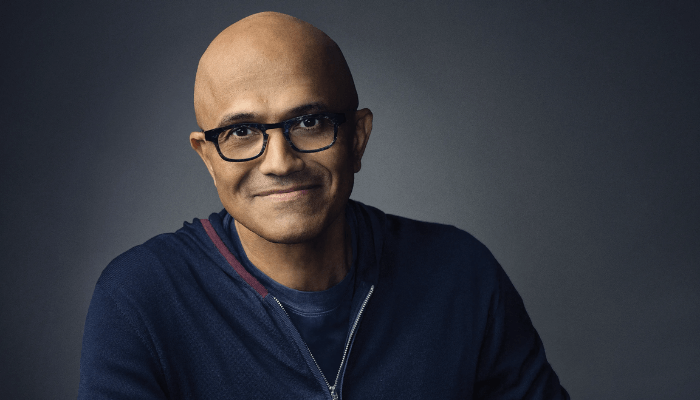
In the world of technology, leadership is often measured not by the products launched today but by the futures imagined years before they become reality. Few executives embody that principle more than Satya Nadella. Since taking the helm of Microsoft in 2014, Nadella has overseen one of the most remarkable corporate transformations in modern business history. He inherited a technology giant often viewed as dominant but aging and reshaped it into one of the world’s most influential forces in cloud computing, artificial intelligence, and enterprise technology. Yet for Nadella, the journey is far from complete.
At Microsoft’s latest developer gathering, he offered perhaps the clearest glimpse yet into the future he believes is coming, a future where intelligence becomes as fundamental to computing as electricity is to modern society. The vision extends beyond chatbots, productivity tools, or even artificial intelligence itself. Nadella is attempting to build the infrastructure for an entirely new computing paradigm.
Throughout Microsoft’s history, the company has helped define major eras of technology. There was the personal computing revolution powered by Windows. Then came the internet age. Later, Microsoft reinvented itself around cloud computing through Azure. Now Nadella believes the next platform shift is underway. “The driving equation remains the same: tokens per dollar per watt,” he explained, underscoring the economics behind modern AI systems.
YOU CAN ALSO READ: Securing the Future of Finance: Musa Jimoh Outlines CBN’s Payment System Vision 2028
Beneath the technical language, however, lies a broader ambition. Microsoft is no longer simply building software. It is building systems capable of reasoning, planning, learning, and acting. The company’s latest announcements reveal a strategy designed to place intelligence at every layer of the computing stack, from devices and operating systems to cloud infrastructure and enterprise workflows. It is a vision that positions AI not as an application, but as a foundational capability.
One of the most striking elements of Nadella’s presentation was his belief that extraordinary computing power should no longer be confined to massive data centers. For years, the most advanced AI models required specialized facilities containing thousands of processors. Today, Microsoft is working toward a future where developers can access unprecedented capabilities directly from their desks. The unveiling of the Surface RTX Spark Dev Box reflected that ambition.
Designed as a purpose-built machine for AI development, the device combines advanced processing, graphics, and AI acceleration into a single architecture. What captured attention, however, was a much larger idea. Nadella described a future where users could run trillion-parameter models locally, effectively turning a desktop computer into a personal data center. Only a few years ago, such capabilities would have been unimaginable outside the world’s largest technology companies. Today, Microsoft is betting they will become commonplace.
If cloud computing defined the last decade, Nadella believes autonomous agents may define the next. Across the presentation, a recurring theme emerged: AI systems that do more than generate responses. These systems can perform tasks, execute workflows, retrieve information, make decisions, and continuously improve over time. Microsoft’s new planning models, agent frameworks, and enterprise autopilots all point towards the same destination. The company envisions organizations operating alongside digital teams capable of handling routine work, coordinating projects, monitoring operations, and assisting human employees in real time. In this future, AI is not merely a tool. It becomes a collaborator. For Nadella, the opportunity is transformative. Just as software amplified human productivity during the digital revolution, autonomous agents may amplify human capability during the intelligence revolution.
Perhaps the most ambitious aspect of Microsoft’s strategy is the creation of what Nadella describes as a unified intelligence layer. Through initiatives such as Microsoft IQ, the company is combining web intelligence, organizational knowledge, operational data, and workplace information into a single ecosystem that AI systems can understand and reason over. The objective is straightforward but extraordinarily complex: create AI systems that are grounded in real-world information rather than isolated datasets. Such systems would be capable of understanding not only what exists on the internet, but also the unique context, procedures, expertise, and institutional knowledge within an organization. The result could fundamentally change how decisions are made across industries.
As AI systems become increasingly autonomous, Nadella understands that trust will determine adoption. That is why security featured prominently throughout Microsoft’s vision. The company introduced new approaches to containment, permissions, and execution environments designed specifically for AI agents. Rather than allowing unrestricted access, Microsoft’s frameworks give organizations granular control over what AI systems can see, access, and modify. It is a recognition that intelligence without safeguards creates risk. For Nadella, the future of AI depends not only on capability but on confidence. Organizations must believe that these systems can operate safely before they are willing to entrust them with meaningful responsibility.
The most futuristic moments of the presentation came when Microsoft previewed entirely new categories of AI-native devices. From desktop companions to wearable digital badges connected to personal agents, the company showcased concepts that suggest computing may soon move beyond traditional interfaces. These devices are designed around interaction rather than applications. Instead of opening software and navigating menus, users engage directly with intelligent systems that understand context and perform tasks on their behalf. The concept reflects Nadella’s long-standing belief that technology should become more intuitive, more human-centered, and ultimately more invisible.
What distinguishes Nadella from many technology leaders is his emphasis on empowerment. While discussions around AI often focus on disruption, job displacement, or technological dominance, Nadella consistently frames innovation through the lens of opportunity. His closing message reflected that philosophy. He acknowledged that society faces two possible futures.
YOU CAN ALSO READ: How Monipoint Helps Bring Banking to Millions Across Nigeria
One where technology concentrates power and reduces human agency, and another where it expands opportunity for developers, enterprises, scientists, and communities around the world. For Nadella, Microsoft’s mission is to make the second future possible. It is a vision rooted not simply in technological progress, but in the belief that innovation should expand human potential.
As artificial intelligence reshapes industries, economies, and societies, that conviction may ultimately become Satya Nadella’s most enduring legacy. The AI race is often portrayed as a competition for dominance. Nadella sees it differently. For him, the challenge is not merely to build smarter machines. It is to build a future where human ingenuity becomes more powerful because of them.