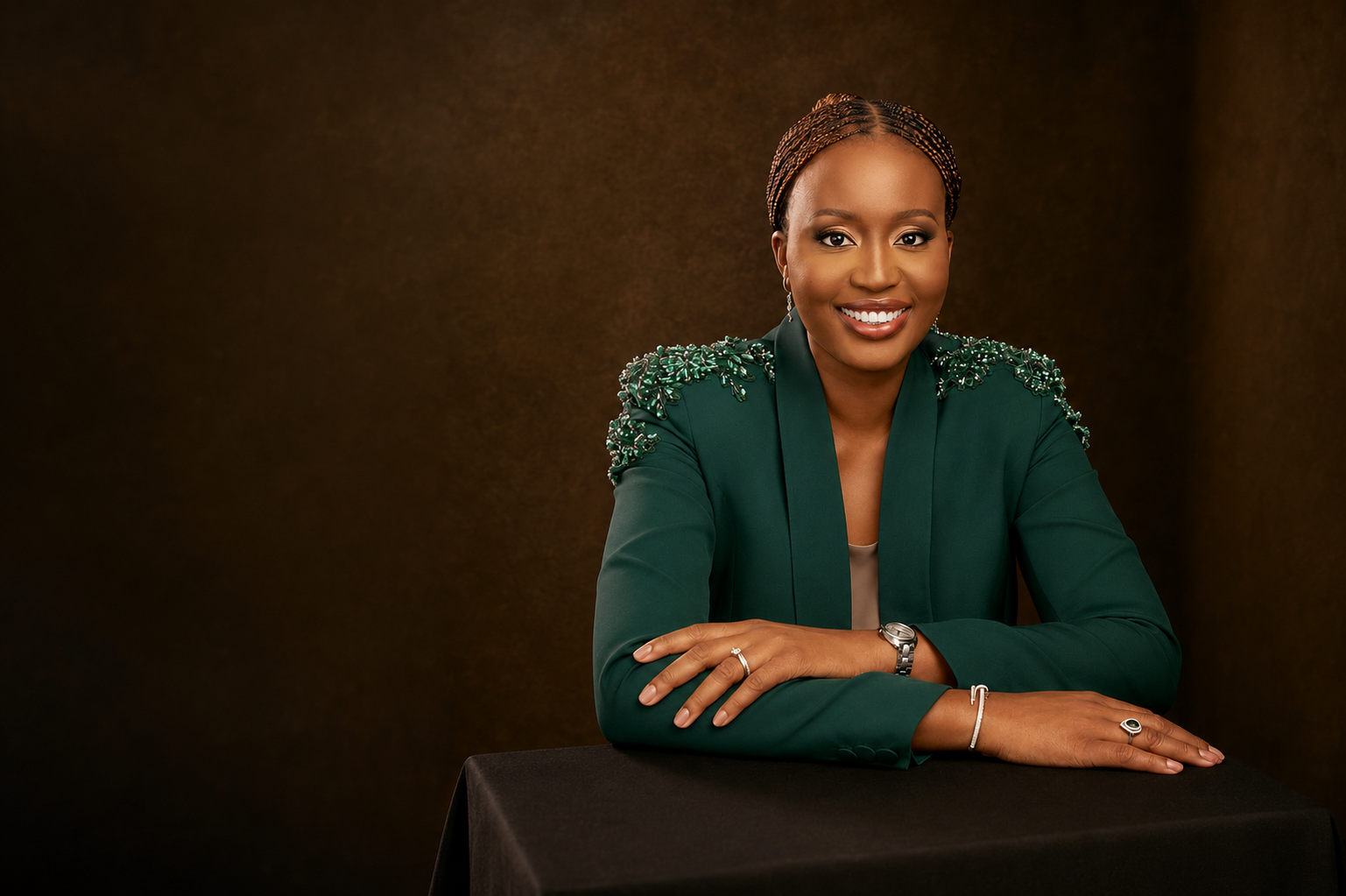
In an era where artificial intelligence and robotics are transforming industries at unprecedented speed, Nigerian-born Harvard alumna Yinka Ogunbiyi is proving that innovation can emerge from the most unexpected places. By bringing cutting-edge engineering into one of the world’s oldest beauty traditions, Ogunbiyi is redefining the future of Black haircare while positioning herself at the forefront of beauty technology.
The Nigerian-American biomechanical engineer and entrepreneur recently secured $7 million in seed funding to commercialise HaloBraid, the world’s first patented braid-assist robot, a breakthrough innovation designed to transform protective hairstyling without replacing the skilled hands of professional braiders.
The investment marks one of the most significant technology-backed funding rounds in the beauty robotics space. It was led by Seven Seven Six, the venture capital firm founded by Reddit co-founder Alexis Ohanian, alongside leading investors AlleyCorp and Bling Capital. Even before its commercial rollout, HaloBraid had attracted overwhelming market confidence, with more than 7,000 professional salons joining its waiting list.
YOU CAN ALSO READ: Why Your Business Isn’t Growing: Ayo Akinola Breaks Down the Real Reasons
For Ogunbiyi, the journey represents the intersection of elite academic research, engineering excellence and personal experience. Armed with a joint MS/MBA from Harvard Engineering School and Harvard Business School, she began her career designing smart kitchen appliances and Internet of Things (IoT) products before turning her attention to a problem that millions of Black women experience worldwide.
The inspiration came during the COVID-19 lockdown when she spent four exhausting days installing her own knotless braids. Rather than accepting the lengthy process as inevitable, Ogunbiyi saw an innovation gap in a multi-billion-dollar global industry that had remained largely untouched by modern robotics.
Together with co-founder David Afolabi, she set out to develop a solution capable of improving efficiency without compromising the artistry that defines professional braiding.
The result was HaloBraid, a collaborative robot, or “cobot,” specifically engineered to work alongside human hairstylists instead of replacing them. Unlike many automation technologies designed to eliminate jobs, HaloBraid enhances the work of professional braiders by taking over the repetitive mid-shaft braiding movements that account for nearly 80 per cent of the time spent on many protective hairstyles.
The technology preserves the creative and personal aspects of the salon experience. Professional stylists continue to part the hair, create the foundation braid and customise the final look, while the robotic assistant handles the repetitive weaving process before returning control to the stylist for finishing touches. The innovation can reduce appointment times for knotless braids by nearly half, allowing salons to serve more customers without sacrificing quality.
“I don’t think anything will get lost from the experience. If anything, it enriches it. Technology simply assists with the repetitive movements that consume the most time and place the greatest strain on the body,” Ogunbiyi said.
Beyond improving efficiency, HaloBraid addresses a long-overlooked occupational health challenge facing thousands of professional braiders. Years of repetitive hand and wrist movements often result in carpal tunnel syndrome, arthritis, chronic back pain and spinal injuries that shorten careers across the beauty industry.
By transferring the physically demanding aspects of braiding to robotic assistance, HaloBraid has the potential to significantly improve workplace health, extend career longevity and increase earning capacity for salon professionals and independent beauty entrepreneurs.
The commercial opportunity is equally compelling. Consumer research indicates that 95 per cent of Black women would choose protective hairstyles more frequently if appointments required less time. That insight presents a massive opportunity to unlock new demand in a global Black haircare market already worth billions of dollars annually.
For investors, HaloBraid represents far more than a robotics startup. It combines artificial intelligence, hardware engineering, beauty technology and healthcare into a platform capable of transforming productivity across an underserved global market.
YOU CAN ALSO READ: Why Investors Are Betting $2.5 Billion on Dangote Refinery’s Future
For Nigeria, Ogunbiyi’s achievement is another powerful reminder that African talent continues to shape world-changing innovations from the world’s leading institutions and technology ecosystems. Her success also reinforces the growing influence of African founders in sectors once considered beyond the reach of traditional entrepreneurship.
As artificial intelligence reshapes industries from manufacturing to healthcare, Yinka Ogunbiyi is demonstrating that the future of innovation can also be found in the salon chair. With HaloBraid, she is not replacing human creativity but amplifying it, creating a new model where robotics and skilled craftsmanship work side by side to redefine an industry that has remained largely unchanged for generations.
The $7 million investment is therefore more than a funding milestone. It is a vote of confidence in a vision that blends engineering with culture, technology with tradition, and African ingenuity with global commercial ambition.