The Federal Government has pushed back strongly against claims that more than ₦8 trillion, equivalent to about two percent of Nigeria’s Gross Domestic Product (GDP), was spent outside the country’s approved budget, describing the allegations as a fundamental misunderstanding of both Nigeria’s fiscal framework and the findings contained in the International Monetary Fund’s 2026 Article IV Consultation Report.
The clarification comes amid growing public debate following interpretations of comments attributed to the IMF’s Resident Representative in Nigeria and sections of the Fund’s latest assessment of the country’s economy. According to the government, the narrative suggesting the existence of a “shadow budget” is not only inaccurate but also risks undermining public confidence in Nigeria’s public financial management system.
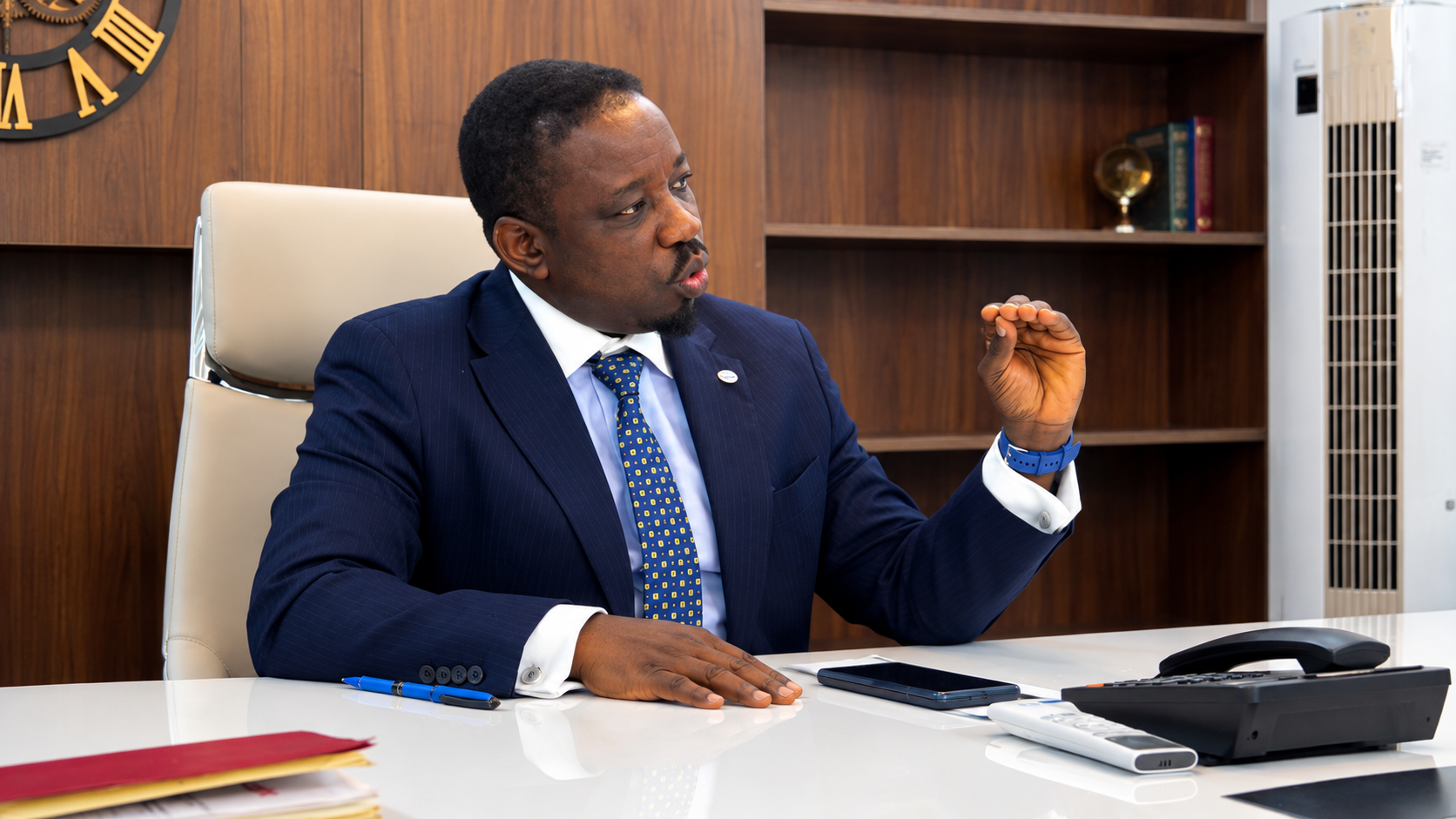
In a detailed statement signed by the Honourable Minister of Finance and Coordinating Minister of the Economy, Taiwo Oyedele, the Federal Government maintained that every naira spent by the federal administration is backed by constitutional provisions and legislative approval, insisting that Nigeria does not operate any parallel or hidden expenditure framework.
YOU CAN ALSO READ: Margaret Omovbude Hosts One-Day Leadership Conference Focused on Career Growth and Workplace Success
The government explained that under Sections 80 to 83 and 162 of the Constitution of the Federal Republic of Nigeria, no public funds can be withdrawn or spent outside the legal framework established by the National Assembly. Annual Appropriation Acts, Supplementary Appropriation Acts and other statutory authorisations remain the legal basis for federal expenditure, while capital projects that span multiple fiscal years are implemented through approved rollover mechanisms recognised under existing laws.
According to the statement, these long-term infrastructure and development projects should not be mistaken for expenditures occurring outside the budget simply because they extend beyond a single fiscal year. Rather, they are standard features of modern public financial management practiced across many countries.
The government also challenged critics to provide concrete evidence for claims that trillions of naira had been secretly spent without legislative approval. It argued that allegations of such magnitude must be supported by verifiable facts, including identification of specific projects allegedly executed without appropriation, rather than speculation or misinterpretation of technical fiscal reports.
To provide greater public understanding, the Finance Ministry distinguished between appropriation, expenditure authorisation, financing arrangements and fiscal reporting, noting that these concepts are often confused in public discourse.
The statement highlighted that Nigeria’s fiscal architecture contains several legally established expenditure mechanisms that may not always appear in the annual Appropriation Act in the same format but remain fully authorised by law. These include statutory transfers to development commissions and agencies created through Acts of the National Assembly, legally approved cost-of-collection arrangements for revenue-generating agencies, separate capital budgets for certain government institutions and the Federal Capital Territory, intervention programmes addressing national priorities such as infrastructure, security and disaster response, as well as debt servicing obligations and other statutory transfers.
According to the government, none of these expenditures are hidden or unlawful. Instead, they are disclosed through official fiscal reports, subjected to oversight and audit, and presented in accordance with both Nigerian laws and internationally recognised fiscal reporting standards. Differences in accounting classifications, the statement stressed, should not be interpreted as evidence of illegal spending.
The Federal Government further rejected suggestions that the reported amount represented an expansion of Nigeria’s fiscal deficit. It explained that a fiscal deficit is determined by the relationship between total government revenue and total expenditure, not by the financing mechanism through which approved projects are executed. Whether projects are financed through annual budgets, supplementary appropriations, statutory transfers or other lawful instruments does not automatically increase the budget deficit.
Importantly, the government argued that the IMF’s observations focused primarily on improving the comprehensiveness, timing and presentation of Nigeria’s fiscal reporting rather than questioning the legality of government expenditure. The administration noted that strengthening the alignment between budget presentation and international reporting standards forms part of ongoing reforms designed to improve transparency and accountability.
The statement also recalled that President Bola Ahmed Tinubu had already acknowledged the need for greater harmonisation of Nigeria’s budgeting process. During his presentation of the 2026 Appropriation Bill to a joint session of the National Assembly on December 19, 2025, the President formally requested lawmakers to discontinue the practice of operating multiple and overlapping budgets in favour of a single, more integrated fiscal framework.
Beyond addressing the immediate controversy, the Finance Ministry pointed to a series of reforms introduced under the current administration to strengthen fiscal governance. These include improvements in budget credibility, more transparent revenue administration, increased digitalisation of government financial systems and enhanced treasury management.
YOU CAN ALSO READ: Meet Mariam Ahmed, Founder Building Next Billion Dollar AI Company
According to the government, these reforms have received recognition not only from the IMF but also from other multilateral institutions, international credit rating agencies, global investors and leading international media organisations, reflecting growing confidence in Nigeria’s economic management.
While affirming that public scrutiny remains essential in a democratic society, the Federal Government urged commentators and analysts to distinguish between technical reporting issues and allegations of unlawful expenditure. Misrepresenting complex fiscal observations as evidence of financial misconduct, it warned, neither contributes to informed public debate nor strengthens democratic accountability.
Reaffirming its commitment to transparency, the rule of law and prudent fiscal management, the government pledged to continue working closely with the National Assembly, oversight institutions, development partners and Nigerians to deepen reforms and strengthen the country’s fiscal governance in line with global best practices.