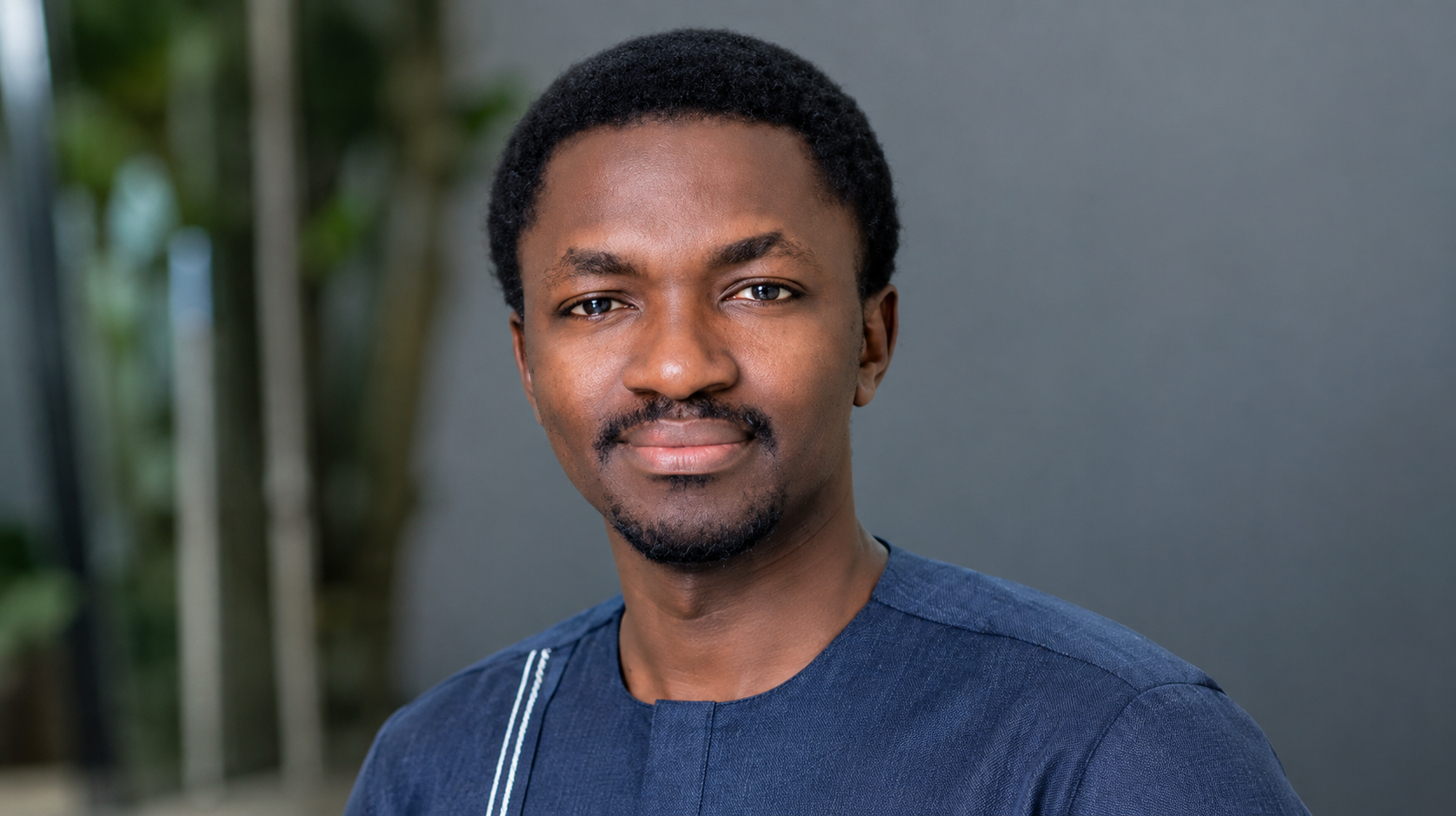
Africa’s technology ecosystem is entering one of the most consequential periods in its history. After years of rapid fintech growth that transformed how millions of Africans send, receive and manage money, the continent is now standing at the threshold of another revolution, one driven by artificial intelligence, stablecoins and intelligent digital infrastructure. For serial entrepreneur and investor Iyinoluwa Aboyeji, one of Africa’s most respected technology pioneers, the future will belong not to companies that simply move money, but to those that understand the people, businesses and ecosystems behind every transaction.
Speaking during a technology podcast, the Future Africa CEO shared his perspective on where African innovation is headed, why payment companies must evolve beyond transactions, why AI talent is now the continent’s greatest competitive advantage and why founders need to think globally from the very beginning. His message was both ambitious and urgent. The next generation of African technology giants, he argued, will be built not on infrastructure alone but on intelligence, context and execution.
Africa’s fintech story has been remarkable. Companies such as Paga, Flutterwave, Moniepoint and Paystack have fundamentally changed financial services across the continent, making digital payments faster, more accessible and more inclusive. Yet Aboyeji believes that era is rapidly evolving. For years, payment companies competed on transaction speed, convenience and affordability.
YOU CAN ALSO READ: Why Prof. Yemi Osinbajo Says Digital Age Demands Greater Discernment
Today, tighter regulation and increased competition have significantly reduced those advantages, forcing fintech companies to search for entirely new ways of creating value. According to him, the next battleground lies beyond domestic transfers. International payments, increasingly powered by stablecoins and blockchain technology, represent the future. As global payment rails become cheaper and more efficient, simply moving money will no longer be enough. The companies that win will be those that understand the context surrounding every payment.
To Aboyeji, every payment tells a story. It reveals what customers buy, how businesses operate, where products originate, who supplies them and how entire value chains interact. That information, he explained, is far more valuable than the transaction itself. A payment company that understands these relationships can offer credit, finance suppliers, optimise inventory, improve cash flow and help businesses make smarter decisions. Payments therefore become only one layer of a much broader business platform. Success will depend less on processing money and more on interpreting the intelligence hidden within every commercial interaction.
That transformation is already underway across Africa. Financial technology companies are steadily expanding beyond payment processing into inventory management, bookkeeping, supply chain services and artificial intelligence. Recent acquisitions by companies such as Moniepoint and South Africa’s Yoco illustrate a growing industry trend toward building integrated business ecosystems rather than standalone financial products. Aboyeji believes these moves reflect a broader reality. Future payment companies will no longer compete solely on infrastructure. They will compete on data, context and the ability to solve increasingly complex business problems.
Artificial intelligence, however, introduces an entirely new competitive dimension. While companies around the world are rushing to integrate AI into their products, Aboyeji cautions that technology alone will not create lasting advantages. What Africa truly needs, he argued, is talent. The continent requires a new generation of AI engineers capable of building solutions specifically designed for African realities. Without that talent base, local companies risk becoming dependent on technologies created elsewhere, leaving them vulnerable to global competitors with greater financial resources.
This conviction has inspired his latest ventures, Talent Nation and Learn to Earn, initiatives focused on preparing young Africans for careers in artificial intelligence. Rather than merely teaching technical skills, these programmes aim to build an entirely new workforce capable of designing, deploying and scaling AI-driven products. According to Aboyeji, developing this talent pipeline is perhaps the most important startup Africa can build today because every future AI company will depend on it.
He also challenged the common belief that local startups possess a permanent advantage because they understand African markets better than international technology companies. In his view, that assumption is increasingly dangerous. Global AI companies have the resources to acquire local data, hire regional experts and rapidly adapt their products for African markets. Local entrepreneurs cannot rely solely on geographical familiarity. Instead, they must build stronger AI capabilities, develop deeper expertise and create products that leverage uniquely African insights before international competitors do the same.
His advice to founders was unmistakable. Every startup should already be asking how it can become AI-native. Artificial intelligence should not exist as a feature added to existing products but as a capability embedded across every aspect of the business. Companies that fail to embrace this transformation, he warned, may struggle to survive as AI becomes an essential layer of modern software.
Yet Aboyeji believes much of the current conversation around artificial intelligence focuses on the wrong opportunities. While many businesses are excited about chatbots and conversational interfaces, he argues that the greatest value lies behind the scenes. He distinguishes between what he describes as “above-the-line” AI and “below-the-line” AI. Most consumers experience AI through tools such as ChatGPT or Claude, where users provide information and receive responses. The more transformative opportunity, however, lies in AI systems that analyse existing operational data to improve logistics, optimise supply chains, forecast demand and automate complex business decisions long before customers ever interact with a product.
He illustrated this idea with a simple example. Ordering food through an AI assistant may seem impressive, but the true innovation is not whether the AI can place the order. The real value comes from whether it knows which restaurant has the necessary ingredients, understands current traffic conditions, predicts delivery times accurately and ensures the order arrives exactly when needed. Those invisible operational improvements ultimately create far greater customer value than any conversational interface alone.
The same principle, he believes, applies to virtually every industry. Artificial intelligence should help businesses make better decisions rather than merely automate existing tasks. In the years ahead, companies that use AI to strengthen operational intelligence will gain a significant competitive advantage over those focused only on customer-facing applications.
Aboyeji also believes the future of payments will increasingly revolve around international commerce. Stablecoins, he explained, are reshaping cross-border transactions by making global payments faster and significantly less expensive. As these technologies mature, payment companies will compete less on transaction execution and more on the quality of information surrounding those transactions. Businesses that understand supply chains, customer behaviour, purchasing trends and commercial relationships will create entirely new categories of financial products capable of serving both local and global markets.
The conversation also turned to blockchain and Web3, sectors that have generated enormous enthusiasm across Africa in recent years. Here, Aboyeji offered one of his most candid observations. Too many blockchain startups, he argued, remain obsessed with technology instead of solving meaningful problems. If decentralised technologies cannot reduce financing costs, simplify business operations, improve access to capital or address practical economic challenges, they risk becoming little more than speculative experiments. Innovation, he insisted, should always begin with human needs rather than technological possibilities.
That same philosophy shapes his broader approach to entrepreneurship. Founders, he believes, should spend less time chasing investment and more time building products customers genuinely need. Businesses capable of generating sustainable cash flow can often grow successfully without external funding. Companies aiming to transform industries or reshape global markets, however, must be prepared to raise the capital necessary to support that ambition. The critical distinction lies in purpose. Capital should accelerate execution, not substitute for it.
YOU CAN ALSO READ: Serena Williams Is Winning a Different Game – and It’s Worth $400 Million
He also encouraged entrepreneurs to prioritise building over fundraising. Products should exist before pitch decks become polished presentations. Customers should matter more than headlines announcing investment rounds. Sustainable companies, he argued, are ultimately built through execution rather than publicity.
Looking ahead, Aboyeji remains optimistic about Africa’s future despite intensifying global competition. The continent possesses one of the world’s youngest populations, rapidly expanding internet connectivity and an increasingly entrepreneurial generation eager to solve complex problems. If Africa successfully develops world-class AI talent, harnesses its unique market knowledge and builds products rooted in genuine local context, its technology companies will not merely compete within Africa but across the world.
For Aboyeji, the future of African innovation is no longer about catching up with Silicon Valley. It is about creating globally competitive companies powered by African talent, solving universal challenges through uniquely local insight. In an era where artificial intelligence is transforming every industry, he believes Africa’s greatest opportunity lies not simply in adopting new technologies, but in producing the people capable of building the future itself.