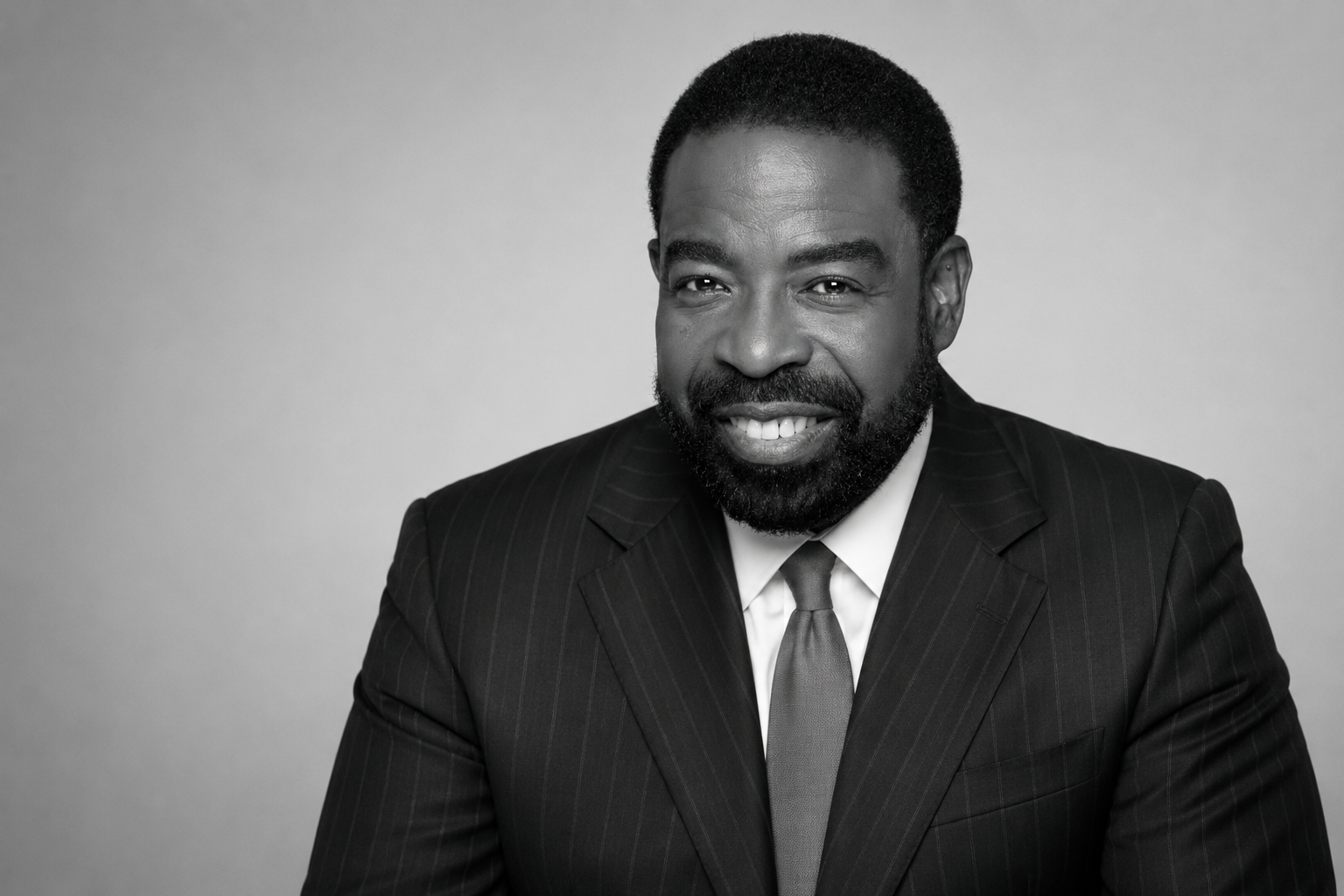
In today’s volatile business environment, chief executives face relentless pressure to deliver growth while navigating economic uncertainty, technological disruption and shifting customer expectations. Markets change overnight, industries are reinvented by innovation and yesterday’s winning strategy can quickly become obsolete. Against this backdrop, leadership is increasingly defined not by certainty but by resilience. It is this reality that renowned motivational speaker Les Brown explored in a powerful address that offered lessons extending far beyond personal development. His message was, at its core, a masterclass in executive leadership.
Brown argued that the greatest limitation facing leaders is rarely capital, competition or market conditions. Instead, it is the tendency to underestimate what is possible. He challenged executives to recognise that most organisations operate far below their true potential, constrained not by opportunity but by limiting beliefs and cautious thinking. According to Brown, what companies achieve often represents only a fraction of what they are capable of accomplishing.
He urged leaders to think beyond quarterly earnings and operational targets by defining success across three dimensions. The first is personal leadership, continually developing the mindset, discipline and emotional intelligence required to lead at higher levels. The second is business growth, building organisations capable of expanding sustainably while creating long term value. The third, and perhaps most enduring, is legacy, the positive contribution an organisation makes to employees, customers, communities and society.
YOU CAN ALSO READ: Sahara Group Appoints Folake Soetan to Lead Arahas Global Oilfield Services
For Brown, successful businesses are not measured solely by financial performance. They are distinguished by the value they create beyond the balance sheet. He observed that organisations focused exclusively on extracting value eventually lose relevance, while those committed to solving meaningful problems build stronger brands, deeper customer loyalty and more enduring enterprises.
His philosophy aligns closely with the evolution of modern corporate leadership, where purpose has become a strategic advantage rather than simply a public relations exercise. Companies that consistently deliver exceptional customer experiences, invest in their people and contribute meaningfully to society increasingly outperform those driven solely by short term financial objectives.
Brown also addressed one of the greatest challenges facing business leaders: maintaining confidence during prolonged periods of adversity. Every CEO experiences moments when growth stalls, investments fail, markets contract or strategic decisions produce disappointing outcomes. During such periods, optimism can feel disconnected from reality.
Rather than dismissing those experiences, Brown acknowledged them as an unavoidable part of leadership. Businesses encounter setbacks. Markets fluctuate. Even the most successful entrepreneurs experience failure. The defining difference, he argued, lies in how leaders respond when circumstances become difficult.
Quoting author Larry D’Angelo, Brown compared life to a grindstone that either polishes or pulverises depending on how an individual positions themselves. The same principle applies to organisations. Economic downturns, competitive disruption and operational crises can weaken companies that react defensively. Yet those same challenges often strengthen organisations led by executives who treat adversity as an opportunity to innovate, adapt and emerge stronger.
Brown illustrated this perspective through his own entrepreneurial journey. Before becoming one of the world’s most recognised motivational speakers, he entered an industry in which he possessed no formal experience, established reputation or influential network. He encountered repeated rejection, financial hardship and persistent criticism. There were periods when he lost his income, his home and nearly his confidence. Yet he continued pursuing his vision despite overwhelming uncertainty.
For CEOs, the lesson is familiar. Every transformational company begins as an uncertain idea. Every market leader was once an unproven challenger. Innovation rarely emerges from comfort. It requires the willingness to pursue opportunities that others consider unrealistic.
Perhaps Brown’s most valuable insight for executives concerned the language leaders use when confronting ambitious goals. He cautioned against demanding absolute certainty before pursuing bold strategies. Instead of insisting, “We will achieve this,” Brown encouraged leaders to begin with a more powerful mindset: “It is possible.”
That distinction may appear subtle, yet it has profound implications for organisational culture. Declaring certainty where none exists can undermine credibility. Believing something is possible, however, creates psychological space for experimentation, calculated risk taking and continuous improvement. Organisations driven by possibility become more innovative because they remain open to solutions others dismiss as unattainable.
Brown also challenged leaders who postpone strategic initiatives while waiting for ideal conditions. Many organisations delay expansion until markets stabilise, postpone innovation until budgets improve or defer transformation until every variable aligns perfectly. Brown argued that such conditions rarely exist.
The organisations that define industries are rarely those that waited for certainty. They are the ones that moved decisively with the resources, knowledge and capabilities available at the time. Progress, he suggested, belongs to leaders who act despite imperfect conditions rather than those who endlessly prepare for a future that never arrives.
His message also carried an important reminder about criticism. Every ambitious strategy attracts sceptics. Every disruptive idea encounters resistance. Brown recalled how even members of his own family questioned his aspirations long before success validated his decisions. For business leaders, the principle is equally relevant. Visionary leadership often requires making decisions that appear unreasonable until results make them obvious.
YOU CAN ALSO READ: Why Ikeja Electric’s New CEO Appointment Matters for Nigeria’s Power Sector
Ultimately, Brown’s address was less about motivation than about executive responsibility. CEOs are not simply tasked with managing operations or delivering quarterly performance. They are responsible for expanding what their organisations believe is achievable. Their mindset influences culture. Their resilience shapes organisational confidence. Their willingness to embrace possibility often determines whether companies merely survive disruption or redefine entire industries.
As global business continues to evolve at unprecedented speed, Brown’s message remains strikingly relevant. Sustainable growth begins with leaders who refuse to be constrained by current circumstances, who measure success by the value they create and who recognise that extraordinary organisations are built not by waiting for certainty but by acting on possibility.
For today’s CEOs, the challenge is clear. Leadership is not about predicting the future with perfect accuracy. It is about creating a future others have not yet imagined and having the conviction to pursue it before the rest of the market believes it can be done.