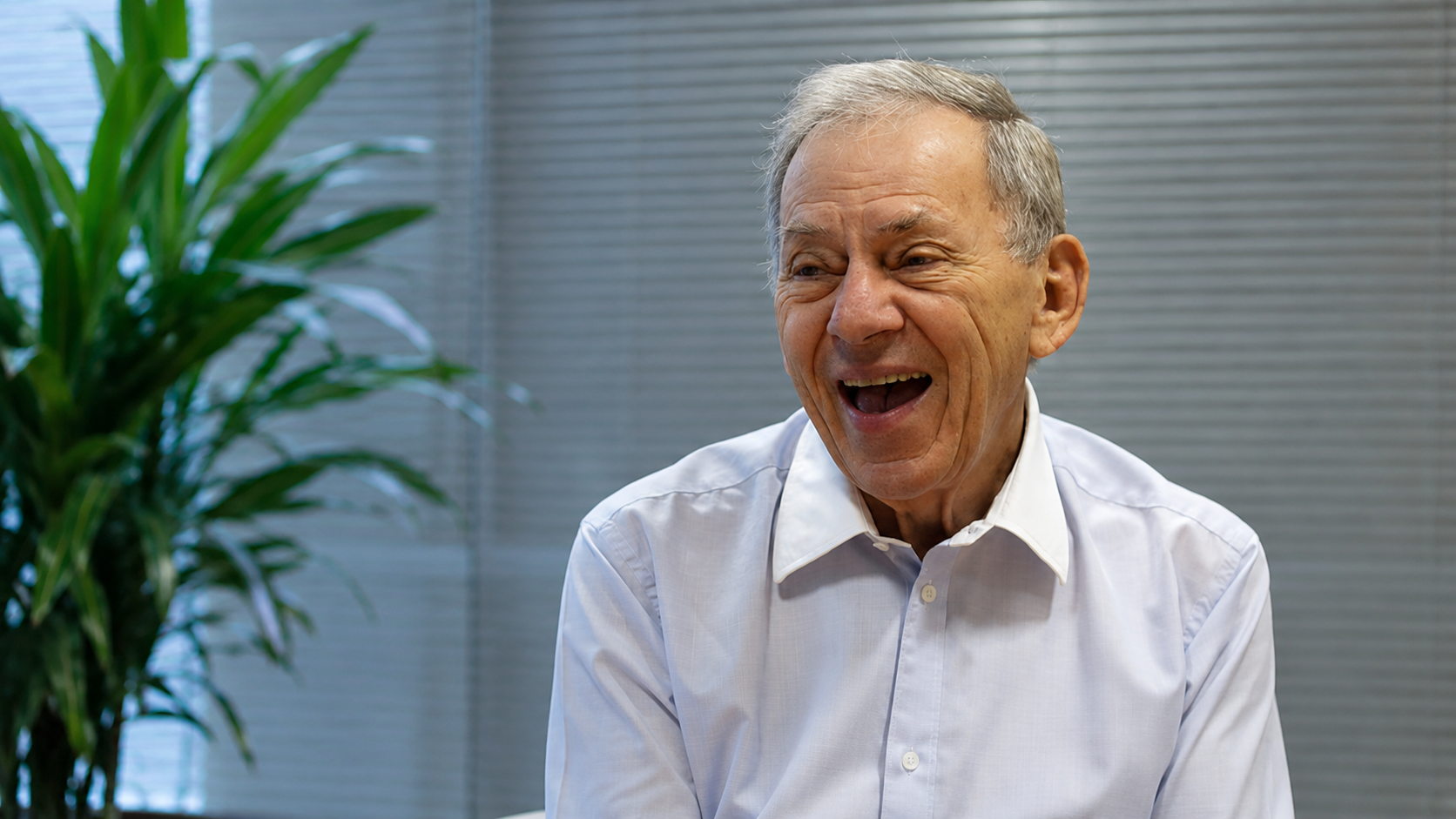
Eswatini billionaire Nathan Kirsh has joined Africa’s exclusive $20 billion wealth club after his fortune more than doubled since the beginning of 2026, driven largely by the sale of his Restaurant Depot business to US food distributor Sysco.
Kirsh, 94, who started the year with an estimated net worth of $9.1 billion, briefly crossed the $20 billion threshold on Friday, according to Forbes’ Real-Time Billionaires Index. Forbes currently places his fortune at about $19.8 billion, putting him alongside Africa’s two other billionaires whose fortunes have crossed the $20 billion mark, Nigerian industrialist Aliko Dangote and South African businessman Johann Rupert.
Kirsh’s extraordinary rise comes after a year of major wealth movements among Africa’s richest individuals. South Africa’s Johann Rupert and Nigerian billionaire Abdulsamad Rabiu also approached the $20 billion milestone, with Rupert eventually crossing the threshold according to the Bloomberg Billionaires Index. Rabiu, whose fortune reached about $19.7 billion at one point, subsequently saw his wealth fall below $15 billion in June.
Kirsh’s dramatic wealth increase is closely linked to one of the biggest business decisions of his career. In March, he agreed to sell Jetro Restaurant Depot to Sysco in a transaction valued at approximately $29.1 billion, including debt.
YOU CAN ALSO READ: Nigeria Moves to Unlock $50bn Offshore Oil Investment With New Fiscal Framework
The deal, which represents the largest acquisition in Sysco’s history, is expected to provide Kirsh’s side with about $21.6 billion in cash and approximately 91.5 million Sysco shares, giving him a stake of roughly 16% in the enlarged company. The transaction is expected to close early next year.
The proposed sale has transformed Kirsh’s financial position, adding roughly $10 billion to his estimated fortune and pushing him rapidly toward the top tier of Africa’s wealth rankings.
Kirsh built his fortune through the wholesale food distribution business, beginning with Jetro Cash & Carry in 1976 before acquiring Restaurant Depot in 1994. His business model helped transform food-service distribution by allowing restaurants, caterers and small businesses to purchase supplies directly from warehouse-style distribution centres rather than relying on traditional wholesalers.
Restaurant Depot subsequently became one of the largest food-service suppliers in the United States. By last year, the business operated 166 locations across 35 states, generated approximately $16 billion in annual revenue and recorded about $2.1 billion in earnings before interest, taxes, depreciation and amortisation.
Despite the scale of his business empire, Kirsh has remained one of the world’s least-known billionaires. Born into a Lithuanian-Jewish family and raised in southern Africa, he initially built his fortune through a corn-milling business before suffering major losses from property investments. He later rebuilt his wealth after moving to the United States and establishing a grocery business in Brooklyn.
YOU CAN ALSO READ: Dangote to Begin Construction of $16bn Kenya Refinery in October
His rise to the $20 billion club marks a remarkable turnaround for a businessman who spent decades operating largely outside the public spotlight.
Kirsh’s emergence also reshapes the upper end of Africa’s billionaire rankings. For much of 2026, he, Rupert and BUA Group founder Abdulsamad Rabiu have traded positions as fluctuations in company valuations and markets affected their fortunes.
With the Restaurant Depot transaction, however, Kirsh’s latest wealth surge is increasingly tied to a combination of cash and publicly traded assets. His journey from a relatively obscure food distributor to one of Africa’s three $20 billion billionaires makes his 2026 wealth creation one of the continent’s most striking business stories.