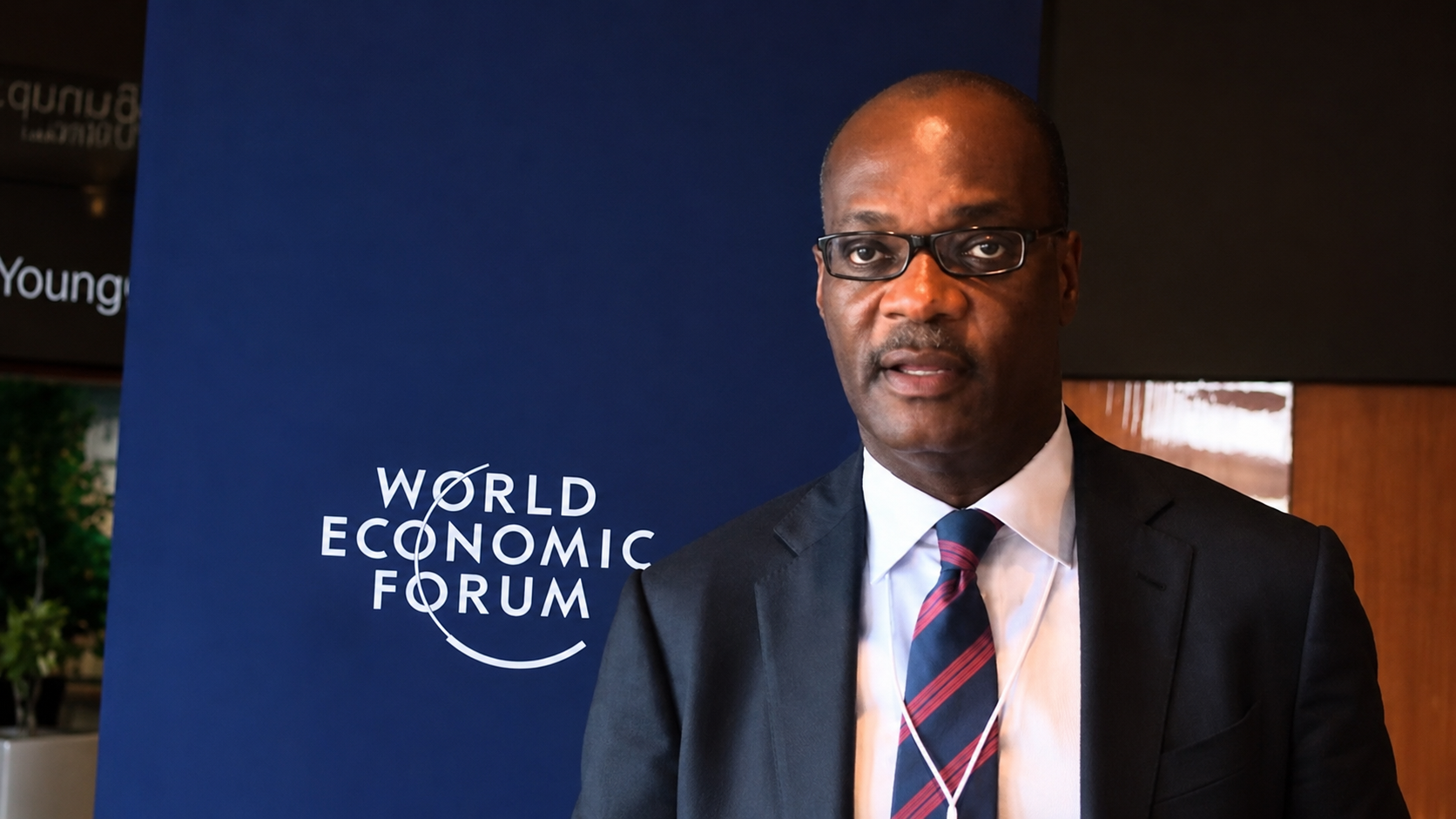
For Prof. Magnus Kpakol, poverty reduction cannot be measured by how much money government distributes. The real measure, he argues, is whether people who once depended on assistance can eventually build sustainable incomes, become productive and stand on their own.
It is a view shaped by experience. As former National Coordinator of the National Poverty Eradication Programme (NAPEP), Kpakol was directly involved in efforts to confront poverty in Nigeria, including the introduction of a conditional cash transfer framework during the Obasanjo administration. Years later, as Nigeria introduces another major social protection initiative, he returns to a familiar question: what does it truly take to move people out of poverty?
Speaking on the Federal Government’s Household Prosperity and Empowerment Social Protection Project, known as HOPE-SP, Kpakol described the initiative as commendable and potentially important. But he said its success should not be judged by the size of its budget, the number of announcements surrounding it or even the volume of cash distributed.
YOU CAN ALSO READ: NESG Sets Agenda for ‘Growth That Works’ as Nigeria Seeks Broader Economic Gains
For him, the test is much more demanding. Can those receiving support eventually escape poverty? Can they create income, become economically productive and reach a point where they no longer depend on government assistance? That, Kpakol believes, is the difference between managing poverty and defeating it.
He does not dismiss cash transfers. He sees them as an important starting point for vulnerable households facing severe hardship. A transfer can provide immediate relief and prevent people from sinking deeper into deprivation. Even a modest amount, he noted, can make a difference to someone with very little. But cash, he argued, is only the floor. It is not the ladder.
Kpakol’s central concern is what happens after the money is received. If a poverty programme ends with a transfer, the recipient may survive for a period but remain trapped in the same economic condition. A serious social protection programme, he believes, must include a mechanism capable of moving people from dependence towards productivity.
That thinking informed his own approach during his time in government. Alongside a basic income guarantee, he introduced what he called a Poverty Reduction Accelerator Investment, designed around the need to invest in people and build their capacity to improve their economic circumstances.
Training was a critical part of that model. Kpakol repeatedly returned to the importance of financial and economic literacy, arguing that poverty reduction must involve more than giving people resources. People must also have the knowledge, competence and capacity to use opportunities effectively.
For him, the deeper objective is productivity. Poverty reduction, he argued, is ultimately about building the capacity of Nigerians to produce goods and services, participate meaningfully in the economy and create sustainable value.
This is why he welcomed the language around “graduating” people out of poverty. In his view, it signals an important shift away from permanent welfare dependency. Government support should help vulnerable people cross a difficult stage, but the long-term objective must be liberation from poverty rather than indefinite dependence on assistance.
Still, Kpakol sees significant risks. One of the biggest is political interference. Major government programmes often attract numerous interests, with politicians and other actors attempting to influence how beneficiaries are selected and how resources are distributed.
Too many people, he warned, can become involved in the process, creating what he described as “too many cooks in the kitchen.” The result can be confusion, politicisation and outcomes that differ sharply from the original purpose of the programme.
Beneficiary selection is therefore crucial. Kpakol recalled his approach at NAPEP, where communities were directly involved in identifying people considered genuinely poor. Selection was conducted openly, with people gathered in public spaces and encouraged to identify vulnerable members of their own communities.
If a person selected as poor was challenged by others in the community, the selection could be reconsidered. The approach was built around visibility and local knowledge, using communities themselves as part of the process of determining who genuinely needed assistance.
That experience continues to shape his views on Nigeria’s social register. He believes government must provide greater transparency about how people are selected, how the register is built and whether it genuinely represents the communities it is intended to serve.
Public confidence, he suggested, will depend on whether Nigerians believe beneficiaries are genuinely vulnerable rather than political associates, party members or individuals with privileged access to government programmes.
For Kpakol, communication is another important part of success. He believes the social protection programme may be stronger than public understanding of it suggests, but says too many components have been presented together without sufficient explanation.
Questions remain about funding, the structure of the programme and the path beneficiaries are expected to follow from initial assistance towards economic independence. These issues, he argued, should be communicated clearly so Nigerians can better understand the programme and offer broader support.
His prescription also extends beyond the Federal Government. Kpakol believes poverty reduction cannot be successfully managed from Abuja alone. State and local governments, he argued, must become more deeply involved, both because of their resources and because poverty is ultimately experienced within communities.
Nigeria’s states, he noted, collectively control substantial resources and could help make national programmes more effective through stronger collaboration. At the local level, his argument is equally clear: capacity matters.
Local governments need stronger institutions and better-trained officials capable of driving economic development in their communities. Poverty reduction cannot simply be an exercise in sending money from the centre. It must connect with the economic realities, resources and productive possibilities of individual communities.
This leads to one of Kpakol’s most far-reaching arguments: Nigeria must build its own path to development rather than assuming that programmes designed elsewhere can simply be transplanted into the country.
He acknowledges that countries can learn from one another, pointing to social programmes in Brazil and development models pursued by South Korea, Singapore and China. But he cautions against copying foreign systems without considering Nigeria’s own economic capacity, institutions and circumstances.
The same principle shaped his own work on conditional cash transfers. He studied international models but said the system he introduced was designed for Nigeria’s circumstances rather than copied wholesale.
For Kpakol, there is no miracle cure. Microfinance can help, but it is not sufficient on its own. Cash transfers can provide relief, but they do not automatically eliminate poverty. Training can build capacity, but people also need opportunities to apply what they have learned.
The missing link, he argues, is a stronger productive economy capable of absorbing people into meaningful economic activity. Nigeria’s poverty challenge, therefore, cannot be separated from industrialisation, infrastructure and access to capital.
Without institutions and industries capable of lifting people to higher levels of economic activity, programmes may provide temporary assistance without creating a permanent route out of poverty.
His vision is more ambitious: communities should have greater ownership and participation in economic development. Kpakol argues that local communities across Nigeria sit on significant natural resources but often remain disconnected from the wealth beneath their own land.
He believes a different approach to resource ownership and taxation could allow communities greater access to capital while enabling government to generate revenue. Unlocking such local economic potential, in his view, could become a faster route towards genuine industrial development than relying solely on welfare programmes.
He also points to opportunities in resources already being wasted, including gas flaring. Such resources, he argues, could be captured and used more productively to support homes, businesses and local industry.
YOU CAN ALSO READ: Meta Faces $18 Billion Bill in Landmark Child Safety Settlement
At the heart of Kpakol’s argument is a challenge to how success is defined. A government can announce a trillion-naira programme, distribute cash to millions of households, create a register, launch a portal and report impressive numbers. But none of those things alone proves that poverty has been reduced.
The more meaningful question, he insists, is whether the people who entered the programme poor can eventually leave it with sustainable livelihoods.
Can Nigeria look back in 10 or 20 years and identify millions of people who have genuinely moved beyond poverty? Can communities build businesses, industries and productive economies? Can the country create the infrastructure and institutions needed to ensure that assistance becomes a beginning rather than a permanent destination?
For Prof. Magnus Kpakol, that is where the real work begins.
Cash can provide relief. Social protection can prevent hardship from becoming catastrophe. But prosperity requires a ladder—one built with skills, capital, productive opportunity, strong institutions and communities empowered to participate in their own economic future.
The ambition, ultimately, should not be to build a better system for supporting poor Nigerians. It should be to build an economy in which far fewer Nigerians need that support at all.