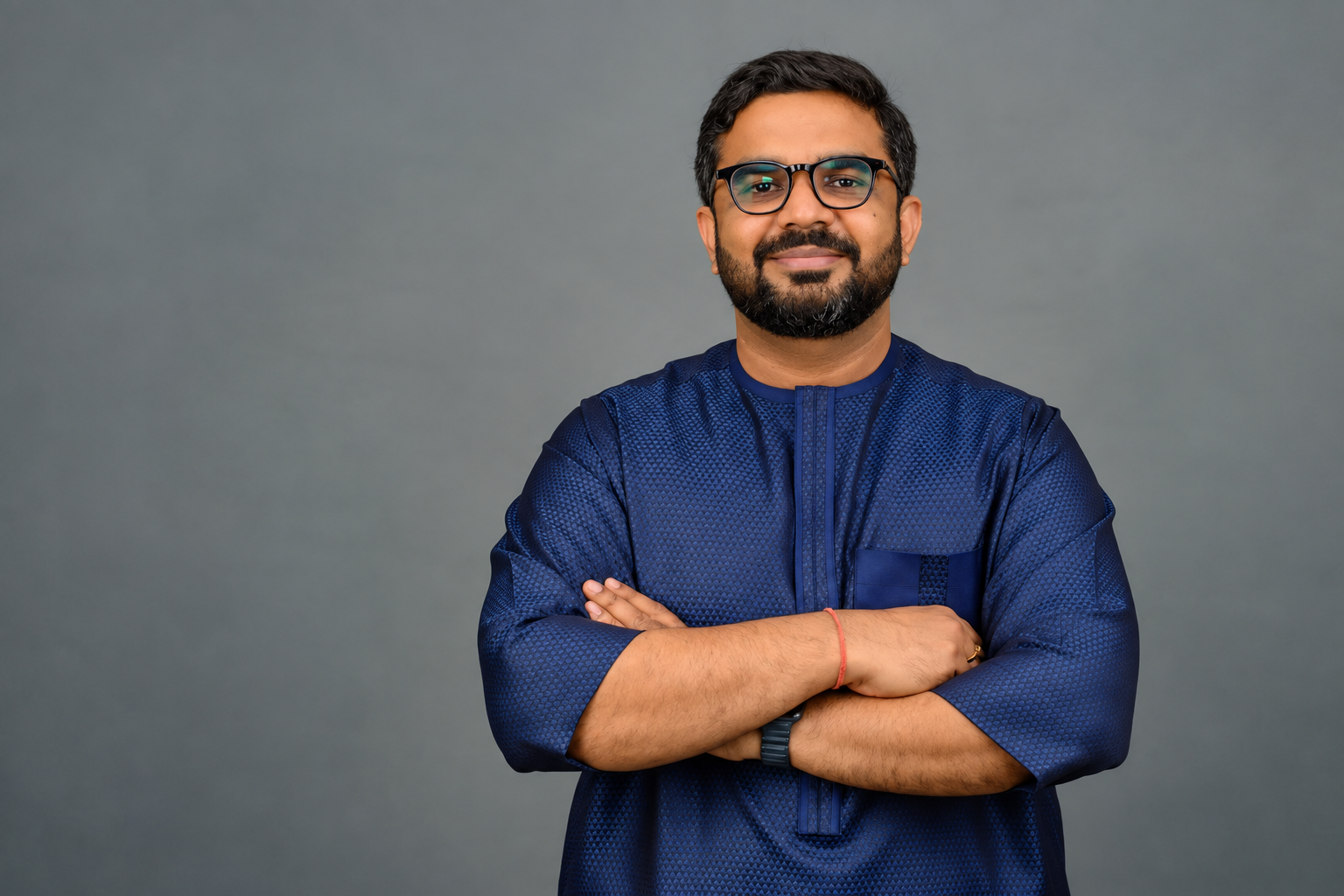
In Africa’s vast consumer economy, the journey of a product from manufacturer to the neighbourhood retailer is rarely as simple as it looks. Behind every carton of milk, bottle of beverage or packet of food on a shop shelf is a complex network of manufacturers, distributors, logistics providers, financiers and small retailers. For decades, much of this ecosystem has operated with limited access to technology, reliable data and affordable financing. It is this fragmentation that Deepankar Rustagi has set out to transform.
As the founder and Chief Executive Officer of OmniRetail, Rustagi is building a technology and embedded finance company designed to connect the different players powering commerce across West Africa. Founded in 2019 with a team of about 12 people, the company has grown to more than 400 employees and now serves over 140,000 retailers, with more than 150,000 stakeholders across its wider ecosystem.
OmniRetail generates approximately $220 million in annual revenue and was valued at $120 million in its last funding round. Rustagi expects the company to reach 500,000 customers within the next two years.
YOU CAN ALSO READ: How Kunle Afolayan is Turning Stories, Challenges and Ideas Into Enterprise
But the numbers only tell part of the story. For Rustagi, OmniRetail is ultimately about building an infrastructure that can become an essential part of how African trade works. His ambition is for the company to evolve beyond being seen simply as a technology business. “We don’t want them to see it as a company. We want them to see it as an ecosystem which is a native part of trade in Africa,” he says.
The idea emerged from Rustagi’s experience working with small and medium sized businesses and recognising the enormous gap between their economic importance and their access to digital tools. The fast moving consumer goods sector particularly caught his attention. Although FMCG represents a major part of economic activity, much of its distribution chain remained fragmented and largely offline. Manufacturers often lacked visibility into their distributors and retailers, while small businesses struggled to access inventory, financing, warehousing and efficient logistics.
OmniRetail was created to connect these pieces. Rather than building a traditional commerce company that owns warehouses and logistics fleets, Rustagi adopted an asset light model. The company works with existing distributors, warehouse operators and logistics providers, giving them technology, financing and digital tools to operate more efficiently. Its role is to connect the ecosystem rather than own every physical component within it.
That strategy initially attracted scepticism. Several competitors were already operating in the B2B commerce market, and many were pursuing asset heavy models. Investors questioned whether an asset light business could compete effectively in a sector where physical infrastructure was considered essential. Rustagi remained convinced that technology, data and sustainable unit economics would ultimately determine the winners.
Today, OmniRetail’s model connects manufacturers, distributors and retailers while integrating commerce with financial services. The company provides technology that enables manufacturers to list their products and connect with distributors, while distributors can access financing and digital tools to serve retailers. Smaller businesses can also access services designed to improve their operations and connect them to a wider commercial network.
Data has become one of the company’s most important assets. Through its connected platform, OmniRetail can see what businesses are buying, how frequently they purchase, pricing patterns and other information across the supply chain. This visibility is particularly valuable in financial services because it enables the company to make more informed lending decisions and develop products based on the actual behaviour of businesses.
For Rustagi, commerce and finance are therefore inseparable. A retailer that cannot access working capital may struggle to purchase inventory, while a distributor without adequate financing may be unable to serve its network. By connecting transactions, payments, financing and distribution, OmniRetail seeks to remove some of the barriers that prevent small businesses from growing.
The company has also strengthened its ecosystem through acquisitions. One of the most significant was its acquisition of Traction, a point of sale and merchant technology platform. The transaction, valued at approximately $7 million and completed through an equity swap, brought additional technology and capabilities into OmniRetail. Rustagi describes the acquisition as phenomenal and says the company is also exploring further acquisitions as it expands its ecosystem.
Physical infrastructure remains important, but OmniRetail approaches it differently. Through its hub model, local partners can operate warehouse facilities while OmniRetail provides financing and digital infrastructure. Manufacturers can supply products to the hubs, where inventory is stored closer to retailers and redistributed within surrounding communities. The company is also developing cold storage facilities, including solar powered hubs, giving smaller manufacturers access to infrastructure that would otherwise be difficult to afford.
The objective is to make distribution more efficient while reducing the cost and complexity of reaching the last mile. A small manufacturer may have a strong product but lack the resources to build warehouses, employ logistics fleets or establish relationships with thousands of retailers. OmniRetail’s proposition is to provide access to that ecosystem without requiring the manufacturer to own it.
Artificial intelligence is becoming another important part of this strategy. Rustagi sees AI primarily as a productivity tool rather than simply a mechanism for cutting jobs. While automation may reduce the need for people in repetitive functions, he expects the company’s workforce to continue growing as the customer base expands. The objective is to enable smaller teams to serve significantly more businesses through technology and automation.
This philosophy will be increasingly important as OmniRetail pursues its target of 500,000 customers. Scaling such an ecosystem requires more than technology. It requires trust, consistency and a deep understanding of the businesses using the platform. Rustagi believes long term relationships with customers, employees and investors have been central to the company’s growth. More than 15 members of his wider team have worked with him for more than a decade, including people who moved with him from previous ventures into OmniRetail.
His approach to investors reflects the same long term thinking. Rustagi says fundraising has often been more difficult than building the company itself. Early investors questioned the risks around the business model, but consistent execution, transparency and regular communication helped build confidence. He remains focused on creating value rather than simply pursuing valuation.
An initial public offering is part of his long term ambition, potentially within four or five years, while a strategic acquisition by a major financial services, FMCG or global commerce company is another possibility. Yet Rustagi says the ultimate measure of success is not the valuation attached to OmniRetail but the value created for the businesses that depend on its infrastructure.
His ambitions stretch towards 2035 and beyond. By then, he wants OmniRetail to be regarded as an integral part of African commerce, much like digital payment infrastructure has become essential to modern transactions. The vision is for businesses to rely on the platform without necessarily thinking about the technology behind it.
That ambition is closely connected to Rustagi’s relationship with Nigeria. He moved to the country with his family 34 years ago after his father took up an opportunity there. Over the years, Nigeria became more than a place where he built businesses. He developed a strong connection with its people, its scale and its potential. Despite the challenges associated with operating in the Nigerian market, he remains convinced that the country’s enormous consumer base and entrepreneurial energy present significant opportunities.
His advice to his younger self captures much of the philosophy behind his entrepreneurial journey. He would focus on adaptability, learning from people, developing strong people skills and understanding how to bring large groups together around a common vision. For Rustagi, leadership is not simply about having the right strategy. It is about building people, creating trust and continuously adapting as circumstances change.
YOU CAN ALSO READ: Keilah Bassey and the Business of Getting Hospitality Right
That philosophy is now reflected in OmniRetail’s evolution. What began as an attempt to digitise a fragmented distribution network has become a broader effort to connect commerce, finance, logistics, warehousing, payments and data into a single ecosystem.
Rustagi’s bet is ultimately on the future of African trade and on the millions of small businesses that power it. If OmniRetail succeeds in connecting those businesses to the products, capital, technology and markets they need, its greatest achievement may not be the size of its revenue or valuation. It may be the infrastructure it leaves behind.
By 2035 or 2036, if Rustagi’s vision becomes reality, OmniRetail may no longer be viewed simply as a technology company. It could become something far more fundamental: a digital backbone quietly connecting the movement of goods, money, data and opportunity across Africa.