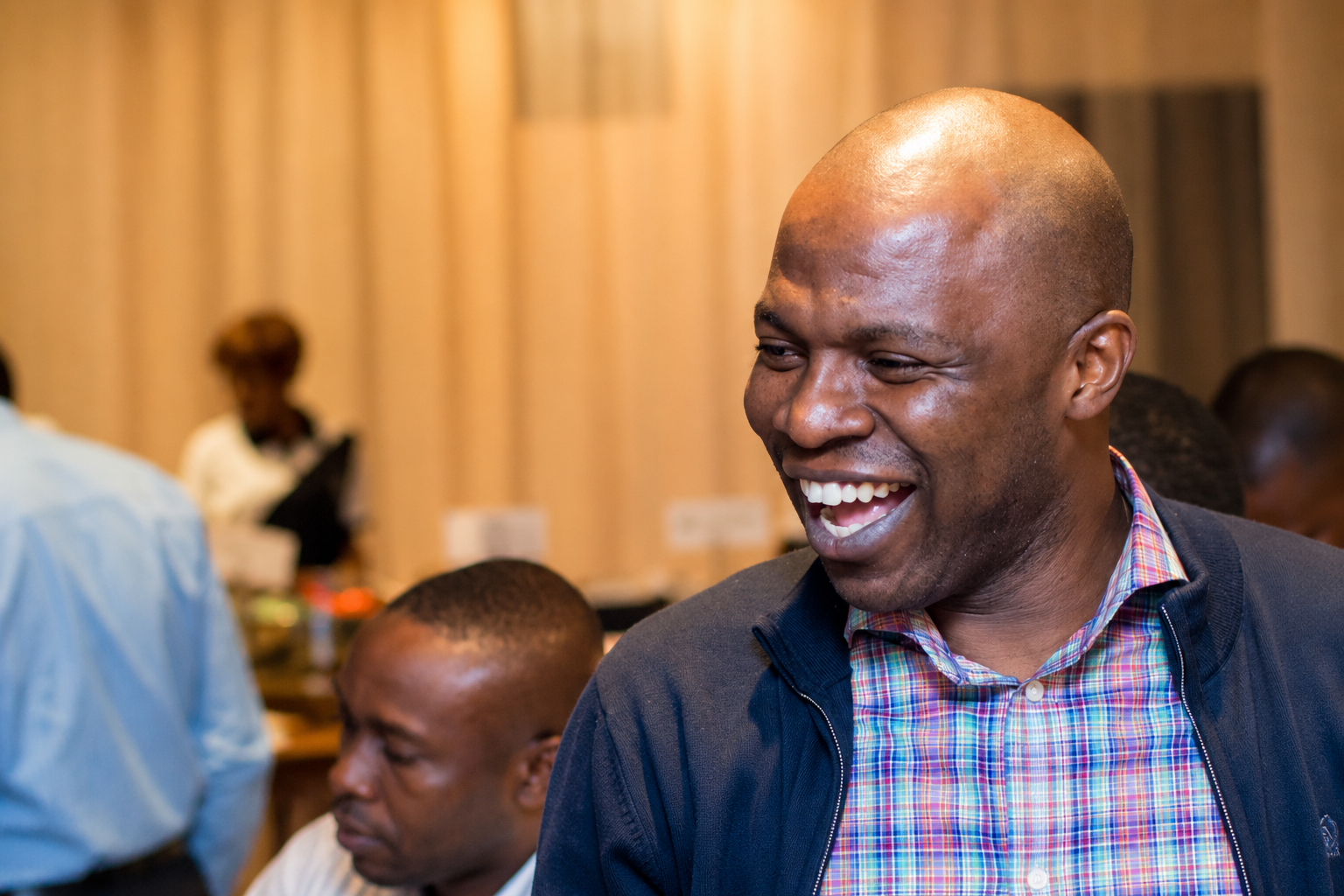
In an industry where margins are razor-thin and failure is often swift, the story of Allen Onyema stands out not just for its scale, but for its contradictions. As the founder and CEO of Air Peace, now widely regarded as West Africa’s largest privately owned airline, Onyema has built an aviation enterprise in what he describes as an “actively hostile” business environment, one defined as much by systemic constraints as by market opportunity.
But long before fleet expansions and international routes, the journey began with a far simpler, almost idealistic goal: job creation.
Driven by a deep concern over unemployment in Nigeria’s southeast, Onyema entered aviation with a belief that would later prove both motivating and misleading, that a single Boeing 737 could generate up to 1,000 direct jobs. It was a figure he now acknowledges as a myth, one that exposed his early naivety about the sector. Yet rather than deterring him, that realization became the catalyst for a far more ambitious pursuit.
“I knew nothing about aviation,” he admits candidly. “But I wanted to create opportunities for people who had none.”
What followed was not a smooth entrepreneurial ascent, but a relentless immersion into one of the world’s most unforgiving industries. Aviation, particularly in Nigeria, is not merely complex, it is structurally challenging. Onyema describes a landscape shaped by high operating costs, policy inconsistencies, regulatory bottlenecks, and infrastructural gaps that place local operators at a significant disadvantage compared to their global counterparts.
From the absence of Maintenance, Repair, and Overhaul facilities to the staggering costs of ferrying aircraft abroad for routine checks, the economics alone are daunting. But beyond these visible hurdles lies a more insidious layer, what Onyema characterizes as internal resistance and systemic sabotage.
“There are challenges that go beyond business,” he suggests, pointing to bureaucratic delays and institutional friction that can stall even the most well-intentioned initiatives. His long-delayed effort to establish a local maintenance facility, which he believes could save Nigeria billions, stands as a case in point.
Yet perhaps the most striking dimension of Onyema’s story is not operational or financial, it is deeply personal.
Despite building and leading an airline, Onyema openly acknowledges a profound fear of flying. It is a paradox that would seem almost untenable in any other context. For years, this phobia limited his mobility and cost him business opportunities. Even today, he admits the fear has not completely disappeared.
And yet, he persists.
“I still have it,” he says. “But I understand the system now. I trust what we’ve built.”
This tension between fear and leadership offers a rare glimpse into the psychological demands of entrepreneurship at scale. Onyema’s approach has been to confront uncertainty not by avoiding it, but by mastering it, studying aviation systems, understanding safety redundancies, and immersing himself in the technical realities of the industry he once knew nothing about.
Over time, that commitment has translated into tangible impact. Air Peace has grown from a domestic operator into a significant regional and international player, connecting multiple African destinations and entering long-haul markets. Along the way, it has also played a critical role in national moments, evacuating stranded Nigerians during global crises and contributing to emergency logistics during the COVID-19 pandemic.
Still, Onyema is clear-eyed about the cost of building such an enterprise. Aviation, he notes, is not a sector for the faint-hearted. It demands not only financial discipline and operational precision, but also resilience in the face of uncertainty, particularly in emerging markets where policy stability cannot always be assumed.
His experience also underscores a broader lesson for entrepreneurs operating in similar environments: success is rarely just about strategy. It is about endurance.
In navigating volatile markets, Onyema emphasizes the importance of discipline, financial, operational, and personal. The inflow of revenue, he cautions, can be deceptive in an industry where a single technical failure can wipe out millions. You must never mistake cash flow for profit, he notes, highlighting a principle that has underpinned Air Peace’s survival and growth.
Today, as global aviation recalibrates and Africa’s market potential continues to attract attention, Onyema’s story offers both inspiration and caution. It is a reminder that building at scale in emerging economies requires more than vision, it requires the capacity to withstand friction at every level.
From a misunderstood statistic about job creation to leading a multimillion-dollar aviation enterprise, Allen Onyema’s journey is not one of linear progress, but of persistence shaped by purpose. It is ultimately a story about confronting fear, challenging systems, and redefining what is possible, even when the odds suggest otherwise.