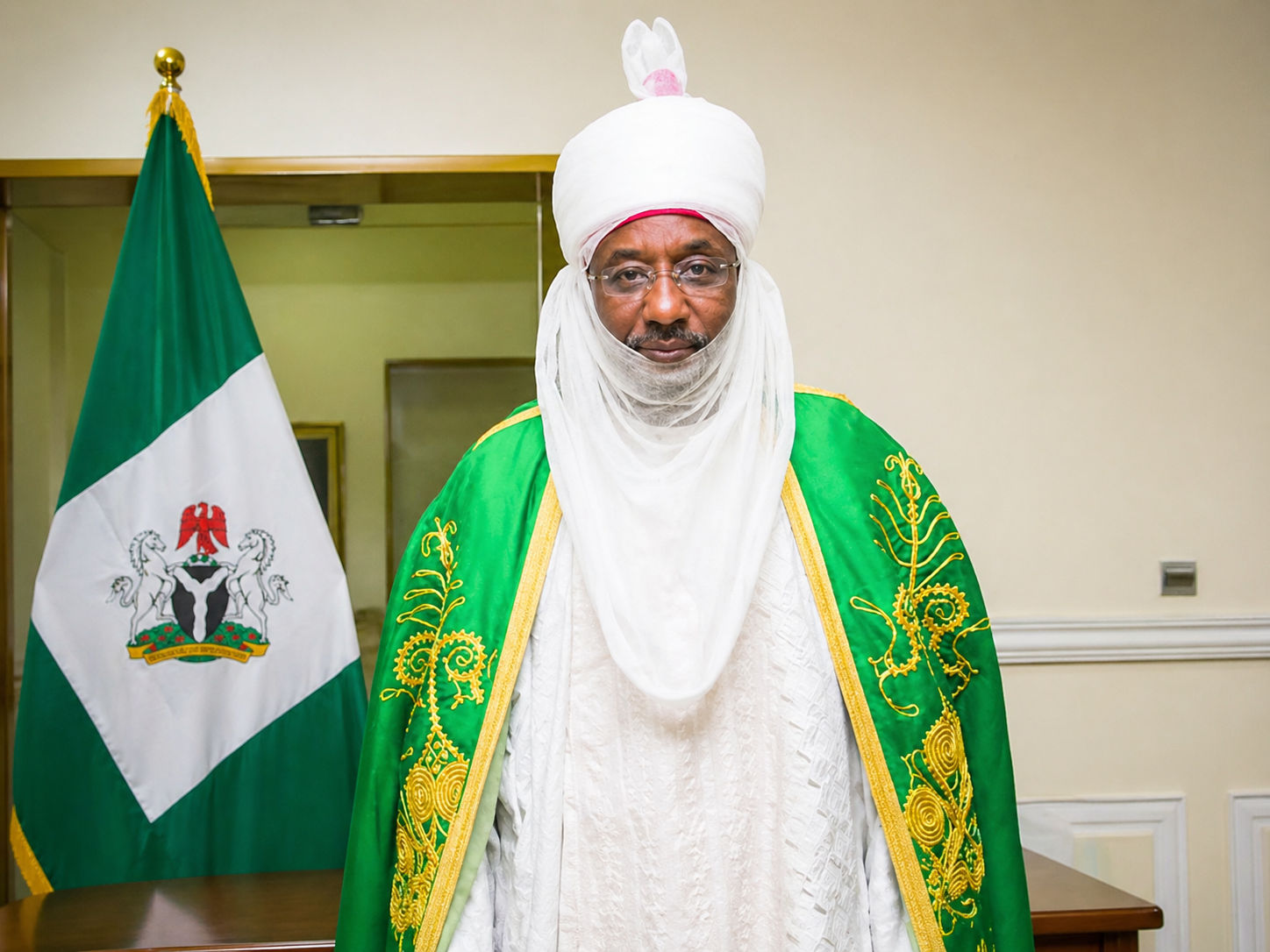
In a hall filled with dignitaries, intellectuals, and policy leaders, the presence of Emir of Kano, Sanusi Lamido Sanusi, carried more than ceremonial weight. It brought with it history, intellect, and a rare moral clarity that continues to shape Nigeria’s public discourse.
With his characteristic wit, the Emir began lightly, distancing himself from economic commentary. Yet, as he spoke, it became clear that his remarks would go far beyond protocol. What emerged was a layered reflection on leadership, governance, and the enduring tension between power and responsibility.
His tribute to Governor Alex Otti was both personal and revealing. He described years of professional rivalry in the banking sector, where he worked in risk management while Otti operated in corporate banking. Their constant clashes, he noted, were not destructive but productive, the kind that builds resilient institutions by balancing ambition with caution. It was an insight that quietly mirrored his broader view of governance.
Sanusi’s message soon deepened into a powerful reflection on public service. He spoke with conviction about the purpose of leadership, insisting that public office is not a pathway to wealth but a privilege entrusted to a few for a limited time. In a political culture often driven by personal gain, his words stood as a firm reminder that service is about impact, legacy, and responsibility.
He pointed to visible transformation as the true measure of leadership. Roads, infrastructure, energy, and industry, he suggested, are what people remember long after power has changed hands. Wealth may exist, but it is not what defines a leader’s legacy. What endures is the difference made in the lives of citizens.
Beyond individual praise, the Emir turned his attention to Nigeria itself. He argued that the country’s greatest challenge is not a lack of education or expertise. Leaders are not short of academic credentials. The real gap, he said, lies in character, discipline, and the willingness to act in the public interest.
His economic reflections were grounded in clarity and realism. Many of Nigeria’s challenges, from fuel subsidies to monetary excesses, were not unforeseen. They were predictable outcomes of decisions made over time. Economics, in his view, is often less about complexity and more about common sense. The real issue is not ignorance but the failure to act on what is already known.
Sanusi also addressed a culture of silence that weakens accountability. He observed that too many people speak only after leaders have left office, avoiding difficult truths when it matters most. Real change, he suggested, requires the courage to speak openly in the present, not in hindsight.
While acknowledging the necessity of reforms such as subsidy removal and exchange rate liberalisation, he emphasised that timing and execution are critical. Reforms introduced without proper structure or coordination can create instability rather than progress. For him, policy decisions must be deliberate, disciplined, and aligned with broader economic realities.
At the core of his message was a defining question about governance. What is the character of the state? Is it focused on development and the welfare of its people, or is it designed for extraction and personal gain? The answer to this question, he implied, determines the direction of every policy and the future of the nation itself.
Despite his critiques, Sanusi expressed cautious optimism. Across Nigeria, he noted, there are leaders delivering measurable results, many shaped by professional backgrounds that emphasise discipline, accountability, and performance. This, he suggested, offers a glimpse of what is possible when competence meets opportunity.
In Muhammadu Sanusi II, Nigeria encounters a voice that blends intellect with integrity, authority with reflection. His message is clear and enduring. Leadership is not defined by power or position but by legacy, and legacy is ultimately measured by the impact left behind.