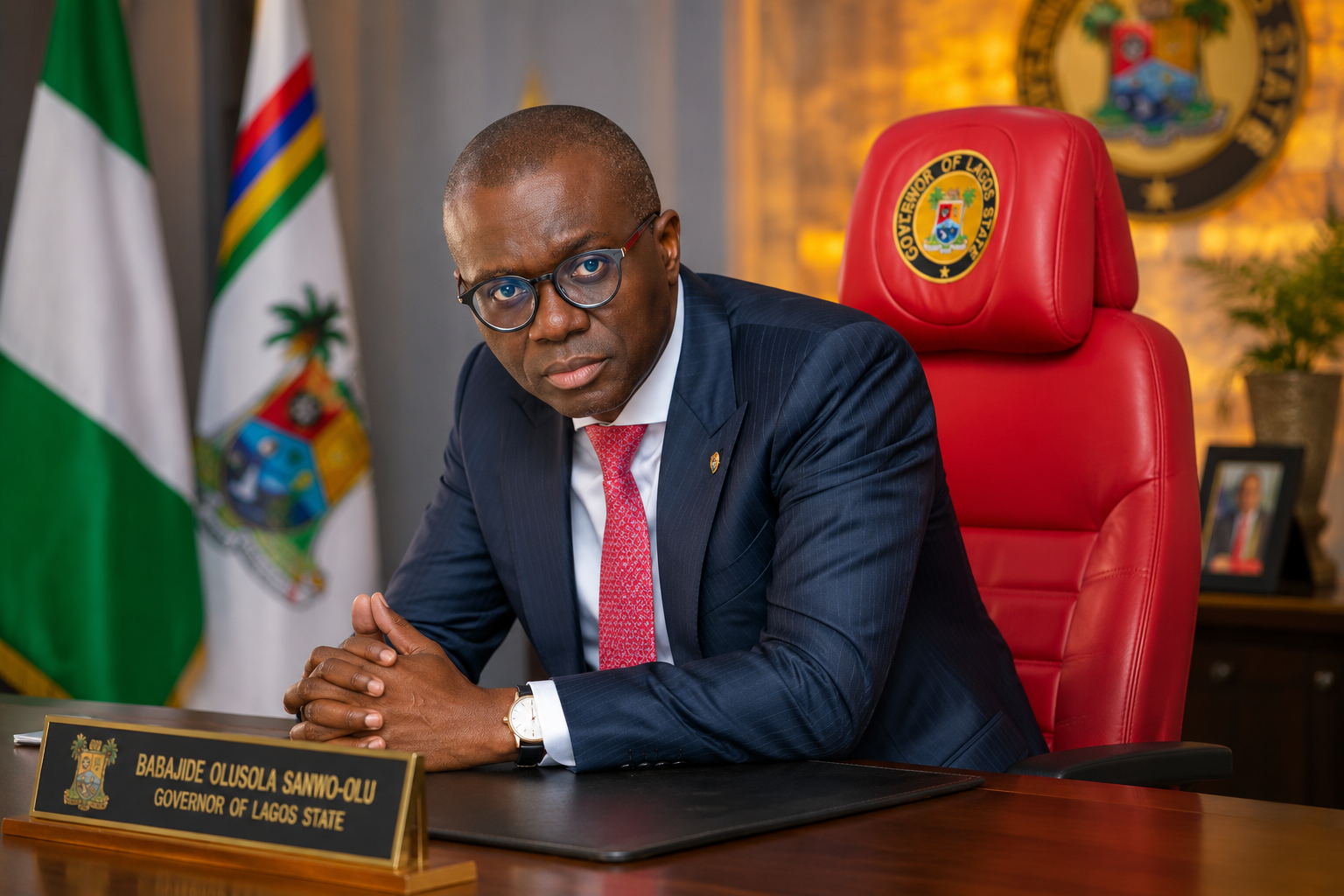
At the third edition of the Lagos International Investment Forum, INVEST 3.0, Governor Babajide Sanwo-Olu delivered a sweeping address that framed Lagos not merely as a commercial hub, but as a strategic gateway to Africa’s rapidly expanding economic frontier.
Speaking before a high-level audience that included Nigeria’s Vice President Kashim Shettima, several state governors, global investors, development finance institutions, and representatives of the Commonwealth business ecosystem, the governor underscored Lagos’ evolving role as a continental entry point for trade, capital, and innovation.
The forum, delivered in partnership with the Commonwealth Enterprise and Investment Council, has grown into one of Africa’s most prominent investment platforms, designed to connect subnational economies with global financiers and project developers.
Sanwo-Olu positioned Lagos as a city undergoing deliberate structural transformation, driven by infrastructure scale-up, regulatory modernization, and private-sector-led expansion.
YOU CAN ALSO READ: Taiwo Oyedele and the Making of Nigeria’s Economic Renaissance
He highlighted Lagos’ status as Africa’s largest subnational economy, with a population exceeding 20 million and a rapidly expanding GDP trajectory approaching the $300 billion mark. He also emphasized consistent growth in internally generated revenue and sustained economic expansion above global benchmarks.
According to him, Lagos is not only consolidating its economic dominance but actively building the institutional and physical infrastructure required to compete globally.
He pointed to major transport and logistics investments reshaping urban mobility, including the operationalization of the Blue Line and Red Line rail systems, with the Green Line underway in collaboration with the federal government.
Water transport, road networks, and logistics corridors were also highlighted as key enablers of productivity and urban efficiency.
On industrial expansion, he referenced the operational growth of major private-sector investments such as large-scale refinery and petrochemical projects, alongside emerging food systems infrastructure designed to strengthen food security and reduce supply chain vulnerabilities.
He also noted the development of a deep-sea port, which has already reached capacity expansion discussions due to accelerated usage, an indicator of Lagos’ rising trade intensity.
Sanwo-Olu emphasized Lagos’ rapid emergence as a digital economy hub, citing the presence of multiple submarine cables, new hyperscale data infrastructure, and a growing ecosystem of technology firms.
He referenced Nigerian-born and Lagos-based unicorns and high-growth companies contributing to fintech, logistics, and software innovation, positioning the city as a continental leader in digital entrepreneurship.
The governor further outlined ambitions for a globally competitive financial ecosystem anchored by the proposed Lagos International Financial Centre (LIFC), a structured financial district designed to integrate global capital markets with African investment opportunities.
Beyond economics, he highlighted Lagos’ increasing global cultural and environmental visibility.
He referenced international sporting and creative events hosted in the state, including global electric racing championships and upcoming continental trade and creative festivals, reinforcing Lagos’ ambition to become not only an economic hub but also a cultural and innovation capital.
Sanwo-Olu acknowledged the role of development finance institutions, private equity firms, and multilateral investors in de-risking investments across Lagos’ infrastructure and industrial landscape.
He emphasized that Lagos is deliberately creating a policy environment that supports capital inflow, structured financing, and long-term partnership models across sectors such as energy, healthcare, logistics, digital infrastructure, and urban development.
A recurring emphasis in the governor’s remarks was execution discipline. He stressed that success would not be measured by speeches, summits, or commitments alone, but by projects that reach financial close and translate into tangible economic and social outcomes.
Investment commitments, he noted, must be tracked through implementation cycles that deliver jobs, improve livelihoods, and strengthen competitiveness across Lagos and other Nigerian subnational economies.
YOU CAN ALSO READ: From Farms to Markets: How Insecurity Is Reshaping Nigeria’s Economy
Sanwo-Olu also acknowledged the support of President Bola Ahmed Tinubu, crediting long-term institutional reforms and subnational empowerment frameworks that have shaped Lagos’ developmental trajectory.
He described collaboration between federal and state governments as essential to sustaining infrastructure expansion, regulatory reform, and investor confidence.
Closing his address, the governor extended an invitation to global investors, financial institutions, and development partners to engage deeply with Lagos over the course of the summit’s deal rooms, technical sessions, and site engagements.
He emphasized that Lagos offers not just opportunities, but a structured pipeline for scalable investments backed by a rapidly maturing regulatory and financial ecosystem.