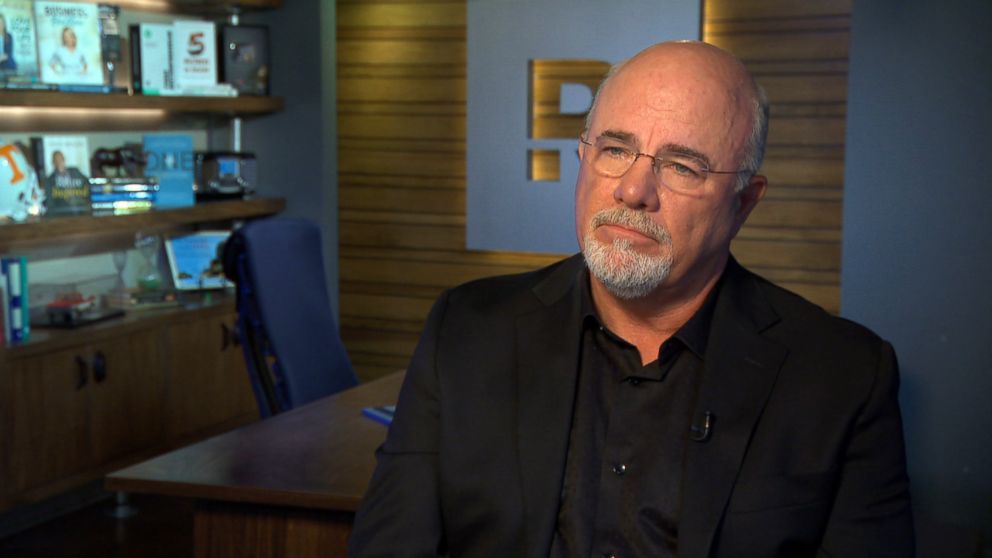
Today, Ramsey Solutions employs more than 1,000 people, reaches an audience of over 20 million through radio, podcasts and digital platforms, and has become one of the most influential personal finance brands in the United States. But long before the bestselling books, sold-out events and national media presence, Dave Ramsey was simply a man trying to rebuild his life after losing almost everything.
The story begins in one of the darkest periods of his life. After experiencing financial collapse and bankruptcy, Ramsey found himself searching for answers. He immersed himself in studying biblical principles about money while trying to understand not only what had gone wrong in his own life but how he could help others avoid the same mistakes. At the time, he was no longer able to build a career in real estate, the field that had previously made him successful. His future was uncertain, his finances were fragile and his confidence had been shaken.
YOU CAN ALSO READ: From Bariga Bus Stops to Boardrooms: The Rise of Dr. Adeniyi Adeyemi
Yet amid the uncertainty, an idea began to emerge. Believing that his painful experiences could help others navigate financial hardship, Ramsey placed a small newspaper advertisement with a simple promise: “We Stop Foreclosures.” The concept was straightforward. People facing financial crisis would come to him for guidance. He would help them create budgets, negotiate with creditors and develop plans to save their homes.
The mission was noble. The business was not.
Within a few months, the numbers simply did not work. His clients were struggling financially themselves, making it difficult to sustain a business model dependent on people who were already in crisis. Revenue failed to cover expenses, losses mounted and eventually Ramsey was forced to shut the operation down.
The closure felt devastating. Having recently survived bankruptcy, another failed venture felt like confirmation that he had once again made the wrong choice. The disappointment was compounded by the fact that he believed he had been called to pursue the work. Instead of success, he found himself loading office furniture into a truck and moving everything back home.
It was a humbling moment. Many entrepreneurs experience one major setback. Ramsey had endured two in rapid succession.
Faced with the need to provide for his family, he returned to what he knew best: real estate. Gradually, his income recovered. Within a year he was once again earning six figures, a substantial achievement at the time. Yet something about the original mission refused to disappear. The dream remained alive beneath the surface.
While rebuilding his real estate career, Ramsey continued offering financial coaching, speaking at churches and helping people whenever opportunities arose. He wrote a small book and carried copies in the trunk of his car. He appeared on local radio stations. He taught classes wherever people would listen.
There was no grand strategy. There was only persistence. Eighteen months after closing his first business, Ramsey and his wife Sharon sat down to make another life-changing decision. Could they take another chance?
This time, they approached the opportunity differently. The lessons from previous failures had left a permanent mark. Instead of signing long leases or making expensive commitments, Ramsey chose caution. He rented a modest 800-square-foot office in the basement of an office complex. The space had no windows and came with a month-to-month lease that could be terminated if things went wrong.
There would be no unnecessary risks, no expensive equipment and no financial decisions that could destroy the business if they failed. Together, they projected what the first year might look like. Their estimate was simple: if everything went according to plan, the business might generate around $65,000 in revenue. It would be roughly half of what Ramsey earned in real estate. Still, they decided to proceed.
At the end of that first year, the company generated $64,400, almost exactly what they had forecast. More importantly, it survived. That survival became the foundation for everything that followed.
Unlike many entrepreneurs who chase growth at any cost, Ramsey adopted a philosophy that would shape the culture of the business for decades. Every dollar mattered. Every purchase required scrutiny. Every commitment had to be justified.
The company operated with extreme financial discipline. Office furniture came from bankruptcy auctions. Equipment was purchased second-hand. Expansion happened only when absolutely necessary. For years, employees worked with outdated computers and basic equipment because Ramsey refused to spend money on upgrades that did not directly contribute to growth.
The mindset was simple: profitability first. Growth would come later. That discipline proved invaluable. As Financial Peace University gained popularity and Ramsey’s audience expanded, the business began to grow steadily. New employees joined. Additional office space was added. Radio syndication expanded. Books sold in increasing numbers.
The company never exploded overnight. Instead, it compounded year after year. As the organization matured, Ramsey faced a new challenge: teaching others how to lead. He realized that many employees brought different assumptions about business, leadership and decision-making. To create consistency, he began teaching internal classes on how he believed a company should operate.
Those lessons covered everything from marketing and money management to leadership and culture. What started as an internal training program quickly attracted outsiders. Employees invited spouses. Friends invited business owners. Pastors and entrepreneurs began attending. Soon, more people from outside the company were attending than employees themselves.
That unexpected demand eventually led to the creation of EntreLeadership, one of Ramsey’s most influential business platforms. The idea reflected his belief that successful businesses require both entrepreneurial thinking and disciplined leadership. Too much entrepreneurship creates chaos. Too much management creates stagnation. The balance between the two became the foundation of the EntreLeadership philosophy.
Today, Ramsey’s influence extends far beyond personal finance. Through books, coaching, conferences and leadership training, he has become a trusted voice for entrepreneurs seeking practical advice grounded in real-world experience.
What distinguishes Ramsey’s perspective is that it was forged through trial and error rather than theory. He often describes himself and his team as practitioners rather than academics. The lessons they teach were not developed in classrooms or think tanks. They were learned through missed opportunities, costly mistakes, difficult payroll decisions and years of navigating uncertainty.
Every failure left a scar. Every lesson carried a price. Yet those experiences ultimately became the company’s greatest competitive advantage. Looking back, Ramsey believes the true reward of entrepreneurship extends beyond financial success. For him, the greatest satisfaction comes from helping small business owners succeed. He views entrepreneurs as the backbone of the American economy, people who create jobs, support families and strengthen communities. Helping them build stronger businesses creates a ripple effect that impacts countless lives.
YOU CAN ALSO READ: The Man Behind the Wings: Allen Onyema Reflects on 10 Years of Air Peace
It is a mission that continues to motivate him decades after that first newspaper advertisement. Ramsey remains realistic about the entrepreneurial journey. He does not romanticize it. He does not promise easy wins. Instead, he describes business ownership as one of the most challenging paths a person can choose. There will always be new problems to solve, new obstacles to overcome and new risks to navigate.
Success requires resilience. It requires patience. It requires the willingness to stand back up every time failure knocks you down. For Dave Ramsey, that may be the most important lesson of all.
The man who once loaded the remnants of a failed business into a truck now leads a company worth hundreds of millions of dollars. The entrepreneur who lost everything built an enterprise that has helped millions improve their financial lives.
His story is proof that failure does not define a business owner. What matters is the decision to keep going. And sometimes, the most successful companies are built not by people who never fail, but by people who refuse to let failure have the final word.