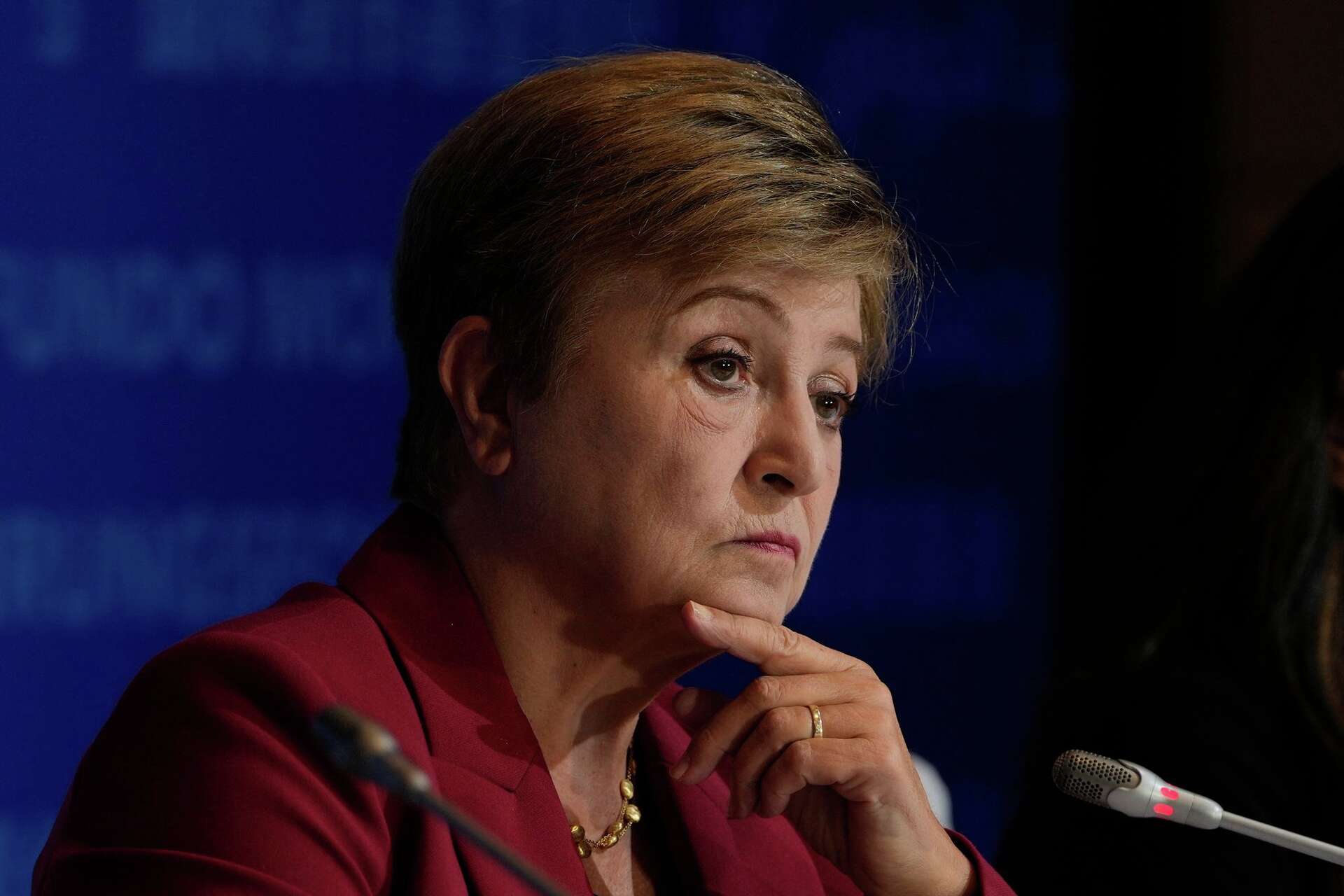
At the International Monetary Fund-World Bank Spring Meetings, where finance ministers, central bankers, and policymakers converge to take the pulse of the global economy, this year’s unveiling of the World Economic Outlook carried an unmistakable tone of urgency.
Behind the formal setting of the press briefing was a far more unsettled reality. A global economy once praised for its resilience is now being tested by a fresh wave of geopolitical shocks, fragile financial conditions, and the lingering aftereffects of past crises. What emerged was not just a forecast but a warning.
The International Monetary Fund’s latest assessment lays bare a world increasingly vulnerable to disruption. At the center of its concern is a familiar but potent force, a negative supply shock driven by surging commodity and energy prices. The implications are immediate and far reaching, including rising production costs, strained supply chains, and households grappling with diminishing purchasing power.
But the real danger, the IMF suggests, lies beneath the surface.
As businesses attempt to recover margins and workers push for higher wages to keep pace with inflation, economies risk slipping into wage price spirals, self reinforcing cycles that are notoriously difficult to contain. In countries where inflation expectations are already fragile, the threat is even more acute, raising the possibility of a prolonged inflationary environment.
The Outlook frames the future through three increasingly severe scenarios, each offering a glimpse into how quickly conditions could deteriorate.
In the baseline projection, the IMF assumes a contained conflict and a moderate rise in energy prices. Even here, the outlook is sobering. Global growth slows to 3.1 percent, while inflation climbs to 4.4 percent. It is a scenario of resilience under strain where stability holds, but only just.
The adverse scenario paints a more unsettling picture. Prolonged disruptions push energy prices higher, tighten financial conditions, and shake investor confidence. Growth slips to 2.5 percent, and inflation accelerates further. The global economy, in this case, begins to lose momentum in a more pronounced way.
Then comes the severe scenario, an environment of extended supply disruptions, volatile markets, and deepening macroeconomic instability. Growth stagnates at 2 percent over multiple years, while inflation breaches 6 percent, creating a difficult landscape for both policymakers and households. It is here that the risks of policy missteps, financial stress, and social pressures begin to converge.
What makes this moment particularly precarious is its uneven impact.
Low income, energy importing countries already constrained by limited fiscal space and structural vulnerabilities stand at the frontline of the crisis. For them, rising energy and food costs are not abstract economic variables but immediate threats to stability and livelihoods. Meanwhile, countries in the Gulf region, despite their role as energy exporters, face direct exposure to the geopolitical tensions driving the shock.
The parallels to the 2022 commodity price surge are unavoidable. Then, central banks achieved what many considered improbable by bringing down inflation without triggering a global recession. But the IMF cautions against assuming history will repeat itself.
Today’s conditions are markedly different. Inflation pressures, while still present, are no longer fueled by the same post pandemic demand surge. Instead, the structure of the global economy has shifted. Supply constraints have eased, but the trade off between inflation and growth has become more pronounced. The IMF notes that the global supply curve has flattened, meaning that efforts to reduce inflation are now likely to come at a higher cost, particularly in terms of employment.
Equally concerning is the psychological imprint left by recent inflation spikes. Households and businesses, having experienced sharp increases in the cost of living, may now respond more quickly and more aggressively to new price shocks. Inflation expectations, once firmly anchored, are at risk of becoming more volatile.
In this environment, the room for policy error is shrinking.
Central banks, the IMF advises, must tread carefully. While markets are already anticipating tighter monetary policy, the recommendation is not for immediate action, but for vigilance. As long as inflation expectations remain stable, policymakers can afford to observe and assess. However, the threshold for intervention is clear. Any sign of persistent inflation or emerging wage price dynamics must be met with decisive action.
Fiscal authorities face an equally complex challenge. Unlike previous crises, where expansive government spending provided a cushion, today’s policymakers operate under the weight of elevated public debt. The era of broad based subsidies and sweeping interventions is giving way to a more constrained reality.
The IMF is explicit in its guidance. Support must be targeted, temporary, and disciplined. Broad measures such as price caps and subsidies, while politically attractive, often distort markets, strain public finances, and prove difficult to reverse. The priority now is precision, protecting the most vulnerable without exacerbating inflationary pressures or undermining long term fiscal sustainability.
Yet, amid the immediate risks, the Outlook also gestures toward longer term transformations.
The current crisis, it suggests, could accelerate the global shift toward renewable energy, reducing dependence on volatile fossil fuel markets and strengthening resilience against future shocks. At the same time, rapid advances in artificial intelligence promise to reshape productivity and economic growth, even as they introduce new challenges for labor markets and social stability.
Overlaying all of this is a deeper geopolitical shift. The IMF points to a world increasingly defined by fragmentation, where trade barriers, shifting alliances, and regional conflicts threaten to erode decades of economic integration. And yet, there is a countercurrent.
A more multipolar global economy, the report argues, does not have to mean a fractured one. Countries are already forging new trade relationships, diversifying partnerships, and adapting to a changing geopolitical landscape. The question is whether these shifts will reinforce cooperation or accelerate division.
Ultimately, the message from the Spring Meetings is both stark and nuanced.
The global economy is not in crisis, but it is under pressure. The path forward remains uncertain, shaped by forces that extend beyond economics into geopolitics, technology, and climate. The difference between resilience and regression will hinge on the choices made now by policymakers, institutions, and nations alike.
With coordinated action, a de escalation of conflict, and the stabilization of critical energy routes such as the Strait of Hormuz, the worst outcomes can still be avoided.
But the margin for error is narrowing.
And the world is watching.