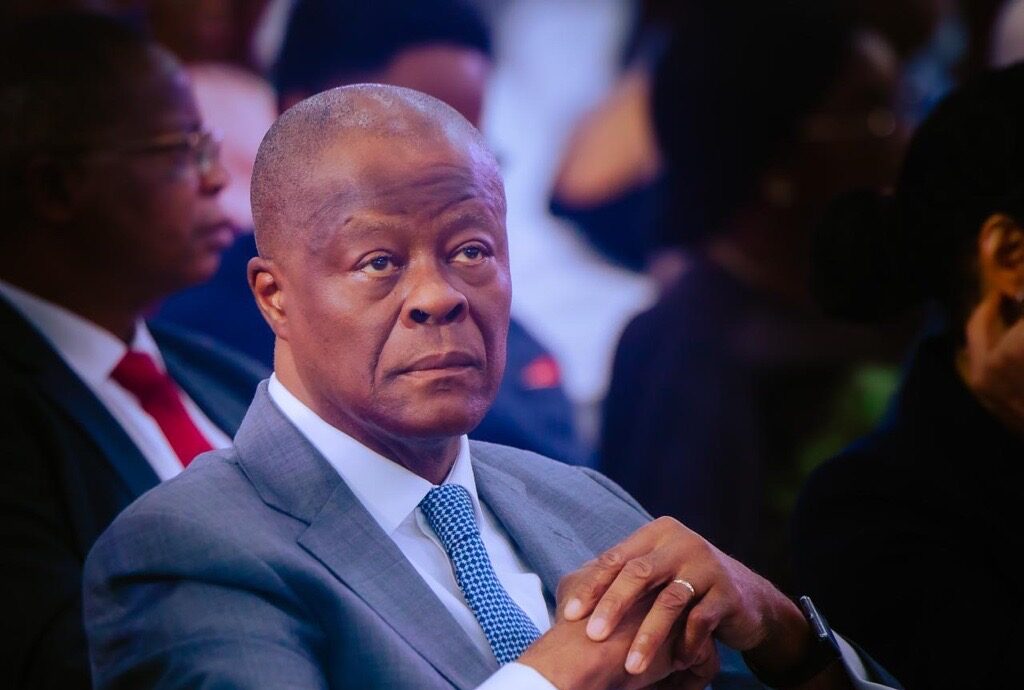
At a moment when the global economy is once again being tested by rising conflict, inflation, and energy shocks, Nigeria’s Minister of Finance and Coordinating Minister of the Economy delivered a firm message amid growing global uncertainty, Wale Edun is making one thing clear: Nigeria will not retreat from reform.
Speaking at the International Monetary Fund-World Bank Spring Meetings in Washington, DC, Edun said that country will not reverse its hard won economic reforms by returning to fuel subsidies, even as the world braces for a potential economic shock.
The backdrop to his position is a rapidly shifting global landscape. The latest World Economic Outlook released by the International Monetary Fund paints a sobering picture of an economy under pressure from escalating geopolitical tensions, particularly the intensifying conflict involving the United States, Israel, and Iran. In its most severe scenario, the IMF warns that the shock could tip the global economy into recession.
Global growth is now projected to slow to 3.1 percent in 2026, down from earlier forecasts, while inflation is expected to rise to 4.4 percent. In more adverse conditions, growth could fall to 2.5 percent, with inflation climbing above 5 percent. A prolonged disruption in energy markets could push growth as low as 2 percent, with inflation exceeding 6 percent, signaling a deeply unstable macroeconomic environment.
For Nigeria, the implications are immediate and complex.
The IMF has revised the country’s growth outlook downward to 4.1 percent for 2026, reflecting the strain of higher fuel costs, rising fertilizer prices, and increased shipping expenses, all of which are expected to weigh heavily on non oil sectors. While higher crude oil prices offer some fiscal relief, as Nigeria remains a net oil exporter, the benefits are partially offset by inflationary pressures that ripple through the broader economy.
Against this backdrop, Edun’s stance underscores a critical policy direction.
Rather than reverting to costly and broad based subsidies, he emphasized the need for targeted and temporary support aimed at protecting the most vulnerable segments of society. His position reflects a broader shift among emerging economies facing similar pressures, where the challenge is balancing social protection with fiscal discipline.
Speaking in his capacity within the G24, a coalition of developing nations, Edun highlighted the dual nature of the current energy shock. For oil producing countries like Nigeria, higher global prices may boost government revenues. Yet, those same increases drive up domestic costs, from transportation to food production, eroding real incomes and amplifying inflation.
It is this delicate balance that now defines Nigeria’s economic strategy.
Edun warned that returning to generalized subsidies would risk undermining the structural reforms initiated in 2023 under President Bola Tinubu, including the removal of fuel subsidies and foreign exchange distortions. Those reforms, while difficult in the short term, were designed to stabilize the economy, restore investor confidence, and create a more sustainable fiscal path.
Reversing course now, he suggested, would not only be costly but counterproductive.
Instead, he called for resilience and precision in policymaking. Governments, he argued, must deploy limited fiscal resources carefully, ensuring that support reaches those most affected by the cost of living crisis without distorting markets or fueling further inflation.
The broader message from the Spring Meetings reinforces this approach.
Across regions, the IMF’s outlook tells a consistent story of rising inflation, slowing growth, and tightening financial conditions. Emerging markets, including those in sub Saharan Africa, face an increasingly constrained environment, with reduced fiscal space, higher borrowing costs, and declining external support.
Yet, within these constraints lies an opportunity.
Higher oil prices, if managed prudently, could provide Nigeria with additional fiscal buffers. The key, as emphasized by policymakers and IMF officials alike, is to channel these gains into targeted interventions, strengthen macroeconomic stability, and build resilience against future shocks.
As the global economy navigates what could become another defining moment, Edun’s position reflects a broader shift among reform minded economies. The era of blanket subsidies is giving way to more disciplined, targeted approaches, even in the face of political and social pressures.
The stakes, however, remain high.
With geopolitical tensions intensifying and energy markets under strain, the margin for policy error is narrowing. For Nigeria and other developing economies, the path forward will require not only careful economic management but also sustained commitment to reform.
In Washington, amid the urgency of global discussions, one message stood out clearly.
Nigeria is choosing discipline over retreat, and targeted resilience over short term relief.