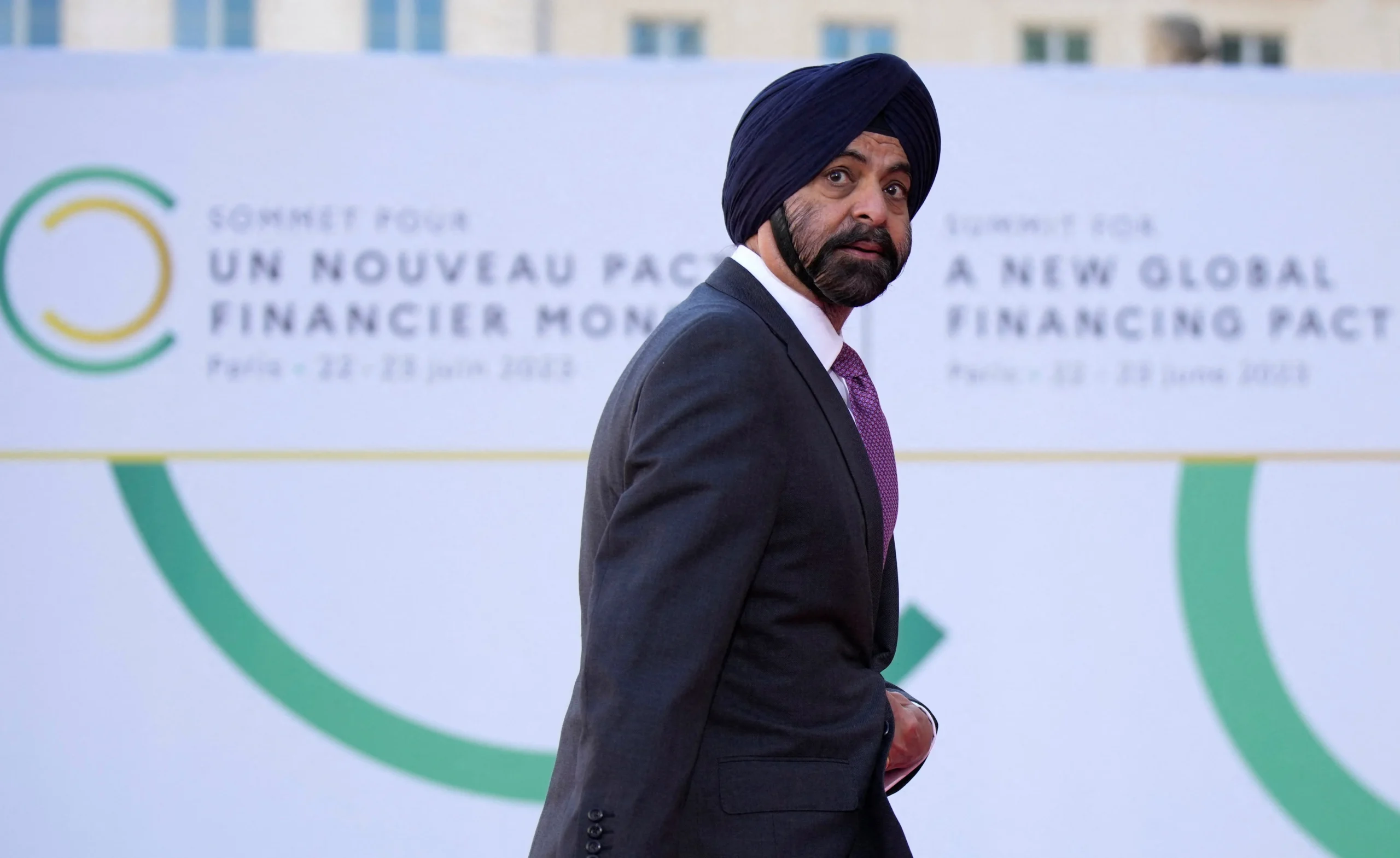
In boardrooms around the world, strategy often dominates leadership conversations. Companies obsess over growth targets, market expansion, and competitive advantage. Yet for Ajay Banga, one factor matters more than all of them combined: culture. Drawing from his experience leading Mastercard and now the World Bank Group, Banga argued that despite operating in vastly different environments, one truth remains constant: culture determines whether organizations succeed or fail.
Having spent over a decade leading Mastercard before taking charge of one of the world’s most complex global institutions, Banga has experienced leadership across both private and public sectors. One operates on speed, competition, and shareholder expectations; the other functions within layers of governments, stakeholders, and institutional processes. Yet he believes culture remains the glue that binds organizations together and shapes how people make decisions, take risks, and work toward a common mission.
YOU CAN ALSO READ: BUA Chairman Pushes New Growth Agenda for Africa
For Banga, culture is not a slogan, a value statement, or words displayed on office walls. It is not what leaders say at town hall meetings. Culture, he argued, is reflected in what organizations measure, reward, tolerate, and most importantly, what people do when leaders are absent. That, he suggested, is what turns culture into a force multiplier.
At the center of his leadership philosophy is a concept he calls the “Decency Quotient” or DQ. More than intelligence or emotional awareness, Banga believes leadership today requires fairness, honesty, consistency, and respect. Decency, he explained, is not about being nice. It is about telling difficult truths, providing clear feedback, and creating environments where people feel safe enough to challenge ideas and contribute openly.
Fear may influence behavior temporarily, but it rarely builds ownership or initiative. Trust, on the other hand, creates speed. When people trust systems and leadership, organizations move faster and make better decisions. Leadership, Banga argued, should feel less like pressure and more like support; not a finger pointed at employees, but a hand on their back pushing them forward.
He also identified confusion as one of the biggest threats to organizational transformation. Many leaders assume resistance is the problem, but Banga suggested that unclear priorities often create greater obstacles. Complex organizations frequently become trapped by multiple agendas and competing interpretations of success.
His answer is simplicity. During his years at Mastercard, Banga unified teams around a simple mission: “Kill cash.” The phrase became a clear strategic direction that connected technology, inclusion, payments, analytics, and digital innovation under one purpose. At the World Bank, he has applied similar thinking to poverty reduction, arguing that lasting progress begins with jobs because jobs provide not just income, but dignity, hope, and belief in the future.
Banga also stressed the importance of measuring what matters. Upon arriving at the World Bank, he inherited a scorecard with 155 performance indicators. Such complexity, he argued, created accountability for nothing. Over time, those measurements were simplified and made more transparent, reinforcing his belief that organizations function better when priorities are fewer, clearer, and visible.
YOU CAN ALSO READ: How Jude Anele is Positioning NOVA Bank for Nigeria’s Banking Future
While transformation in global institutions differs from change in corporations, Banga maintained that the principles remain the same. Whether in the private or public sector, leaders must align systems, simplify priorities, reward desired behaviors, and communicate direction repeatedly. Leaders may tire of repeating themselves, he noted, but organizations rarely tire of hearing clarity.
Ultimately, Banga’s reflections went beyond management philosophy. Leadership, he argued, is neither privilege nor entitlement; it is responsibility. Once entrusted with people, a leader’s role changes permanently. Success is no longer measured solely by outcomes but by whether leaders create environments where people continue moving forward even when leadership is absent. In the end, strategy may define ambition, but culture determines whether ambition succeeds.