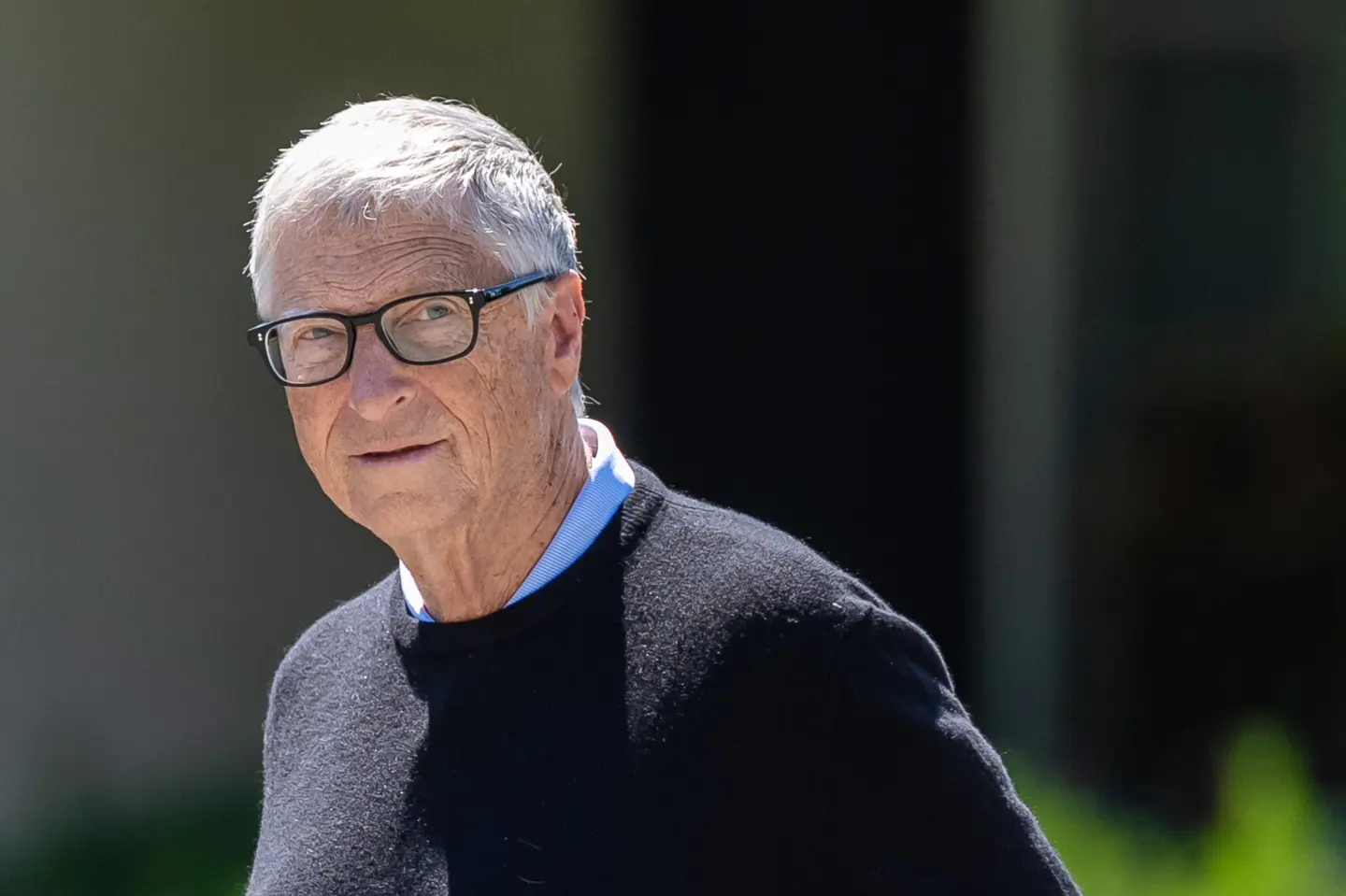
The world’s greatest investors rarely succeed by predicting the future perfectly. Instead, they survive because they evolve faster than the markets around them. Few embody that philosophy more completely than Dan Loeb, the billionaire founder and CEO of Third Point, whose career has become a remarkable study in reinvention, disciplined capital allocation and intellectual curiosity.
From his early years as a deep-value investor specialising in distressed debt and event-driven opportunities to building one of Wall Street’s most respected multi-strategy investment firms, Loeb has consistently refused to be confined by conventional investing labels. Markets change, technologies evolve, and industries rise and fall. For Loeb, adaptation has never been optional; it has been the defining principle behind decades of exceptional performance.
Speaking with Patrick O’Shaughnessy, Loeb reflected on the journey that transformed Third Point from a hedge fund focused primarily on value opportunities into a diversified investment powerhouse spanning public equities, venture capital, private credit, insurance and artificial intelligence. His story is less about predicting markets than about constantly questioning assumptions and positioning capital where the future is being built.
YOU CAN ALSO READ: Aliko Dangote’s Master Plan to Make Africa a Global Industrial Power
Few themes capture Loeb’s imagination today more than artificial intelligence. While previous technological revolutions reshaped individual industries, he believes AI represents something fundamentally different, a platform technology capable of transforming nearly every sector of the global economy.
For Loeb, AI is not simply another investment trend. It is the next industrial revolution. Every major business, from healthcare and manufacturing to finance and software, will eventually be reshaped by its capabilities. Yet he argues that investors focusing only on AI applications may be overlooking the deeper opportunity.
The real foundation of the AI revolution, he explains, lies in semiconductors, computing infrastructure and the enormous energy requirements needed to power increasingly sophisticated models. Without chips, data centres and reliable electricity, artificial intelligence cannot scale. As demand for computational power accelerates, these supporting industries may become just as valuable as the software companies building AI applications themselves.
That perspective reflects one of Loeb’s defining strengths as an investor: looking beyond the obvious narrative to identify the critical infrastructure enabling long-term transformation.
His willingness to rethink investment frameworks has also reshaped Third Point itself. While many hedge funds remain tied to traditional public markets, Loeb steadily expanded into venture investing, private credit and reinsurance, believing that attractive opportunities increasingly exist outside conventional equity portfolios.
Rather than viewing these businesses as unrelated, he sees them as complementary engines of capital allocation. Reinsurance, for example, provides permanent capital that can be invested across multiple strategies, creating flexibility while strengthening long-term returns. It represents another example of Loeb’s ability to connect seemingly unrelated financial disciplines into a coherent investment model.
Yet despite his reputation as one of Wall Street’s most influential investors, Loeb remains perhaps best known for his activist campaigns. Over the years, Third Point has pushed for strategic and governance changes at some of the world’s most recognised companies, often unlocking significant shareholder value.
Among his most memorable campaigns were Sotheby’s and Sony, two companies operating in entirely different industries but facing remarkably similar governance challenges.
At Sotheby’s, Third Point challenged entrenched leadership and argued that stronger governance and greater accountability were essential for unlocking the auction house’s full potential. The campaign ultimately reshaped the company’s board and strategic direction.
Sony presented an even more complex challenge. Rather than attacking management, Loeb recognised that the Japanese conglomerate possessed extraordinary assets whose value was often hidden beneath a complicated corporate structure. His proposals focused on improving capital allocation and encouraging management to unlock value that public markets had failed to recognise.
These experiences reinforced one of his deepest convictions: great companies are rarely built by strategy alone. Exceptional governance, aligned incentives and accountable leadership often determine whether businesses realise their full potential.
Loeb believes the strongest organisations create systems where long-term thinking consistently outweighs short-term pressures. The quality of leadership, board oversight and corporate culture ultimately matters as much as financial performance.vHis admiration for Danaher illustrates this philosophy perfectly.
Widely regarded as one of the world’s best-run industrial companies, Danaher has spent decades building a culture centred on continuous improvement, operational excellence and disciplined capital allocation. Loeb sees the Danaher Business System not merely as a management framework but as a competitive advantage capable of compounding value over generations.
Instead of relying on occasional transformational decisions, Danaher succeeds through relentless incremental improvement. Every acquisition, every operational process and every leadership decision is evaluated against a consistent framework designed to produce superior long-term outcomes.
For Loeb, that commitment to constant refinement mirrors the discipline required for successful investing. Markets reward those who improve continuously rather than those searching for shortcuts.vNot every lesson, however, came through success.
Among the most painful episodes Loeb discussed was Third Point’s exposure to the spectacular collapse of cryptocurrency exchange FTX. Like many sophisticated institutional investors, Third Point had believed it was backing one of the fastest-growing financial technology companies in the world.
The collapse served as a humbling reminder that even experienced investors remain vulnerable when governance fails.
For Loeb, the episode reinforced timeless investment principles that no amount of technological innovation can replace. Transparency, proper oversight, ethical leadership and rigorous due diligence remain indispensable regardless of how exciting a business appears.
In an era increasingly captivated by disruption, the FTX failure demonstrated that trust remains one of the most valuable assets in finance—and one of the easiest to destroy.
Despite managing billions of dollars and navigating some of the world’s most complex financial markets, Loeb repeatedly returned to an unexpectedly simple idea: investing remains fundamentally a human business.
YOU CAN ALSO READ: Femi Otedola’s Business Memoir Earns Top Continental Literary Recognition
Markets may be driven by algorithms, artificial intelligence and quantitative models, but successful investing still depends on relationships, judgment and the ability to understand people. Whether negotiating with corporate boards, evaluating founders or assessing management teams, human insight remains irreplaceable.
Technology can process information at unprecedented speed, but conviction often comes from conversations, experience and understanding incentives, qualities that cannot easily be automated.
That balance between embracing innovation and respecting timeless principles defines Loeb’s investment philosophy. He eagerly explores emerging technologies while remaining anchored by disciplines that have guided successful investors for generations.
Looking back across decades of market cycles, Loeb’s greatest achievement may not be a single investment or activist campaign. It is his remarkable willingness to evolve. From distressed debt to venture capital, from activism to artificial intelligence, from public markets to insurance, every chapter of his career reflects an investor who refused to become trapped by yesterday’s success.
For many investment managers, longevity comes from protecting a proven strategy. For Dan Loeb, longevity has come from continually rewriting it.
In a financial world where disruption has become the only constant, Loeb’s career offers a powerful reminder that the greatest competitive advantage is not simply intelligence or access to capital. It is the ability to adapt before everyone else does. That relentless commitment to reinvention has enabled Third Point not merely to survive changing markets, but to help shape the future of global investing itself.