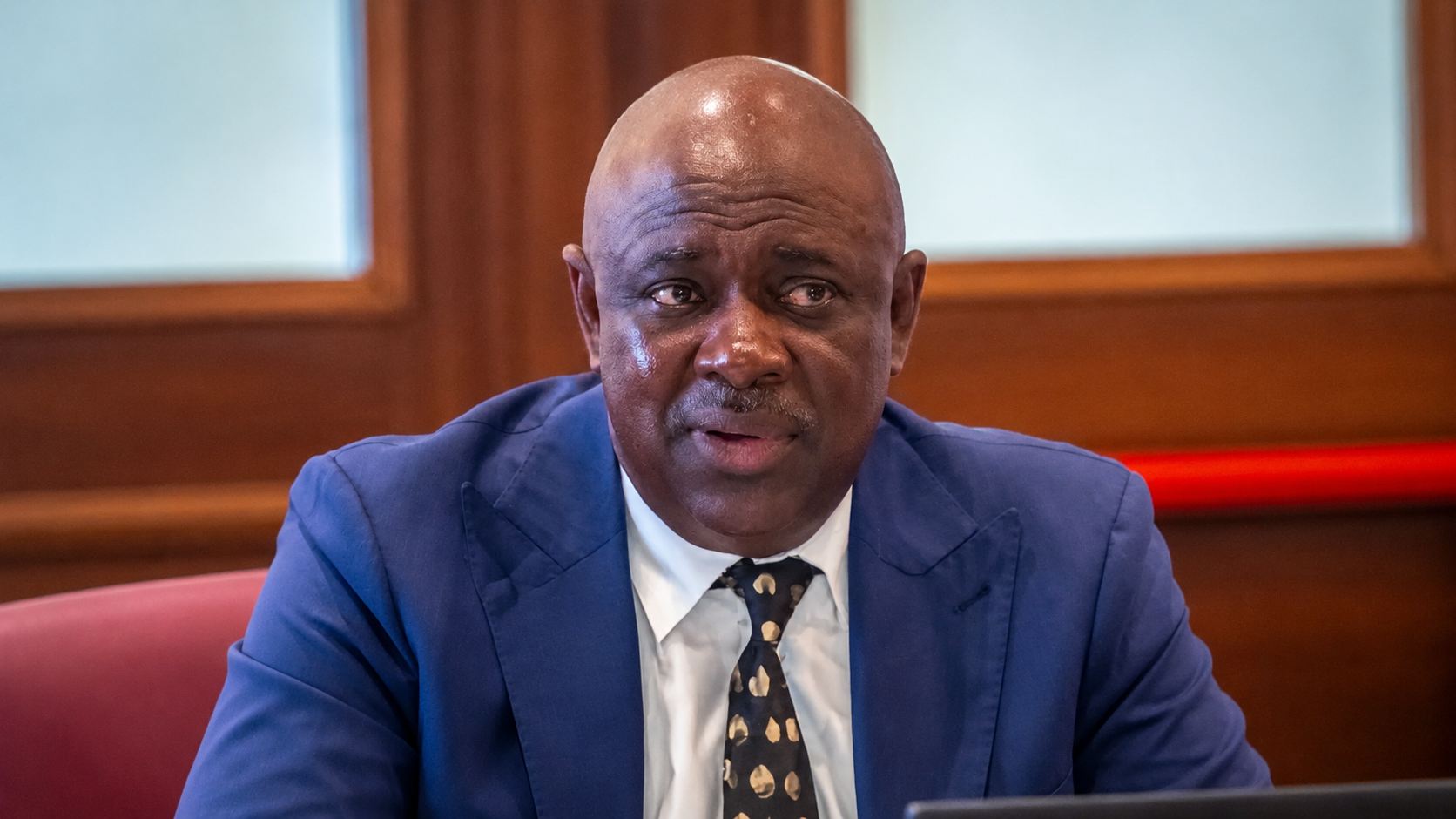
For years, conversations about Nigeria’s oil and gas industry were dominated by one question: Can the country regain its place as Africa’s premier investment destination? At NOG Energy Week 2026, the Minister of State for Petroleum Resources (Oil), Senator Heineken Lokpobiri, offered a confident answer. The recovery, he argued, is no longer a projection. It is already underway.
Addressing an influential gathering of policymakers, investors, regulators, energy executives, financiers, and international delegates, Lokpobiri presented a compelling account of an industry that is steadily rebuilding investor confidence through bold reforms, stronger institutions, and an unwavering commitment to execution. His message was less about celebrating milestones and more about demonstrating that Nigeria is once again becoming a destination where capital, opportunity, and ambition can thrive.
As the industry celebrated the 25th anniversary of NOG Energy Week, the minister reflected on the remarkable evolution of a conference that has become one of Africa’s foremost platforms for shaping energy policy and investment. He commended the pioneers who envisioned an annual gathering capable of bringing together government, business, academia, regulators, and international stakeholders to chart the future of Nigeria’s energy industry.
YOU CAN ALSO READ: NOG Energy Week Has Become Africa’s Energy Meeting Point, – Wemimo Oyelana
For Lokpobiri, however, anniversaries are meaningful only when they are accompanied by measurable progress.
He argued that the reforms introduced under President Bola Ahmed Tinubu’s administration are beginning to restore confidence in a sector that had experienced years of declining investment, regulatory uncertainty, and delayed project development. While acknowledging that significant work remains, he maintained that Nigeria is now moving in the right direction.
Production growth, he explained, provides one of the clearest indicators of that progress.
Nigeria’s crude oil production has risen to more than 1.8 million barrels per day, including condensates, a level he described as encouraging but still far below the country’s true capacity.
For the minister, the benchmark is not today’s production level but Nigeria’s demonstrated ability to exceed 2.5 million barrels per day. Achieving that level again, he insisted, is an ambition grounded in experience rather than optimism.
His confidence is reinforced by renewed international interest in Nigeria’s energy sector.
According to Lokpobiri, governments, trading companies, and investors from Europe, the United States, the Middle East, and other regions continue to seek long term partnerships with Nigeria as global demand for reliable energy supplies grows. The country’s challenge, he suggested, is no longer attracting attention but creating sufficient production capacity to satisfy expanding market opportunities.
Unlocking that capacity depends on one critical factor: sustained investment.
The minister described investment as the lifeblood of the petroleum industry, noting that production growth can only be sustained when operators continue drilling, exploring, and developing new assets. In that regard, Nigeria is beginning to witness encouraging momentum.
Active drilling rigs have increased significantly, rising from around forty when the current administration assumed office to well over sixty today. For Lokpobiri, this growth represents far more than operational statistics. It reflects renewed confidence by investors who are once again willing to commit long term capital to Nigeria’s upstream sector.
He attributed this resurgence largely to the successful implementation of the Petroleum Industry Act and the policy reforms that have strengthened regulatory certainty, improved institutional coordination, and enhanced the country’s investment climate.
Perhaps one of the most transformative developments, in his view, has been the emergence of indigenous energy companies as dominant players in Nigeria’s upstream industry.
The minister described the recent transfer of onshore assets from international oil companies to Nigerian operators not as a withdrawal of foreign investment but as a strategic restructuring of the industry.
While indigenous companies have assumed responsibility for producing a substantial share of Nigeria’s crude oil, international operators have redirected their expertise toward deep offshore developments where they continue to expand exploration and production activities.
This dual strategy, Lokpobiri explained, has strengthened the industry’s overall resilience while creating greater opportunities for Nigerian companies to demonstrate their technical and commercial capabilities.
Today, independent indigenous operators account for well over sixty percent of Nigeria’s daily crude production, a development he described as one of the most significant achievements of the ongoing reforms.
Beyond production, the minister also challenged prevailing global narratives surrounding energy policy.
He argued that international conversations have evolved from advocating an abrupt energy transition toward embracing a more practical energy mix, acknowledging that oil and gas will remain indispensable to global economic growth for decades.
For Africa, this shift carries profound implications.
Lokpobiri maintained that the continent should not be expected to abandon the natural resources capable of financing its industrialisation while nations that achieved prosperity through hydrocarbons continue to depend on those same resources.
With Africa contributing only a small percentage of global carbon emissions, he called for a fair and balanced approach that allows developing economies to utilise their energy resources responsibly while investing in cleaner technologies and sustainable development.
Oil and gas revenues, he argued, remain indispensable for financing infrastructure, expanding industries, creating employment, and improving living standards across the continent.
The minister also highlighted government’s determination to improve the ease of doing business within the petroleum sector.
Responding to industry concerns over multiple taxes, levies, and regulatory charges, he disclosed that government has commenced comprehensive benchmarking exercises aimed at aligning Nigeria’s fiscal regime with globally competitive jurisdictions. The objective is to simplify administrative processes, eliminate unnecessary costs, and create a more attractive environment for investors.
Throughout his presentation, Lokpobiri repeatedly emphasised one defining principle of the current administration: engagement.
Rather than formulating policies in isolation, government continues to work closely with operators, investors, regulators, and industry associations to identify challenges and implement practical solutions that strengthen the sector’s competitiveness.
He also celebrated recent exploration successes by Renaissance Africa Energy Company, describing them as further evidence that Nigeria’s petroleum basins still possess significant untapped potential capable of supporting long term production growth.
YOU CAN ALSO READ: Why Jeff Bezos Says Speed Is the Ultimate Competitive Advantage
With national reserves estimated at approximately 37 billion barrels, he expressed confidence that continued exploration campaigns and increased investment would unlock even greater opportunities for future generations.
By the conclusion of his address, Lokpobiri had presented more than a government progress report. He had articulated a broader national ambition.
An ambition where reforms replace uncertainty, investment replaces hesitation, indigenous companies become global competitors, and Nigeria once again assumes its position as one of the world’s leading energy investment destinations.
For the minister, the country’s energy story is no longer defined by missed opportunities. It is increasingly becoming a story of renewed confidence, courageous reforms, strategic partnerships, and a nation determined to transform its abundant natural resources into enduring economic prosperity.