As Nigeria Energy Week marks 25 years of shaping Africa’s energy dialogue, President,DMG Events, hristopher Hudson says the world’s greatest challenge is no longer choosing between energy sources but delivering enough affordable, reliable and sustainable energy to meet unprecedented global demand.
A quarter of a century ago, Nigeria Energy Week began as a platform to bring together policymakers, industry leaders and investors to discuss the future of one of Africa’s most strategic sectors. Twenty-five years later, the conference has evolved into one of the continent’s premier energy gatherings,
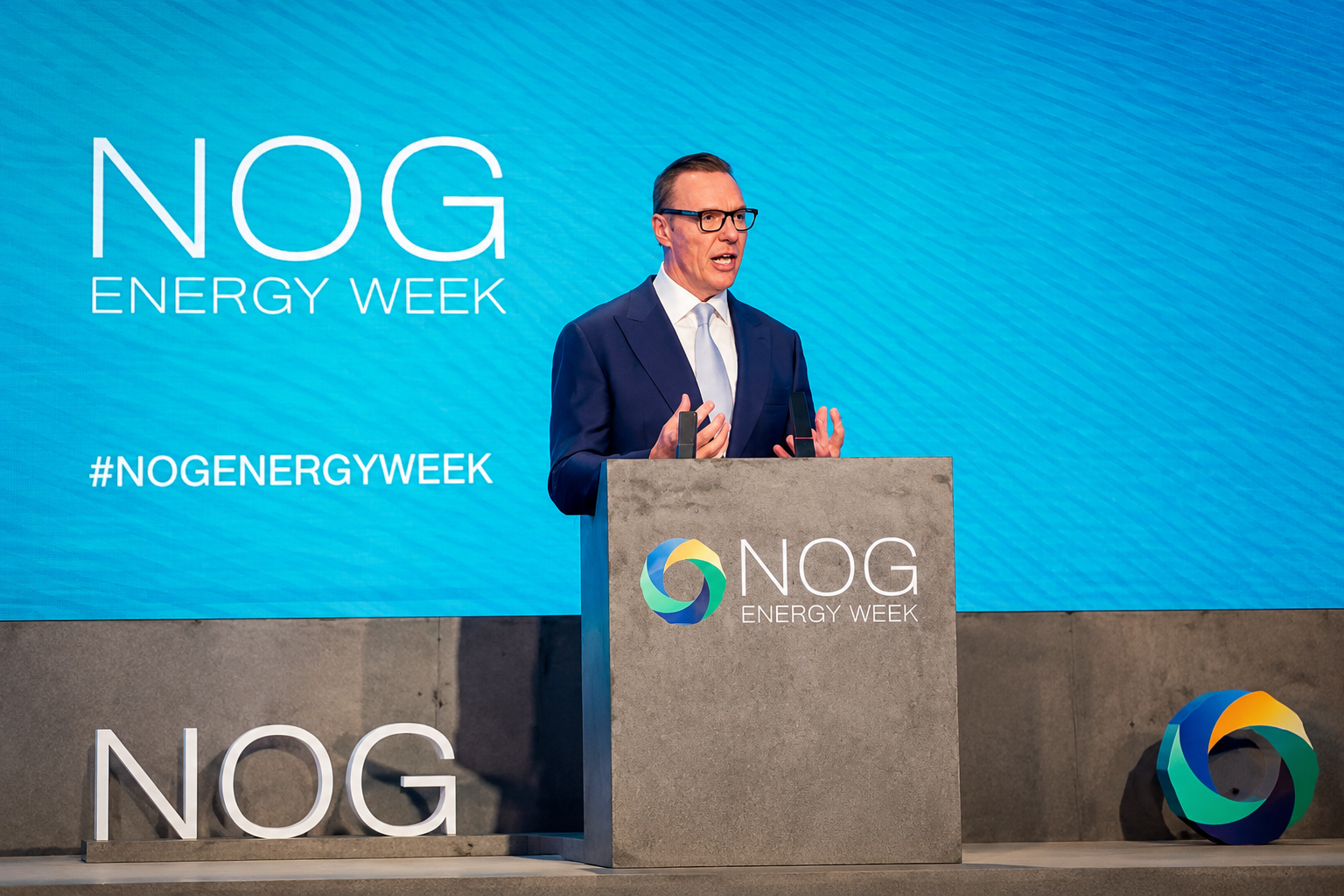
a marketplace where policy meets capital, partnerships are forged and billion-dollar investment conversations begin. Opening the landmark silver jubilee edition, President of dmg events, Christopher Hudson, welcomed delegates from around the world with a message that reflected both the significance of the occasion and the scale of the global energy challenge ahead.
Describing the anniversary as a defining milestone, Hudson paid tribute to the Nigerian government, the Nigerian National Petroleum Company Limited (NNPC Ltd.), ministries, regulators and industry partners whose collaboration has enabled Nigeria Energy Week to become an internationally recognised platform for dialogue and investment. He reserved special appreciation for President Bola Ahmed Tinubu, applauding the administration’s vision and leadership in positioning Nigeria as an increasingly competitive investment destination and a reliable partner in the global energy landscape. Hudson also acknowledged the contributions of the Minister of State for Petroleum Resources (Oil), the Minister of State for Petroleum Resources (Gas), senior government officials, visiting ministers from Zimbabwe and Niger, members of the diplomatic community and Special Adviser to the President on Energy, Mrs. Olu Verheijen, describing their participation as evidence of the growing international importance of Nigeria’s energy sector.
Beyond the ceremonial welcome, however, Hudson challenged delegates to confront a reality that is reshaping energy markets across the globe. “The world needs more energy,” he declared, using that simple statement to frame the central theme of his address. According to him, global energy demand is entering an unprecedented period of expansion. By 2040, worldwide energy consumption is expected to increase by nearly 30 per cent, driven by rapid population growth, accelerating urbanisation, industrial development and rising living standards in emerging economies.
YOU CAN ALSO READ: Why Olu Verheijen Believes Trust Is More Valuable Than Oil
The scale of that challenge is enormous. The world’s population is projected to approach 9.8 billion by 2050, while more than 70 per cent of future electricity demand will come from developing economies, particularly across Africa and Asia. At the same time, electricity consumption is accelerating as economies become increasingly digital and climate conditions drive greater demand for cooling technologies. Hudson noted that the number of air conditioners in operation globally is expected to rise from approximately 1.6 billion today to 5.6 billion by 2050, while the global commercial aviation fleet is forecast to double from about 25,000 aircraft to nearly 50,000, reflecting rising incomes and increasing global mobility.
Meeting this demand, Hudson argued, will require every available source of energy. Natural gas and liquefied natural gas (LNG) are expected to grow significantly as dependable fuels for electricity generation and industrial development, while renewable energy will more than double over the coming decades, becoming an increasingly important pillar of the global energy mix. The conclusion, he stressed, is clear: “This is not an energy transition. This is energy addition.” Rather than replacing one energy source with another, the world must embrace an approach that expands all forms of energy simultaneously to satisfy rising demand while reducing emissions through innovation and cleaner technologies.
Supporting that ambition will require an unprecedented investment in infrastructure. Hudson pointed out that by 2050 the world will need approximately six million kilometres of new electricity transmission lines, alongside more than $7 trillion in investment to strengthen power grids, modernise energy systems and deploy next-generation technologies. “You cannot run tomorrow’s economy on yesterday’s grid,” he remarked, underscoring the urgent need to build the infrastructure capable of sustaining future economic growth.
Yet Hudson insisted that the industry’s greatest responsibility extends beyond infrastructure and investment. It is also about expanding access to energy. Today, more than 750 million people still live without electricity, while over 2.1 billion people lack access to clean cooking fuels. Closing those gaps, he said, represents one of the most important opportunities to improve public health, reduce emissions, stimulate economic development and lift millions of people out of energy poverty. For Africa, the implications are especially profound. Reliable electricity powers factories, hospitals, schools and digital economies, while clean cooking solutions improve health outcomes, protect forests and enhance the quality of life for millions of households. Affordable energy, Hudson argued, remains the foundation of sustainable development.
YOU CAN ALSO READ: Africa’s Energy Future Will Be Built by Institutions, Not Resources Alone
Against this backdrop, he positioned Nigeria Energy Week as far more than an annual industry conference. “This is not another conference,” Hudson told delegates. “It is where policymakers meet, businesses come together and deals are made.” For twenty-five years, the event has served as a catalyst for partnerships that strengthen energy security, attract investment and encourage collaboration among governments, financiers, technology providers and energy companies. Its purpose, he explained, is to help build resilient energy systems capable of supporting economic growth while protecting countries against future geopolitical and market disruptions.
Reflecting on the conference’s journey, Hudson noted that conversations initiated a quarter-century ago have evolved into policy reforms, landmark projects and enduring international partnerships that continue to shape Africa’s energy landscape. Looking ahead, he expressed confidence that the next twenty-five years hold even greater promise. Africa, he said, is no longer viewed simply as a supplier of natural resources but as a continent increasingly recognised for its innovation, investment opportunities and capacity to shape the future of the global energy economy.
As he concluded his remarks, Hudson captured that optimism in a powerful reflection. “When a continent rises, the world moves with it.” It was a fitting conclusion to an address that celebrated not only the legacy of Nigeria Energy Week but also the immense opportunities that lie ahead. In Hudson’s vision, the future of global energy will not be built by choosing between oil, gas and renewables. It will be built through partnership, investment and a shared commitment to delivering more energy to more people than ever before.