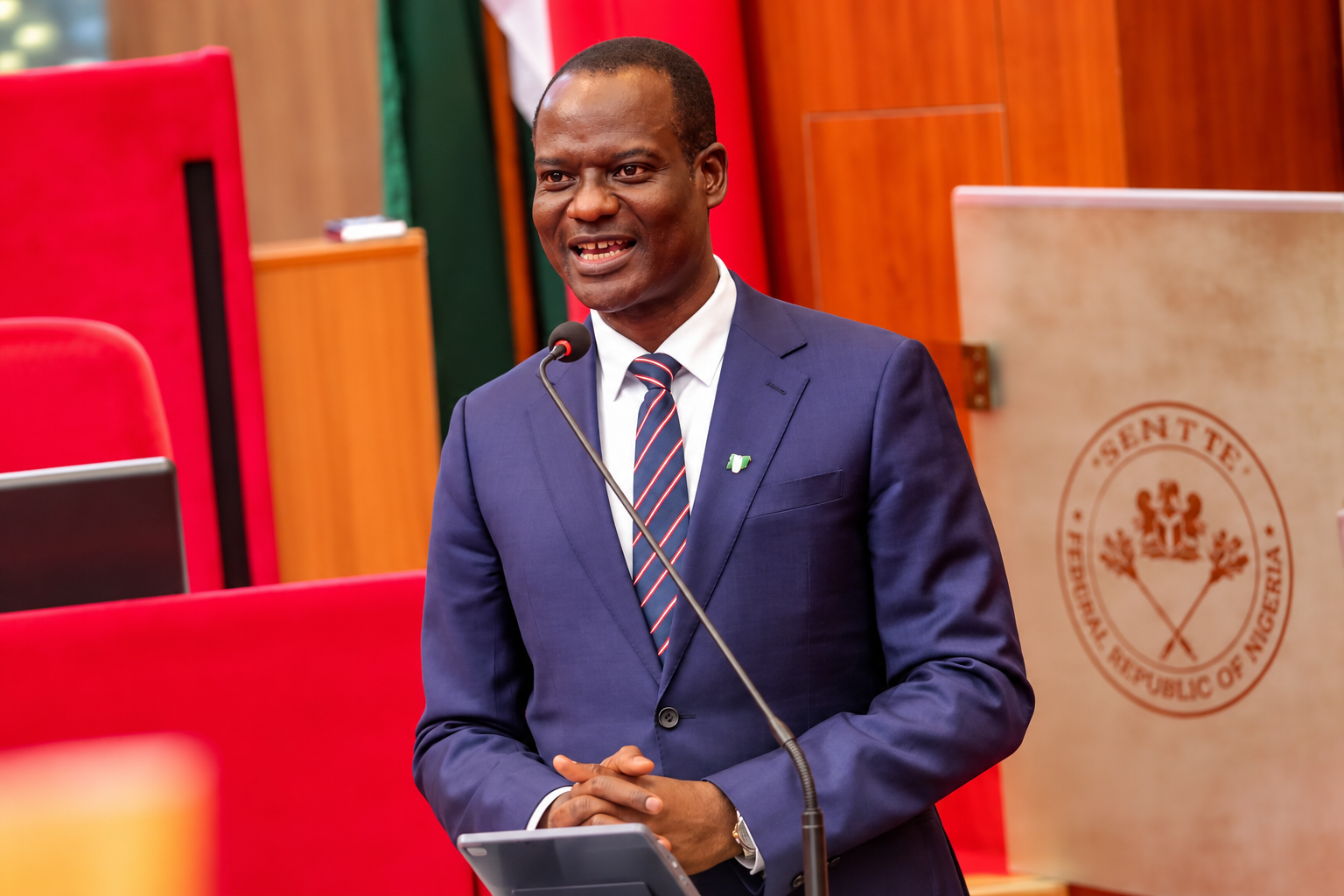
Nigeria’s economic reform journey is entering a new phase, and according to Coordinating Minister of the Economy, Taiwo Oyedele, the priority must now shift from stabilisation to production, industrialisation and competitiveness.
Speaking at the Nigeria Economic Summit Group’s half year economic review, Oyedele said the difficult measures implemented over the past three years, including exchange rate unification, the removal of the fuel subsidy and efforts to restore fiscal discipline, are beginning to generate measurable economic momentum.
He pointed to sustained growth of nearly 4 per cent in the first half of 2026, driven by agriculture, manufacturing, construction and services, particularly ICT, alongside easing inflation and improving investor confidence. But for Oyedele, these gains are not an endpoint.
“Stabilization is not the destination. It is the bridge,” he said, warning against reform fatigue and the temptation to regard macroeconomic stability as the finish line rather than the foundation for deeper economic transformation. At the heart of that transformation is industrialisation.
YOU CAN ALSO READ: What Was Eko Atlantic Worth? Inside the Economics of Building a City from the Ocean
Oyedele highlighted the Federal Government’s Nigeria Industrial Policy 2026 as the framework for moving the economy from consumption driven growth towards greater domestic production.
The policy, he said, was developed through extensive stakeholder consultation and designed as an implementation framework rather than a document that would simply remain on the shelf. Its measures span access to capital, infrastructure, digital market access, value chain development and public procurement.
For manufacturers, the government is scaling the Bank of Industry’s capital base towards ₦3 trillion, alongside targeted intervention funds intended to provide more affordable, long term financing, particularly for small and medium sized businesses seeking to retool and meet competitive standards.
Infrastructure is another critical component. The government is fast tracking interstate road corridors, logistics hubs and port modernisation, with private capital being mobilised through warehouse financing and public private partnerships. The stated objective is to reduce the cost of trade by at least 15 per cent.
The strategy also targets smaller businesses. According to Oyedele, 25,000 SMEs are being onboarded onto digital trade platforms, integrated logistics systems and data driven market intelligence tools to help them participate more effectively in formal value chains. One of the more contested elements of the industrial strategy is tariff policy.
Oyedele explained that the government has revised import adjustment taxes across 192 tariff lines, while creating a list of approximately 127 essential industrial inputs and raw materials that attract duties ranging from zero to 10 per cent.
The objective is to reduce the cost of production while increasing tariffs on selected finished imported goods in areas where domestic production capacity exists or can be developed. But he stressed that tariff protection alone cannot create competitive industries.
Nigeria’s experience with import substitution in the 1980s, he noted, demonstrated the limitations of shielding domestic producers without simultaneously addressing power, logistics, skills and financing.
“Tariff policy is only one instrument,” Oyedele said, emphasising that it cannot serve as a substitute for the broader investments required to make Nigerian businesses competitive.
He also acknowledged that policies must remain responsive to evidence, noting that where tariff changes place undue pressure on legitimate businesses without viable domestic alternatives, the government is prepared to recalibrate. “Policy consistency does not mean policy rigidity,” he said.
For Oyedele, industrialisation cannot be built around Nigeria’s domestic market alone. The African Continental Free Trade Area provides an opportunity to transform Nigeria into a manufacturing and processing hub serving a much larger continental market.
The government is therefore working to align Nigerian products and industrial standards with continental requirements while expanding export credit guarantees to facilitate the movement of Nigerian made goods across African markets.
The ambition extends beyond import substitution. Nigeria, he said, must develop an industrial base capable of anchoring regional supply chains and positioning the country as a manufacturing and processing centre for West Africa and, eventually, the wider continent. Oyedele also placed strong emphasis on coordination between different arms of economic policy.
Fiscal, monetary, trade and industrial policies, he argued, must work in the same direction. Financing from development institutions must align with national development objectives, while industrial targets must be reflected in the national economic plan, medium term expenditure framework and annual budget.
The government is strengthening the National Council on Industrial Development as a platform for bringing relevant ministries and agencies together and reducing the policy fragmentation that has historically affected Nigeria’s industrial ambitions.
But coordination, Oyedele stressed, extends beyond government. He called on platforms such as the NESG to continue providing candid feedback on tariff policy, infrastructure constraints, subnational levies and regulations that may undermine competitiveness.
For Nigeria’s economy, Oyedele’s message is ultimately about what happens next. The first half of 2026, he said, has demonstrated that stabilisation can create the fiscal and monetary space required for deeper reforms. The challenge now is to convert that space into productive capacity, stronger value chains, greater exports and a more competitive industrial base.
YOU CAN ALSO READ: Why Nigeria Must Move Beyond Welfare to Defeat Poverty, Says Kpakol
The government has set targets of 30 per cent growth in export volumes by 2028 and increasing manufacturing’s contribution to GDP towards 25 per cent by 2030.
Achieving those targets will require more than policy announcements. It will demand consistency, coordination, investment and sustained engagement between government, businesses, development partners and other stakeholders.
For Oyedele, Nigeria’s next economic chapter is therefore not simply about keeping the economy stable. It is about using that stability to produce more, compete better and build an industrial economy capable of creating value at home while serving markets across Africa.