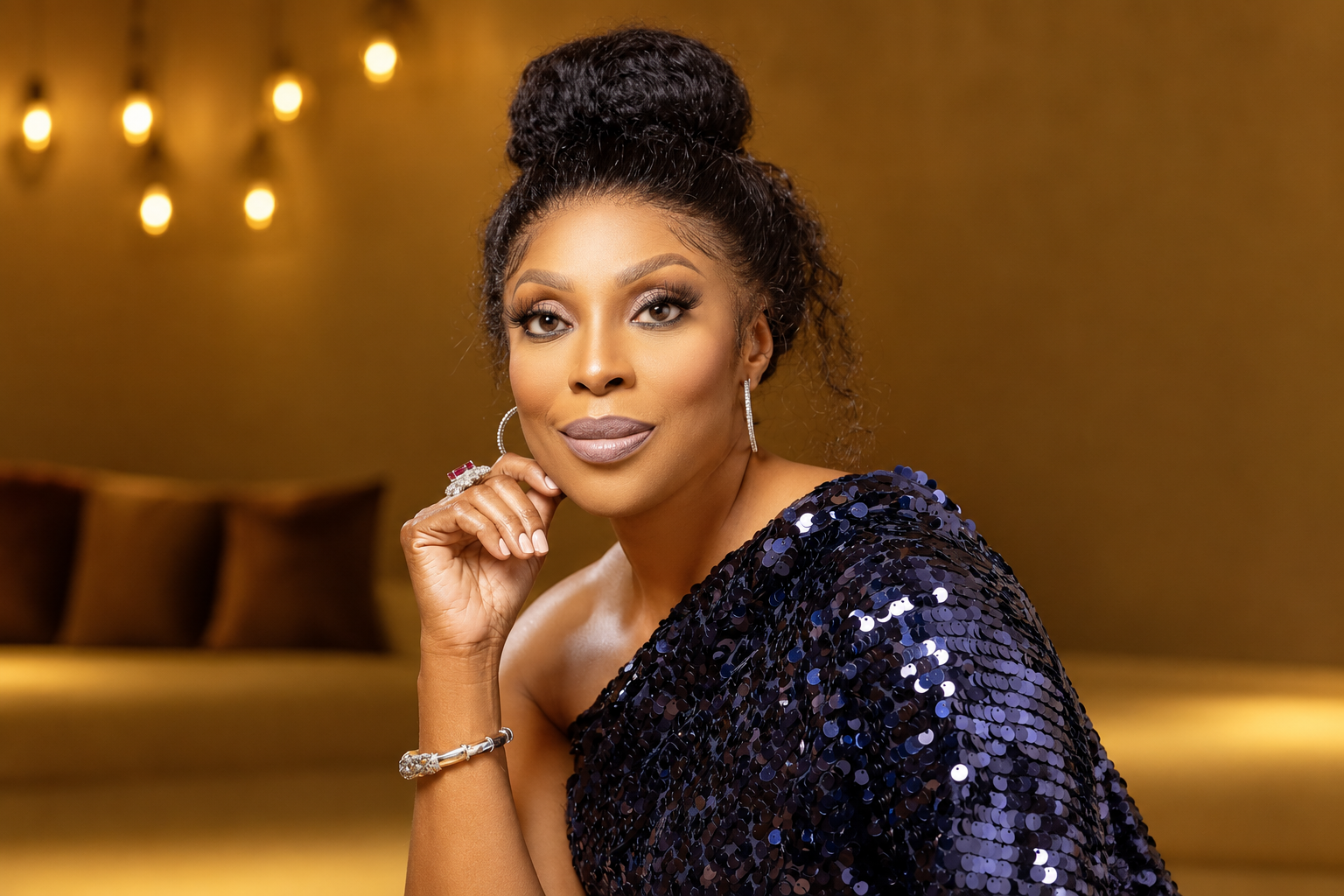
At 40, when many careers are settling into predictability, Mo Abudu chose uncertainty. She walked away from a decade-long corporate career and entered an industry she had never worked in, driven by a bold idea and a conviction that Africa needed to tell more of its own stories. What began with a talk show would grow into television, cinema, film production, hospitality and a wider creative ecosystem.
Now 62, Abudu is still building, and that may be the most revealing thing about her journey. Despite the institutions she has created and milestones she has crossed, she has never appeared interested in simply preserving what already exists. She keeps returning to the beginning, to the blank page, the new idea and the unfamiliar territory.
Mo Abudu’s story is not simply one of success. It is a story of reinvention, audacity and the willingness to start again when comfort would have been easier. Before media, there was corporate Nigeria. Abudu spent about a decade at ExxonMobil before moving through consulting and hospitality.
YOU CAN ALSO READ: From Talk Show to Global Screens: Mo Abudu’s Creative Empire
By the time she entered television, she had already built a successful professional career, but she saw a gap: Africa needed platforms capable of presenting its people, conversations and stories with confidence and sophistication. That conviction became Moments with Mo. She took the idea to MultiChoice and was challenged to secure the sponsorship required to make it happen. She did, turning the concept from an ambitious idea into a television production and establishing the foundation for everything that followed.
The experience reinforced one of her enduring beliefs: relationships matter. The networks built over a career can become as valuable as any balance sheet when it is time to turn an idea into reality. Moments with Mo was only the beginning. She went on to build EbonyLife TV, followed by EbonyLife Place, cinema ventures and film production. Each move meant entering unfamiliar territory, assembling teams, raising resources and learning new aspects of the business. Her philosophy remained simple: identify the gap, understand the opportunity and build.
“I never want to be the smartest person in the room,” she says, reflecting an approach to leadership that values expertise and collaboration. Rather than trying to know everything, she seeks people who bring knowledge, creativity and perspectives different from her own.
For Abudu, building has never meant building alone. It has also meant knowing when to let go. When Moments with Mo continued with other hosts, she demonstrated that a strong brand should not depend entirely on its founder. That transition reflected a larger ambition: to create institutions capable of outliving individual personalities.
The same thinking now runs through her vision for Africa’s creative economy. Abudu sees training, production, financing, distribution, cinema and streaming as interconnected parts of one ecosystem. Her focus on developing younger filmmakers is therefore more than mentorship; it is an investment in the infrastructure needed to make African storytelling sustainable and globally competitive.
Her return to cinema with Baba Sei: The Secret Lives of Baba Sei’s Wives represents another chapter in that journey. Rooted in Yoruba culture and centred on family, relationships and tradition, the film reflects her belief that authentic African stories can connect with audiences far beyond the continent. For Abudu, African stories do not need to lose their identity to become global; they need to be told with quality, confidence and emotional truth. Her career has demonstrated this belief repeatedly, as she has moved between television, film, cinema and streaming while continuing to create platforms for African voices.
The journey, however, has not been without setbacks. The opening of EbonyLife Place was followed by the disruption of COVID-19, while the wider media industry continued to navigate changing technology, audience behaviour and business models. Yet uncertainty has rarely stopped her. Her career has been defined by repeated beginnings, with each new venture requiring her to learn, adapt and take another risk.
That resilience is matched by an insistence on standards. Abudu is demanding about quality and execution, and she makes little apology for it. Descriptions such as “shark” have sometimes followed her, but she rejects the gendered assumptions behind such labels. For her, ambition and high standards are part of what it takes to build institutions capable of competing internationally.
YOU CAN ALSO READ: Peter Ashade and the Rise of a New United Capital
Away from the boardroom and production set, there is another side to Abudu. She speaks warmly about her mother, her children and especially her grandchildren, whose presence offers a softer counterpoint to a life shaped by deadlines, meetings, travel and entrepreneurship. She also acknowledges the personal dimensions of life, relationships, companionship, family and the importance of balance. But even when discussing slowing down, her attention inevitably returns to the future. There are more stories to tell, more talent to mentor, more filmmakers to support and more possibilities to explore.
That is the paradox of Mo Abudu. At 62, when many successful entrepreneurs might be concentrating solely on protecting their legacy, she remains focused on expanding it. Her journey proves that reinvention does not have an expiration date. Starting in media at 40 did not make her late; it gave her a new arena in which to apply everything she had learned before.
Her legacy, ultimately, may not be measured only by the companies, television programmes, films or entertainment spaces she has created, but by the doors she opened, the talent she encouraged, the filmmakers she supported and the stories she helped bring to wider audiences.
Mo Abudu entered media because she believed African stories deserved bigger platforms. More than two decades later, she is still creating them. At 62, she is still building, and perhaps her greatest achievement is showing others that they can build too.