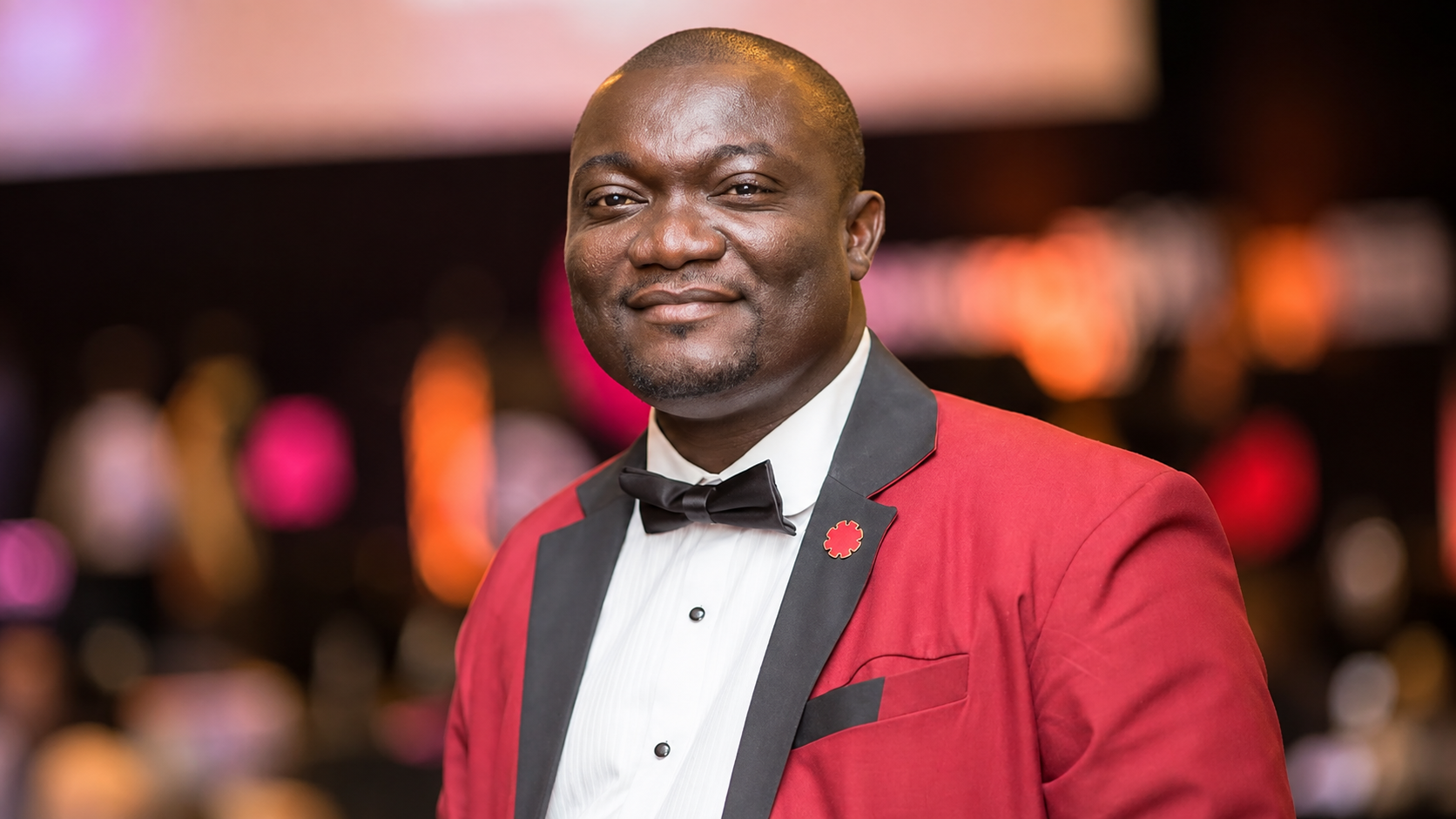
There were people who entered rooms quietly, and there were people who changed the temperature of the room the moment they walked in. Dr. Tochukwu MacFoy, known as Dr. Foy, belonged firmly to the second category.
A trained medical doctor, he was also a creative strategist, media executive, pastor, and the founder of Energize Central, a talent and culture driven platform that managed influential voices such as TY Bello. Beyond talent management, he had helped shape brand narratives for global giants including Netflix and Coca Cola, sitting at a rare intersection where faith, creativity, and business were not separate worlds, but one continuous ecosystem.
His story was not the predictable arc of a man who left medicine for media. It was more layered than that. It was about systems, survival, culture, and the changing demands of attention in a digital age that never stopped asking for more.
He put it plainly, without romanticism.
“The creative industry almost profited from brokenness. The more one was perceived to be drugged up, the more people assumed better music could be created.”
Then he paused the illusion with a physician’s certainty.
“Stay off drugs. Stay off drugs.”
It was not a moral sermon. It was a diagnosis of an industry under pressure.
Dr. Foy explained that the creative economy had changed its rules dramatically within a short span. There was a time when visibility was simple. Artists could take their music to radio stations like Cool FM or Beat FM, and the system would carry it. Exposure was centralized, structured, and less exhausting.
In contrast, the structure had since dissolved.
Now, the same artist had to be a constant publisher, performer, marketer, and personality. The content ecosystem had become extremely demanding. Always thirsty.
The result was an invisible crisis, burnout disguised as ambition.
“You were worth more,” he said, cutting through the noise.
For him, the danger was not creativity itself, but the absence of value systems attached to creative output. Without structure, strategy, and self-worth, exhaustion became inevitable.
Dr. Foy’s worldview was shaped by contradiction in the best possible sense. He was a medical doctor who understood physiology and pressure. He was also a media insider who witnessed the rise of Afrobeats from the corridors of MTV Base and Cool FM during the formative years of artists who would later define a generation.
He recalled the early ecosystem clearly. Wizkid, Kiss Daniel, and others were not yet global names but were already operating with discipline and hunger. Talent was visible, but so was endurance.
Yet even there, he challenged a common assumption in the creative world.
Talent, he argued, was not the currency of success.
“It had to be combined with value, discipline, and systems.”
In earlier eras, success depended on persistence and gatekeeping. One needed networks, access, and resilience to enter the industry. In contrast, the gate had widened, but the competition had intensified.
Algorithms replaced radio DJs. TikTok trends replaced playlist negotiations. Relevance became seasonal, not permanent.
A voice that worked in one market could fail in another. A talent that shone in one moment could disappear in the next.
In that reality, creativity alone was not enough.
Dr. Foy framed the modern creator as a hybrid being, part artist, part strategist, part data analyst.
He pointed to the digital economy as both opportunity and illusion. Barriers to entry had collapsed. A phone could now produce what once required a studio. Comedians, musicians, and filmmakers could build audiences without traditional institutions.
But ease of entry did not equal sustainability.
“What won now was understanding systems, data, and audience behaviour,” he explained.
He was particularly critical of creators who operated without financial literacy. Streaming revenue, brand deals, and global licensing all depended on geography, structure, and negotiation. A song in London or New York did not earn the same as a stream in Lagos. The difference was not talent. It was economics.
This was why, he argued, global thinking was no longer optional for Nigerian creatives. Markets in Europe, the Americas, and even emerging hubs in the Gulf region had become essential revenue pathways.
Nigeria, in his view, remained a country of immense potential that had not yet fully translated into structured output.
But he was not pessimistic.
He saw opportunity in the gaps.
Infrastructure challenges, from unstable power to inconsistent internet, remained real constraints. Yet they were also openings for innovation. Live streaming, remote production, and digital-first content strategies were already reshaping the landscape.
The question was no longer whether Nigeria could participate in the global creative economy, but who would build the systems that allowed it to scale.
Dr. Foy was also clear about something often ignored in creative conversations: trust.
Creatives, he warned, had to learn discretion. Not every idea should be public. Strategy, like craftsmanship, required privacy before execution.
“It was like sharpening a sword in private before going public,” he said.
His reflections also turned inward, toward the human cost of constant visibility.
The creative industry, he observed, had a complicated relationship with wellness. In earlier decades, exposure was occasional. In contrast, it had become continuous. Artists had to remain visible every day or risk disappearing from relevance.
This shift, he warned, had consequences.
The pressure to perform constantly had created a culture where burnout was normalised and emotional distress was monetised. Substance abuse, he noted, was not incidental in this ecosystem. It was often a symptom.
The advice he offered was simple, almost old-fashioned in its clarity: rest, discipline, and distance from harmful coping mechanisms.
Behind the strategy and analysis was a consistent belief that anchored his perspective: Nigeria was not finished. It was still forming.
He argued that the future of work in the country would not be defined by traditional employment structures, but by digital income systems, creative entrepreneurship, and platform-based economies.
In his view, Nigeria’s advantage was not stability. It was adaptability.
As the conversation drew to a close, Dr. Foy returned to a broader reflection. The creative and economic future of Nigeria would depend on how effectively it moved from raw potential to structured execution.
He was betting on that future.
Not blindly, but deliberately.
And in that belief sat the essence of his worldview: that faith, creativity, and systems were not separate disciplines, but interconnected forces shaping what came next.