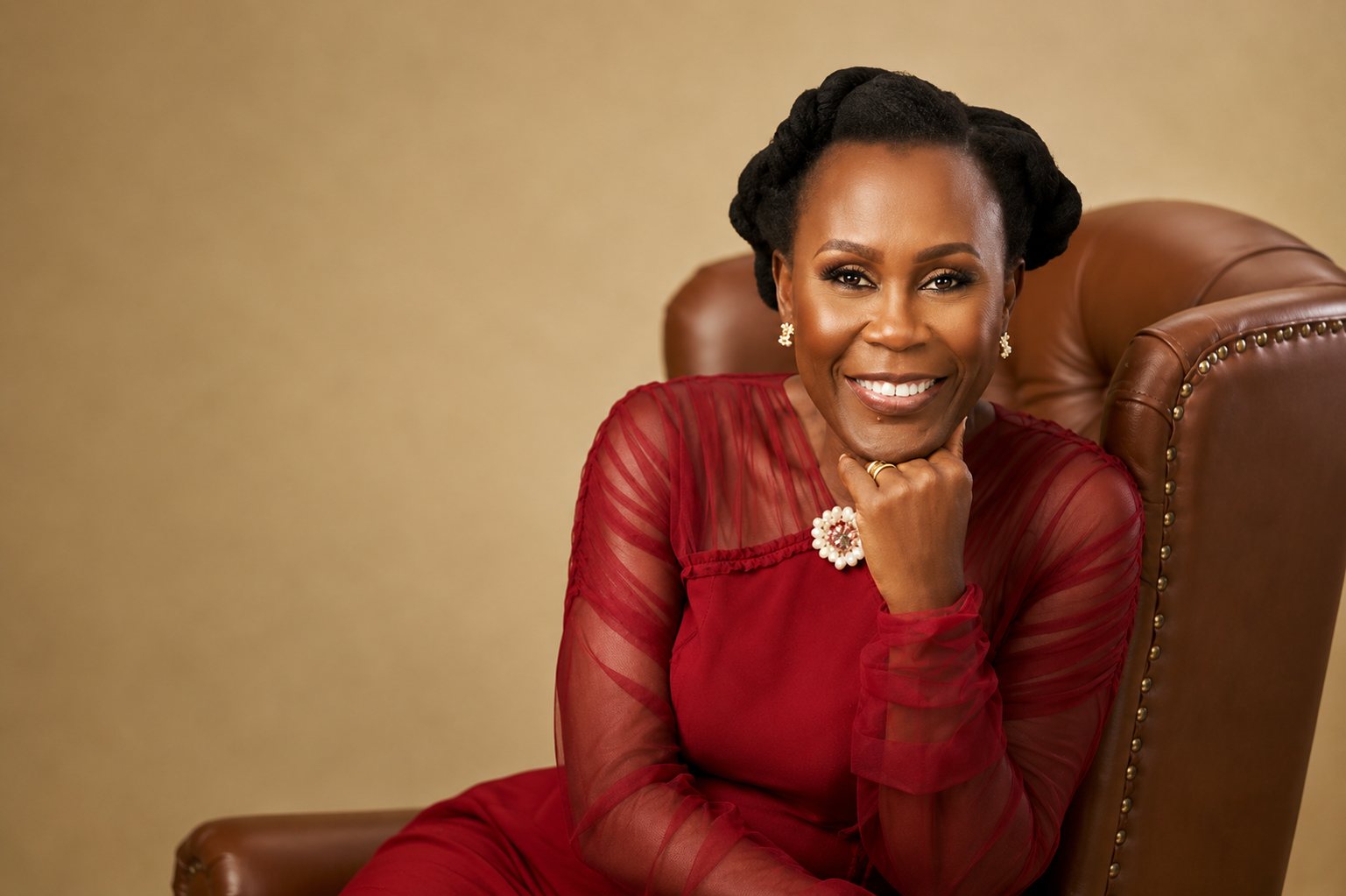
Few entrepreneurs in Africa have managed to transform an industry, build a lasting institution, raise a thriving family, inspire a generation of women, and still remain deeply rooted in purpose and service quite like Tara Fela-Durotoye.
When she stepped onto the stage of The Morayo Show, the atmosphere immediately shifted from a routine interview into something far more profound: a masterclass on vision, resilience, leadership, legacy, nation-building, and faith.
Graceful yet commanding, warm yet deeply intentional, Tara Fela-Durotoye carried the presence of a woman who has spent decades building not just a business, but a movement.
Introduced as a phenomenal woman, a bestselling author in both the United States and Canada, founder of the Building Beyond You Institute, and pioneer of Nigeria’s beauty industry, the conversation quickly revealed why her influence extends far beyond makeup and entrepreneurship.
At the core of everything she shared was one powerful idea: true success is not about building for yourself alone. It is about creating something that outlives you.
Tara reflected emotionally on the journey that brought her to that moment. Long before the lights, applause, and global recognition, she was simply a young woman with a dream. At just 20 years old, while many of her peers were still uncertain about their future, she started what would eventually become House of Tara, a brand that would revolutionize beauty entrepreneurship in Nigeria and professionalize makeup artistry across the country.
Today, makeup artistry is an established career path for thousands of Nigerians, but Tara reminded the audience that there was a time when such a profession barely existed in structured form. She spent years not only building a company, but developing an entire industry and training generations of artists who would go on to shape the African beauty space.
Yet her reflections were not rooted in glamour. They were rooted in perspective. Speaking directly to young people overwhelmed by uncertainty, societal pressure, and anxiety about the future, Tara offered a message that instantly resonated across the room.
“Calm down. Drink cold water. Let your chest relax.” The audience burst into laughter, but beneath the humor was deep wisdom. She explained that many young people are consumed by fear of not having everything figured out early enough, when in reality life unfolds gradually.
According to her, the most important thing young people can do is learn to dream boldly. Dreaming, she argued, is not fantasy. It is strategy.
She described how the human mind naturally gravitates toward whatever it consistently focuses on. Once you begin imagining a future for yourself, your mind starts recognizing opportunities, connections, and possibilities aligned with that vision.
Equally important, she said, is speaking those dreams into existence.
Long before she became an internationally bestselling author, Tara had casually told a friend during secondary school that one day she would write an inspirational book. Decades later, that declaration became reality with the success of Building Beyond You, a book inspired by her obsession with one pressing question: why do so many African businesses disappear after one generation?
That question haunted her. She remembered iconic Nigerian brands from her childhood that no longer exist today. Companies once considered household names had faded into irrelevance because they lacked sustainability, governance, and institutional structure.
Tara became determined not to let House of Tara suffer the same fate. She envisioned a future where employees would retire proudly after decades of service and their children could someday work in the same company. She imagined generations speaking proudly about helping to build an enduring African institution.
That vision pushed her toward corporate governance, leadership systems, and succession planning long before such conversations became popular among many Nigerian entrepreneurs.
In one of the boldest decisions of her career, she eventually handed over leadership of House of Tara to a managing director who was not herself, a move that stunned many within the Nigerian business landscape where founders rarely relinquish operational control.
But for Tara, that transition was proof that the company had matured beyond dependence on one personality.
That philosophy eventually evolved into the Building Beyond You movement and institute, a platform designed to help African entrepreneurs create businesses capable of surviving across generations.
For her, the mission is bigger than entrepreneurship alone. It is about nation-building. She passionately challenged Africans to stop thinking only about immediate survival and begin thinking about legacy. Businesses, she argued, should not exist merely to pay bills for one generation. They should become institutions capable of creating jobs, wealth, and stability long after their founders are gone.
Throughout the conversation, Tara’s humanity remained as compelling as her business insights. She spoke candidly about the challenges of building a business while raising three sons, admitting openly that there were difficult moments, emotional exhaustion, and seasons where balancing motherhood and entrepreneurship felt overwhelming.
But she refused to accept the idea that women must choose between building successful careers and nurturing strong families. “I am not the first woman to do it well, and I will not be the last. But do it well, I must.”
It became one of the defining lines of the evening. Her stories about motherhood drew laughter, applause, and emotion in equal measure. She described waking her children up at 3 a.m. to wash plates they left in the sink, insisting on discipline, protecting what they watched, and making faith a consistent part of their upbringing.
Years later, those values continue to reflect in her children’s lives. One particularly emotional moment came when she described seeing her son graduate wearing a sash boldly declaring “110% Jesus.” For Tara, it represented more than a proud parenting moment. It was evidence that consistent values, repeated conversations, and intentional parenting truly matter.
“Keep talking,” she advised mothers. “It works.” Equally striking was the way she spoke about marriage and support systems. Rather than portraying success as a solo journey, Tara emphasized the importance of involving people in your vision.
She explained that one reason many entrepreneurs struggle emotionally is because they attempt to carry their dreams alone. By involving her husband, siblings, employees, and community in her journey, she created a support system that strengthened both her business and personal life.
Her philosophy of shared vision extended beyond family into leadership itself. Great builders, according to Tara, are people who know how to invite others into their dreams.
The evening also highlighted her growing influence beyond entrepreneurship. As a member of the Royal Order of the Warri Kingdom under Ogiame Atuwatse III, Tara now contributes to broader cultural and developmental initiatives aimed at strengthening her heritage and community. One of her assignments involves helping coordinate a global Itsekiri homecoming initiative designed to reconnect diaspora communities with their roots and stimulate regional development.
Even there, the pattern remains consistent: building beyond herself. Perhaps the most powerful aspect of the conversation was the clarity with which Tara defined success. Not money alone. Not fame. Not applause. But impact that continues long after you are gone.
By the end of the interview, what emerged was not merely the story of a beauty entrepreneur. It was the portrait of a woman deeply committed to helping Africans believe that they too can build enduring institutions, raise purposeful families, preserve values, strengthen communities, and create generational transformation.
In many ways, Tara Fela-Durotoye represents a new model of African leadership: visionary yet grounded, ambitious yet deeply humane, globally recognized yet passionately committed to local impact.
And perhaps that is why her message resonated so strongly.
Because in a generation searching for quick success, Tara Fela-Durotoye is reminding people to build something that lasts.