In a world increasingly shaped by geopolitical realignments, economic uncertainty, and shifting global power structures, a quiet but consequential gathering in Abuja sought to answer one pressing question: what will it take for Africa to shape its own future rather than inherit one designed elsewhere?
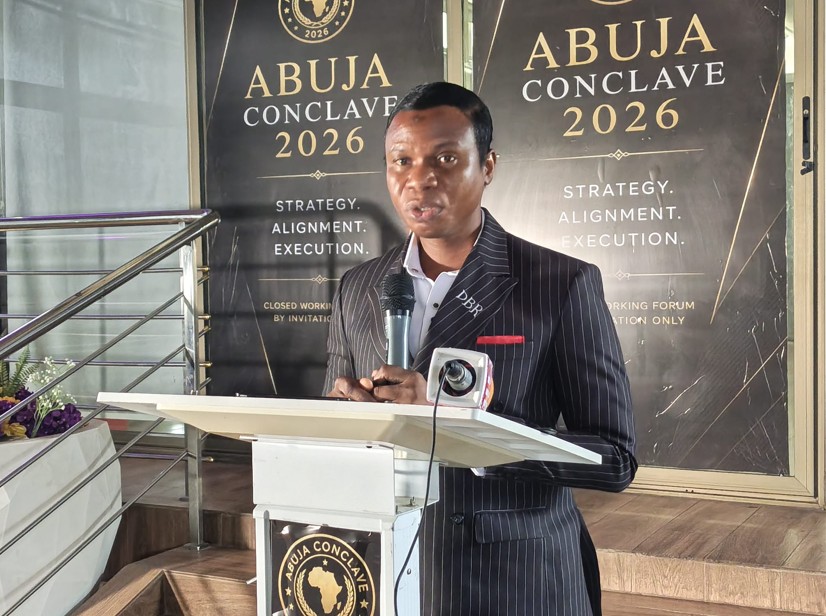
This week, the Abuja Conclave assembled an influential mix of policymakers, business executives, academics, institutional reform advocates, and strategic thinkers from across the continent for a high-level closed-door engagement focused on governance reform, infrastructure execution, capital mobilisation, and Africa’s strategic positioning in a rapidly changing world.
Convened under the Global Strategy Nexus, the gathering drew participants from Nigeria, Ghana, Kenya, Liberia, and other African nations. But unlike the ceremonial atmosphere that often defines international conferences, the Abuja Conclave presented itself as something more deliberate, a working room for ideas, execution frameworks, and difficult conversations about Africa’s future.
YOU CAN ALSO READ: Beyond Capital: How Mezuo Nwuneli Is Investing in Africa’s Future
At the center of the conversations was a growing belief that Africa can no longer afford to operate as a passive observer within global systems increasingly shaped by others.
Opening the conclave, Convener Brian O Reuben delivered a message that set the tone for the gathering: Africa must move from being a permanent rule taker to becoming an active architect of global systems.
For Reuben, the challenge facing the continent extends far beyond politics or economics. It is about intellectual participation, institutional courage, and the willingness to build long term systems capable of protecting Africa’s interests in an era defined by competition for influence, resources, technology, and strategic control.
“Things are shifting and Africa cannot continue to exist as a permanent rule taker,” he said. “If you do not participate in shaping the systems and structures that govern the world, you will ultimately be forced to live within systems designed by others.”
The statement captured the broader spirit of the conclave, a recognition that Africa’s development conversation must evolve from aspiration to execution.
Reuben emphasized that the Abuja Conclave was intentionally designed not as another summit filled with speeches and symbolic declarations, but as a strategic environment focused on clarity, implementation, and practical outcomes.
“This is not a summit,” he stated. “It is a working room for serious thinkers willing to confront difficult realities, challenge assumptions, and pursue practical solutions.”
That emphasis on practical thinking became one of the defining themes of the gathering.
One of the most notable announcements at the conclave was the launch of the Pan African Leadership Prize, an initiative aimed at identifying and supporting exceptional African thinkers aged 30 and under.
According to Reuben, the project was born from concerns that Africa continues to underinvest in young people capable of thinking deeply about governance, leadership, institutional reform, and nation building.
In many ways, the initiative reflects a broader anxiety shared by participants at the conclave: that Africa’s future cannot be built solely on infrastructure projects or economic policies without simultaneously developing intellectual leadership capable of sustaining institutions over time.
Applicants for the initiative are expected to submit original essays responding to a provocative question: If you had the power to shape your country over the next 10 years, what would you do and how would you execute it?
Twenty fellows will ultimately be selected based on the strength of their ideas, clarity of thought, and practical understanding of governance and development. Successful applicants will receive a $5,000 Leadership Fellowship Package alongside access to continental networks and strategic engagement opportunities across Africa.
For participants at the conclave, the initiative represented more than a fellowship programme. It symbolized a growing recognition that Africa’s long term transformation will require not only capital and policy, but also a generation of thinkers capable of building durable systems.
The issue of institutional durability also featured prominently throughout the discussions.
Chairman of Liberia’s Policy Advisory Council, Elias Shoniyin, argued that Africa’s long term progress would depend largely on whether countries can build institutions strong enough to outlive political administrations and individual leaders.
The conversation reflected a familiar challenge across many African nations where reforms often struggle to survive changes in government, weakening continuity and slowing development outcomes.
Participants repeatedly returned to the idea that sustainable growth cannot be built on personalities alone. Instead, they argued for systems grounded in accountability, discipline, institutional memory, and long term strategic planning.
Another major focus of the conclave was the growing influence of geopolitics on African economies and daily life.
Dean of the UPSA Law School in Ghana, Ernest Kofi Abotsi, highlighted how global conflicts increasingly shape trade routes, energy prices, investment flows, and economic stability across the continent.
Referencing tensions surrounding the Strait of Hormuz, Abotsi explained that geopolitics is no longer an abstract international concept discussed only in diplomatic circles. Instead, it has become a direct factor influencing inflation, transportation costs, energy prices, and household realities across Africa.
He also noted that foreign powers continue to maintain deep strategic interests in Africa’s resources, markets, and political direction, making it even more critical for African nations to develop stronger negotiating capacity and clearer continental priorities.
The discussions reflected a growing understanding among participants that Africa’s future competitiveness will depend not only on domestic reforms, but also on how effectively the continent navigates an increasingly fragmented global order.
Perhaps one of the most candid moments of the conclave emerged during discussions around infrastructure development and Public Private Partnerships.
Chief Executive Officer of Mayor of Housing Limited, My-ACE China, argued that many of Africa’s infrastructure failures are not caused by a lack of vision or policy, but by weak execution structures and excessive political interference.
“A functional PPP is a public private partnership,” he remarked. “The dysfunctional version becomes a public political partnership.”
The comment resonated strongly within the room because it captured a recurring frustration across many African economies where infrastructure projects are often delayed, abandoned, or weakened by changing political interests.
China stressed that sustainable infrastructure delivery would require stronger institutional discipline, professional accountability, and greater insulation of long term projects from political disruption.
The message aligned closely with one of the conclave’s broader conclusions: Africa’s biggest development challenge may no longer be the absence of ideas, but the inability to consistently execute them at scale.
The conclave also explored the continent’s persistent capital mobilisation challenges and the disconnect between available financial resources and productive enterprise development.
Professor Uche Uwaleke of Nasarawa State University emphasized the need to better connect institutional capital with productive sectors and small businesses capable of driving economic expansion.
According to him, Africa’s challenge is not necessarily a shortage of money, but the inefficiency of systems responsible for channeling capital into enterprises capable of generating sustainable growth.
YOU CAN ALSO READ: Why Zenith Bank’s Chairmanship Change Signals Institutional Maturity, Not Disruption
The discussion reinforced broader concerns about financial intermediation across the continent, particularly the difficulty many African businesses face in accessing long term financing despite the presence of significant institutional capital pools.
As the conclave concluded, one message remained consistent throughout the conversations: Africa’s future will depend on stronger institutions, disciplined execution, strategic clarity, and locally driven solutions capable of producing measurable results.
Beyond the speeches and policy discussions, the Abuja Conclave reflected a deeper shift taking place across sections of the continent’s leadership community, a growing insistence that Africa must think more strategically about governance, infrastructure, capital, and global influence in an era where economic and geopolitical competition is intensifying.
In many ways, the gathering was less about immediate answers and more about building the intellectual and institutional foundations for the decades ahead.
For those inside the room, the challenge was clear: Africa’s next chapter cannot simply be imagined. It must be deliberately designed, strategically executed, and institutionally sustained.