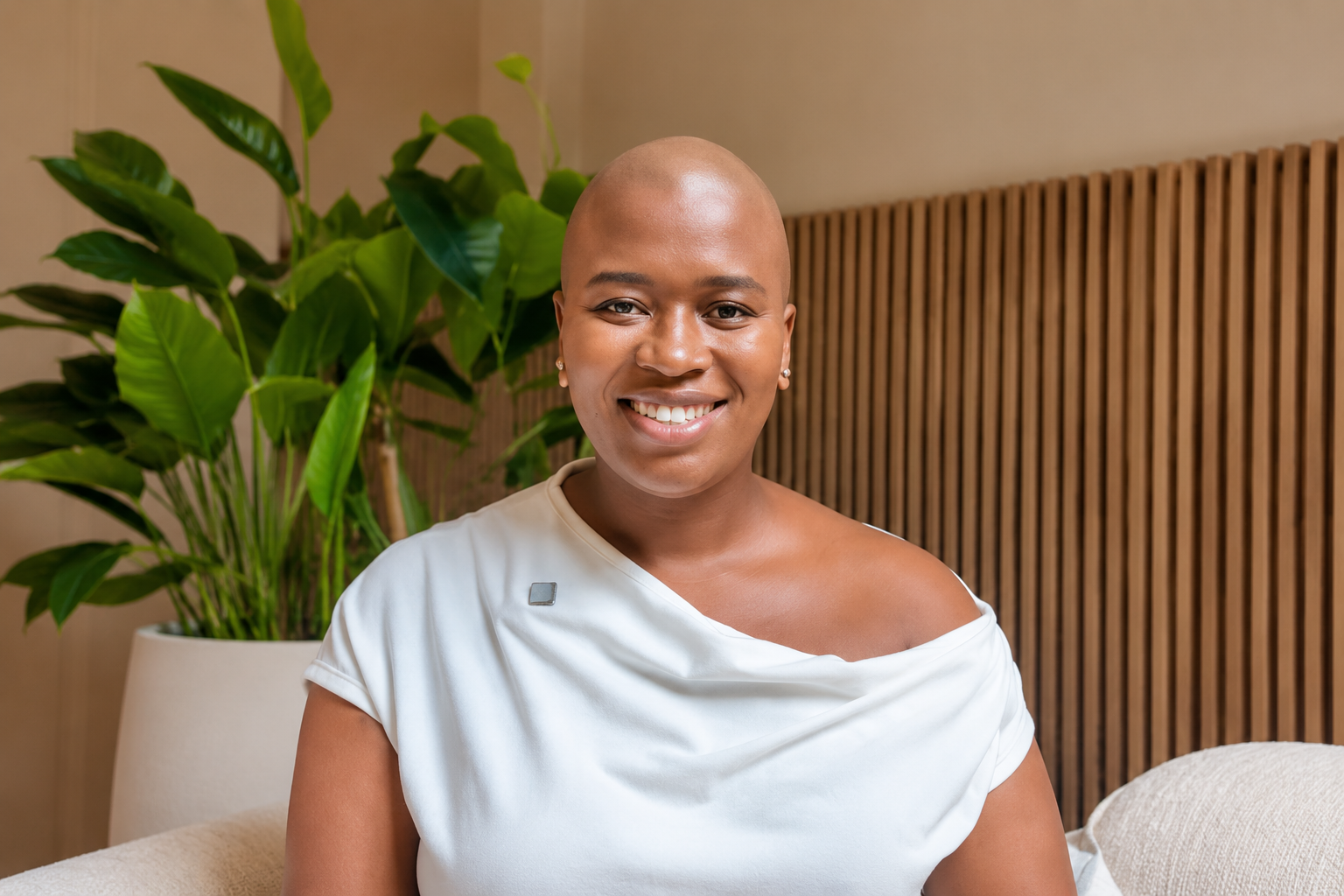
After building more than seven businesses over the past decade, entrepreneur Meloh Nhleko has learned that making money is not the hardest part of business. Building something that has value beyond the owner is. Many entrepreneurs run businesses that generate income, but if they stepped away tomorrow, everything would stop. The customers know them personally, the systems live in their heads, and every important decision flows through them.
The business may be profitable, but it cannot function without them. For Meloh, that distinction has become one of the most important lessons of her entrepreneurial journey. “You can have a business that makes money, but you’re still dancing for your money,” she says. “You’re actively working for every rand that comes in.”
Over the last ten years, she has built businesses ranging from shoe care and laundry services to cafés and technology-driven water distribution. Along the way, she discovered that sustainable growth is not about working harder. It is about building systems that allow a business to operate consistently, whether the owner is present or not.
YOU CAN ALSO READ: Moritz Fürste and the Race That Changed Fitness Forever
That lesson became particularly clear when she explored selling parts of her business portfolio. Like many founders, she believed the value of her business was reflected in the years of sacrifice, risk, sleepless nights and effort she had invested. But buyers viewed the business through a different lens. They were not interested in her passion or the future she imagined. They wanted to know what the business was producing today and whether it could continue producing results without her.
“The market doesn’t care about your passion,” she explains. “They care about what the business is doing right now.” While entrepreneurs often focus on potential, buyers focus on returns, predictability and systems. They want a business that can function without constant supervision. They want documented processes, stable operations and clear structures that can be replicated. In Meloh’s words, they want a “business in a box.”
That realization changed the way she thinks about building companies. For her, systems are not limited to software or technology. They are the processes that ensure consistency across every aspect of a business. A point-of-sale platform is a system. Inventory management is a system. A camera setup that tracks customer traffic is a system. Even the way employees answer the phone is a system. “I’m very particular about customer interactions,” she says. “If I call one of my stores and someone answers the phone incorrectly, I notice immediately.”
The reason is simple: customers experience a brand through hundreds of small moments, and consistency in those moments builds trust. One poor interaction can undo years of relationship building. That is why Meloh invests heavily in training and standards. Employees are taught not only what to do, but how to do it. They learn how to communicate with customers, how to handle complaints and how to represent the business. Customer service, she believes, is not something that happens by accident. It must be designed, reinforced and monitored. “Life will always happen,” she says, “but not at the cost of my brand.”
The same philosophy extends to recruitment. One of the biggest mistakes small businesses make, according to Meloh, is hiring out of desperation. When a position becomes vacant, many entrepreneurs settle for whoever is available instead of waiting for the right fit. She takes a different approach. “We are the prize,” she says. “We’re looking for people who fit our culture.” Some of her best hires have come through deliberate headhunting rather than traditional recruitment. She encourages her managers to visit larger businesses, observe customer-facing employees and identify individuals who consistently deliver exceptional service.
“If it means you’re visiting every chicken place, ordering food and assessing the service, that’s what you do.” Her logic is straightforward. Large companies spend significant resources training employees. Small businesses can benefit from that investment by recruiting people who already understand professionalism, accountability and customer service. Yet she is equally careful not to force employees into roles that do not suit them. One lesson she has learned over the years is that technical competence and leadership are not the same thing. Someone may be excellent at performing a task while struggling to manage people. “Don’t get someone to do something they don’t want to do,” she says. “Don’t try build something in your mind out of someone when they don’t want it.”
As her businesses expanded, quality control became another critical area where systems proved essential. At TechyWash, every pair of shoes passes through multiple inspection stages before being returned to the customer. Shoes are checked during cleaning, checked again after drying and inspected once more before collection notifications are sent. Every step is documented, and every employee’s work is traceable. These procedures were not developed from theory but from experience. As the business grew, Meloh realised that quality could not depend solely on individual effort.
If a customer receives a poorly cleaned product, there must be a clear process that identifies where the breakdown occurred and how to prevent it from happening again. Consistency, she believes, is what creates trust and trust is what builds value. Whether a customer visits one branch or another, they should receive the same standard of service, the same level of professionalism and the same customer experience.
One of the most important lessons she has learned, however, is that systems themselves are never finished. Many entrepreneurs believe that once a process is documented, the work is done. Meloh disagrees. “Everything changes. Nothing is constant.” Markets evolve, customer expectations shift and teams change. A system that worked perfectly two years ago may become ineffective today. Successful entrepreneurs are not attached to processes; they are committed to outcomes.
That means continuously reviewing, refining and improving the way a business operates. “Just because you’ve built a system and you think it’s amazing doesn’t mean it’s practical,” she says. The willingness to adapt has allowed her businesses to evolve alongside changing circumstances rather than becoming trapped by outdated ways of working.
YOU CAN ALSO READ: The Man Behind the Wings: Allen Onyema Reflects on 10 Years of Air Peace
Beyond systems, Meloh believes leadership is what ultimately determines whether a business can grow without its owner. Too many entrepreneurs focus on controlling people instead of developing them. They avoid investing in training because they fear employees will leave. They refuse to delegate because they struggle to trust others. Meloh sees things differently. She has invested in employees who eventually left, gained experience elsewhere and returned with even greater value. Rather than leading from fear, she prefers to lead from abundance. “I wish people well,” she says. “Everybody has dreams and aspirations.”
That mindset shapes her company culture and informs one of her more unconventional beliefs. While many businesses operate under the principle that the customer is always right, Meloh believes leaders should prioritise their employees first. She has seen what happens when managers fail to support staff and what happens when leaders create environments where people feel respected and protected. In her experience, employees who feel valued are more likely to deliver exceptional service, which ultimately benefits customers as well.
Looking back on ten years of entrepreneurship, Meloh believes the businesses with the greatest long-term value are not necessarily the ones generating the most revenue today. They are the ones that can continue operating without the owner’s constant involvement. Those businesses have documented processes, quality controls, recruitment systems, customer follow-up procedures and financial discipline. They have leaders who understand that growth comes from building structures rather than carrying everything alone. Most importantly, they have owners who recognise that real value is created when the business becomes bigger than the entrepreneur. Because the goal is not simply to own a business. The goal is to build an asset. And that only happens when systems do the heavy lifting.