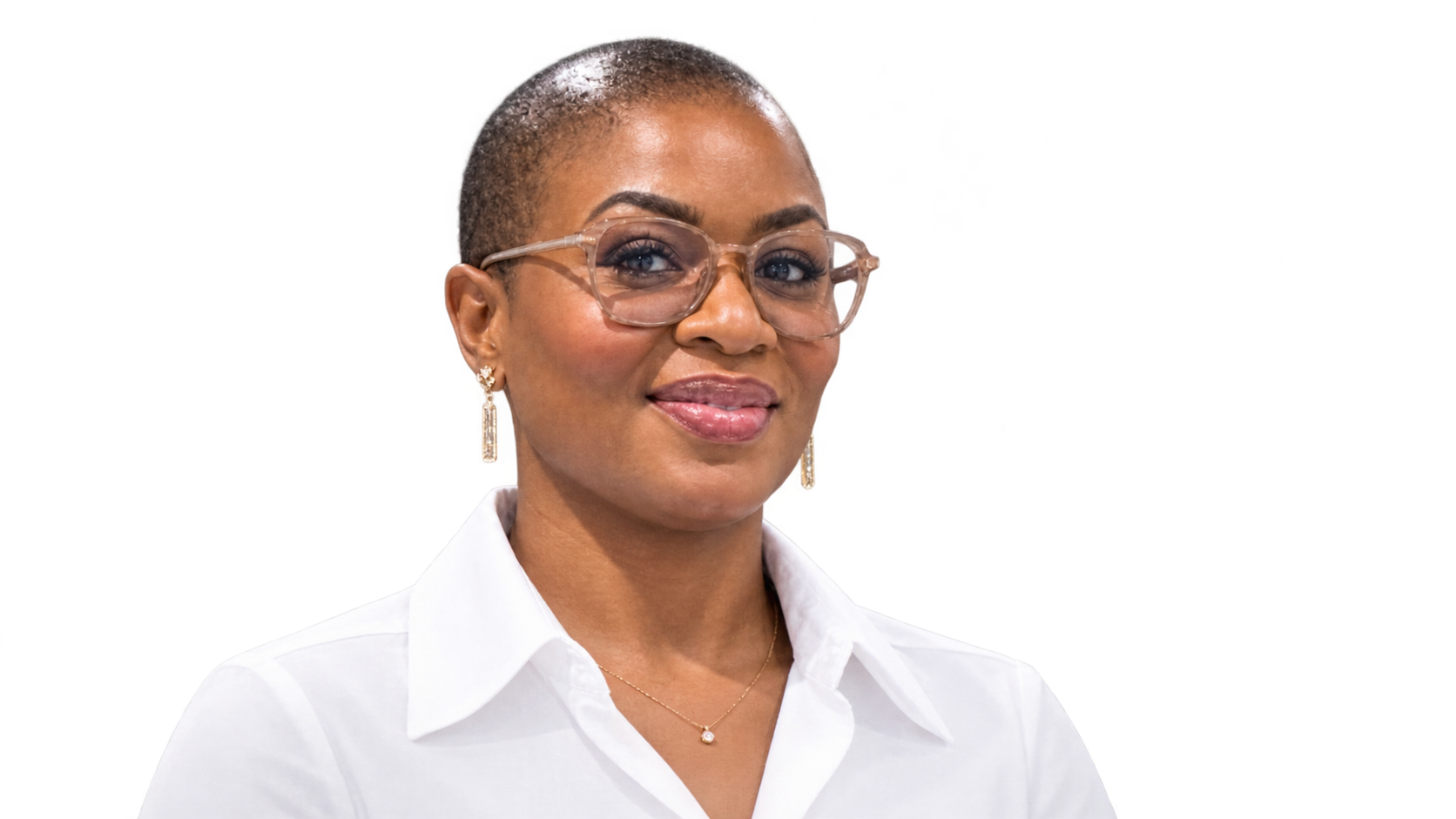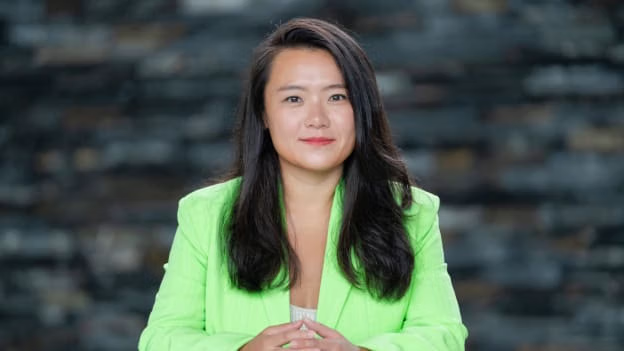
Long before remote work became a global phenomenon and years before companies embraced hiring talent from anywhere in the world, Shuo Wang was already convinced that geography would eventually become irrelevant. Today, that conviction has become Deel, one of the fastest-growing technology companies in modern history and a global platform that powers payroll, hiring, compliance and workforce management for more than 40,000 companies across 150 countries.
As co-founder and Chief Revenue Officer, Wang has helped build a business that recently surpassed $1.5 billion in annual recurring revenue, processes nearly two million payroll transactions every month and moves approximately $2 billion globally every single month. Behind those extraordinary figures, however, is an unlikely entrepreneurial journey that began far away from Silicon Valley.
Born in China, Wang moved to the United States at 16 without being able to fluently speak English. Her earliest business lessons did not come from prestigious classrooms or startup accelerators but from helping her mother’s motorcycle and scooter business at a local flea market. There, she discovered a principle that would define her career: if the right product meets the right audience, it can often sell itself without elaborate marketing.
That mindset stayed with her as she entered the Massachusetts Institute of Technology (MIT). Initially fascinated by mathematics, her path shifted dramatically after a near-fatal accident in which a bus ran over her left arm. The incident inspired her to study mechanical engineering and robotics, determined to create technologies that could restore mobility for others. More importantly, it taught her to think in systems, a philosophy she now applies to building global organisations.
Today, she leads a company of more than 7,000 employees spread across 120 countries. To Wang, businesses are systems, problems are systems, and every challenge can be solved by building efficient structures around people, processes and technology. Deel itself is a manifestation of that philosophy.
The company’s beginnings were far from straightforward. When Wang and her co-founder entered Y Combinator in 2019, their original idea was a cryptocurrency payment platform for content creators. Then the crypto market crashed. Instead of clinging to a failing idea, they pivoted repeatedly, changing direction three times while searching for a more meaningful problem to solve.
During those early weeks, they interviewed nearly every startup in their Y Combinator batch, asking simple but revealing questions: How do you hire people? How do you pay international employees? What are your biggest operational challenges? Those conversations exposed a massive gap in the market. Companies wanted access to global talent, but there was no seamless infrastructure to hire, manage and pay employees while navigating the complexities of compliance, taxation, immigration and payroll.
Wang saw an opportunity years before the world fully embraced remote work. When the Covid-19 pandemic eventually accelerated global workforce transformation, Deel was already perfectly positioned to become indispensable business infrastructure.
At the heart of Deel’s growth was an obsession with speed. Wang and her founding team institutionalised a culture of rapid execution. They would identify problems, experiment with multiple solutions, determine what worked and immediately scale successful ideas. That approach transformed Deel from a simple payroll platform into a comprehensive global workforce management ecosystem that now encompasses hiring, payroll, IT management, employee benefits, immigration services, background checks and workforce mobility solutions.
Culture, however, remained equally important. In the early days, Wang personally interviewed the company’s first 400 employees to ensure alignment with Deel’s mission and values. For a fully distributed company with no physical headquarters, she believed a strong cultural foundation was essential to sustainable growth.
Today, Deel operates without a traditional office. Slack functions as its headquarters, becoming the digital heartbeat of an organisation spread across multiple continents and time zones. Every conversation, decision and collaboration takes place within its channels. For Wang, missing a single message could trigger a 12-hour delay somewhere else in the world, making communication speed a critical business advantage.
That same emphasis on efficiency has now extended into artificial intelligence. Earlier this year, Deel expanded access to Anthropic’s Claude AI from 100 internal licenses to all 7,000 employees in a single week, a move that reportedly surprised even Anthropic’s own executives. Engineers now use AI to build faster, operations teams automate workflows, sales professionals generate market intelligence and customer service teams resolve issues more efficiently.
Wang views AI not simply as a productivity tool but as a company-building tool. In fact, rather than reducing her workload, AI has made her even more engaged. She often works until two or three o’clock in the morning, driven not by pressure but by excitement. To her, the AI revolution feels remarkably similar to Deel’s earliest startup days, another transformative moment filled with limitless possibilities.
Beyond technology, Wang remains focused on a larger mission: creating a world where opportunity is not limited by geography. Through Deel’s immigration services, companies can sponsor work visas, establish global offices and move talent across borders with unprecedented ease. In many ways, Deel has become a bridge connecting international talent with global opportunity.
Despite becoming one of America’s richest self-made women, Wang’s lifestyle remains remarkably unchanged. Her days are still consumed by building products, solving problems and refining systems. Wealth, she suggests, has never been the destination. Building has always been the reward.
For Wang, the future remains extraordinarily large. Deel currently serves about two million workers globally, representing only a tiny fraction of the estimated 800 million knowledge workers worldwide. She believes the next frontier will not simply involve managing human employees but also AI agents working alongside them in hybrid workforces.
That future is already taking shape. And Shuo Wang intends to be one of its principal architects.
For someone who once stood behind a flea market stall selling motorcycles in a country whose language she barely understood, her story is a remarkable reminder that world-changing companies often begin with simple observations: understand the problem, build a system and scale it relentlessly. It is a philosophy that has transformed Shuo Wang into one of the defining entrepreneurs of her generation and Deel into a company that may ultimately reshape how the world works for decades to come.