Economic history rarely remembers leaders for the crises they inherited. It remembers them for the decisions they made when confidence disappeared. At moments when uncertainty dominates markets, investors retreat, businesses delay expansion, and citizens begin to question the future, leadership is measured not by popularity but by the willingness to make difficult choices that restore stability.
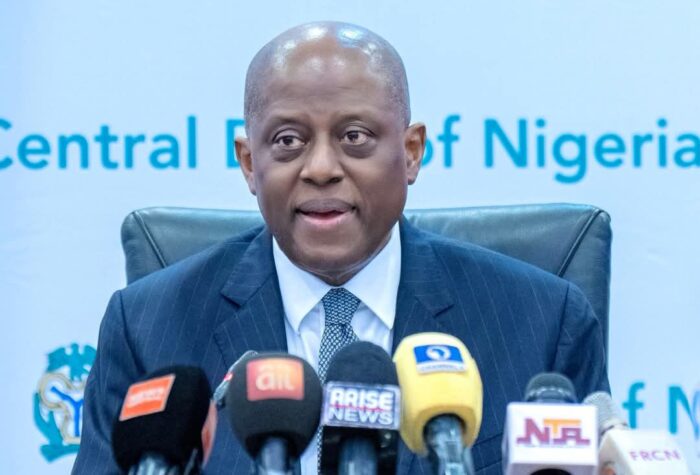
That philosophy defined the message delivered by the Governor of the Central Bank of Nigeria (CBN), Olayemi Cardoso, during a fireside conversation at the 2026 BusinessDay CEO Forum. Speaking before an audience of chief executives and senior business leaders, Cardoso reflected on Nigeria’s economic recovery, the importance of investor confidence, monetary policy, banking reforms, and the leadership principles that had guided some of the Central Bank’s most consequential decisions.
Rather than dwelling on past challenges, Cardoso urged business leaders to focus on the opportunities emerging from what he described as a period of hard-earned economic stability. He acknowledged that significant reforms had taken place over the previous three years, including changes to exchange rate management, monetary policy, and financial sector stability. Those reforms, he said, had fundamentally altered Nigeria’s investment outlook. Yet, despite the progress, one concern continued to occupy his mind.
YOU CAN ALSO READ: The Entrepreneur Building Africa’s Digital Trade Infrastructure
Cardoso questioned whether Nigerian business leaders truly believed that the new economic stability would endure. From his vantage point at the Central Bank, he said, international investors had begun paying close attention to Nigeria. Interest from global investors had increased, with several major investments already underway and others expected to be announced over time. His concern, however, was that many domestic businesses remained hesitant, holding on to outdated assumptions shaped by years of economic uncertainty.
He warned that waiting for complete certainty before making investment decisions could prove costly. Businesses that delayed expansion risked discovering that opportunities had already been seized by others. Stability, he argued, naturally created investment opportunities, but only for those prepared to act while the environment remained favourable.
That confidence in Nigeria’s economic direction was rooted in what Cardoso described as measurable improvements in macroeconomic stability.
Responding to questions about the Central Bank’s interest rate outlook, he explained that Nigeria had recorded eleven consecutive months of disinflation, evidence that monetary tightening had begun producing the desired results. Although inflation had not declined as quickly as policymakers had projected, he attributed much of the interruption to external geopolitical shocks that affected economies around the world.
According to Cardoso, Nigeria weathered those shocks better than many countries because difficult reforms had already been implemented before global disruptions intensified. Those earlier decisions, he explained, strengthened the country’s resilience and enabled the economy to absorb external pressures more effectively than would otherwise have been possible.
While many analysts had expected interest rate reductions, the Central Bank had maintained a cautious stance. Cardoso explained that the Monetary Policy Committee based its decisions strictly on economic data rather than market expectations. On occasions when the Committee chose not to reduce rates despite widespread predictions, subsequent developments had validated that caution as external risks became clearer.
For Cardoso, credibility in monetary policy depended less on satisfying market expectations than on making decisions that protected long-term economic stability. The discussion also highlighted one of the Central Bank’s most visible achievements: Nigeria’s foreign reserves.
Cardoso recalled the scepticism that initially greeted the Bank’s strategy to rebuild reserves and diversify foreign exchange inflows. Among the initiatives pursued was an aggressive effort to increase diaspora remittances through closer engagement with Nigerian communities abroad and policy reforms that improved confidence in formal remittance channels.
Those efforts, he said, had significantly increased monthly inflows, with the Central Bank projecting that remittances would reach one billion dollars each month before the end of the year. He was careful, however, to clarify what foreign reserves were designed to accomplish.
Many observers, he noted, mistakenly assumed that strong reserve levels should automatically translate into routine interventions in the foreign exchange market. Cardoso rejected that interpretation, explaining that reserves existed primarily as strategic buffers rather than instruments for day-to-day currency management. A more liquid and market-driven foreign exchange system, he argued, had reduced the need for constant intervention while preserving reserves for periods of genuine market stress.
That approach, he suggested, represented an important shift from previous practices, when market participants often depended almost entirely on Central Bank intervention to determine exchange rate movements.
Another significant milestone discussed during the conversation was Nigeria’s banking sector recapitalisation programme.
Cardoso acknowledged that the initiative initially faced considerable resistance from industry stakeholders. Over time, however, banks came to recognise that stronger capital bases would improve their resilience and position them for future growth. He noted that Nigerian banks occupied leading positions across the African continent, making stronger capitalisation not only desirable but necessary to support their expanding regional operations.
Recapitalisation, he emphasised, was never intended as an end in itself. Instead, it formed part of a broader effort to build a stronger, safer, and more resilient financial system capable of supporting Nigeria’s long-term economic ambitions.
Looking ahead, Cardoso expected banks to play a greater role in financing businesses as inflation moderated and interest rates eventually eased. At the same time, he encouraged financial institutions to strengthen their expertise in serving small and medium-sized enterprises, recognising that lending to emerging businesses required specialised skills and stronger risk management capabilities. Throughout the conversation, Cardoso repeatedly returned to the importance of trust.
Unlike manufacturing businesses that sell physical products, he observed, central banking depended almost entirely on confidence. Once public trust in monetary authorities weakened, restoring credibility became exceptionally difficult. Every major policy decision, therefore, had to reinforce confidence among investors, businesses, financial institutions, and citizens alike.
It was this philosophy that framed the most personal moment of the discussion. Asked where he found the courage to implement reforms that many considered politically difficult, Cardoso reflected on the circumstances he encountered upon assuming office. Nigeria’s net foreign reserves had fallen to critically low levels, external obligations remained significant, confidence had deteriorated sharply, and both domestic and international sentiment toward the economy had weakened considerably.
Faced with that reality, he argued, there were only two options. One could avoid difficult decisions and preserve personal comfort, or confront the challenges directly in the interest of future generations.
YOU CAN ALSO READ: From Barcelona to Billionaire: Business Decisions That Made Lionel Messi a Billionaire
Cardoso chose the latter. Leadership, he suggested, demanded more than technical competence. It required discipline, integrity, and the willingness to make unpopular decisions when national interest demanded them. The reforms were never intended to generate applause, he explained. Their purpose was to restore confidence, strengthen institutions, and create the conditions for long-term economic growth.
His closing message extended beyond central banking. Economic transformation, he argued, depended not only on policymakers but also on business leaders willing to invest with confidence, financial institutions prepared to support productive enterprises, and entrepreneurs prepared to seize emerging opportunities.
For Cardoso, the journey from economic instability to sustained prosperity followed a clear sequence: stability created confidence, confidence attracted investment, and investment ultimately generated growth.
His challenge to Nigeria’s corporate leaders was equally clear. They should not allow old assumptions to shape decisions in a changing economy. Those who recognised the new realities early would help define the country’s next chapter of economic growth, while those who hesitated risked discovering that opportunity had already moved on.