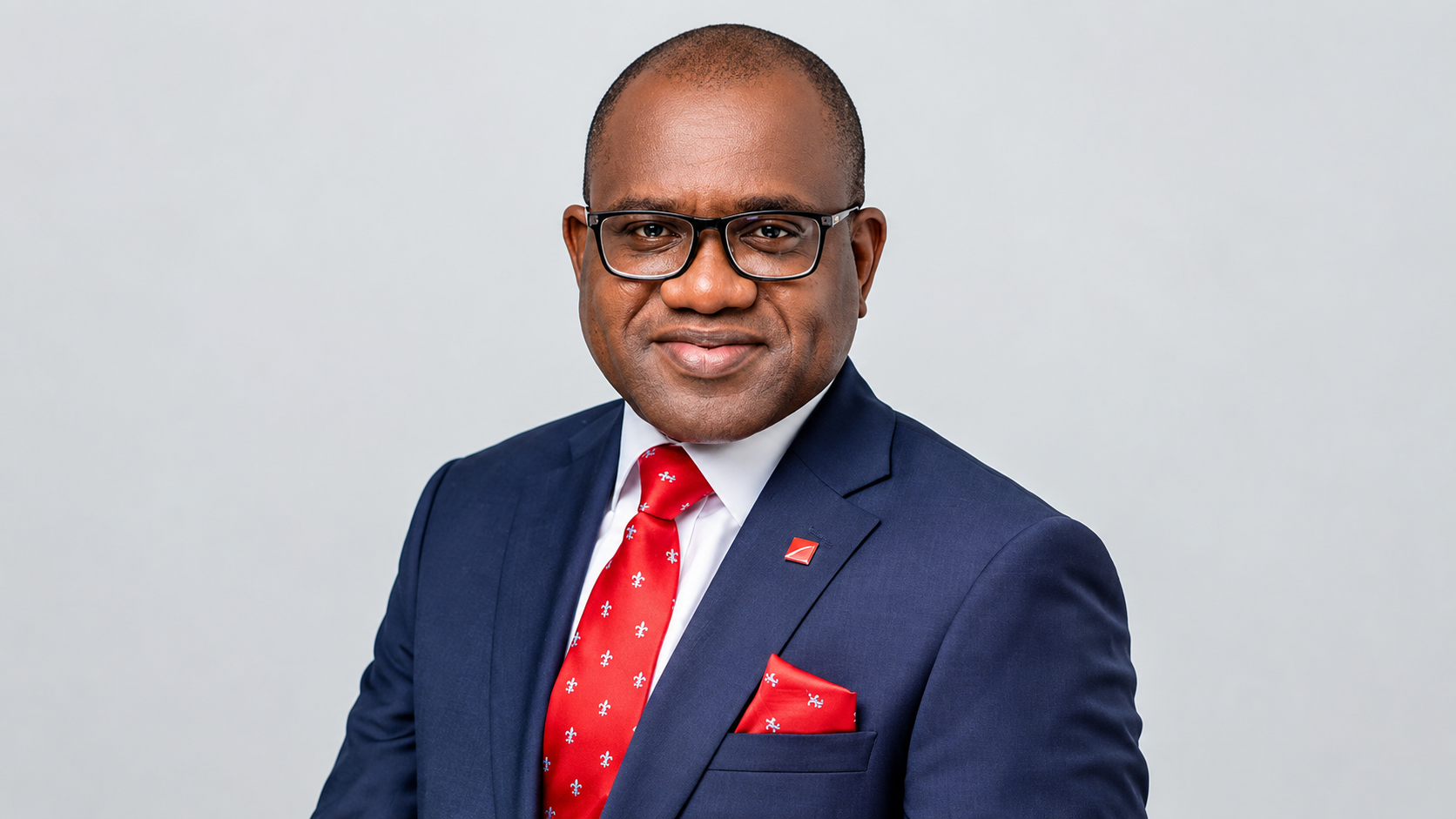
The Managing Director and Chief Executive Officer of Financial Derivatives Company Limited, Bismarck Rewane, has called for a strategic shift towards investment-led growth, arguing that Nigeria must concentrate resources on sectors capable of generating strong economic linkages if it is to achieve its ambition of becoming a $1 trillion economy.
Speaking on Africa’s economic leap, Rewane said Nigeria’s growth ambitions would require more than headline targets, stressing the need for realistic policies, increased private investment, improved productivity and greater consistency in economic management.
YOU CAN ALSO READ: Taiwo Oyedele Unveils Nigeria’s Next Industrialisation Push as Economy Gains Momentum
He noted that Nigeria has set an ambition of reaching a $1 trillion economy, alongside targets for sustainable growth averaging 7 percent annually, becoming Africa’s largest economy and reducing poverty.
According to Rewane, achieving these objectives would require a significant increase in investment, which he described as the critical driver of the economic multiplier. He pointed to the expansion of Nigeria’s capital market as evidence of growing investor participation, noting that total investment in listed equities has risen significantly over the years.
Rewane argued that Nigeria should adopt the principle of “unbalanced growth” by concentrating resources on strategic sectors with strong backward and forward linkages rather than attempting to develop every sector simultaneously.
He cited the experiences of countries including South Korea, Taiwan, China, Mauritius and Rwanda, where targeted investment in selected sectors helped create wider economic activity. Mauritius, for instance, leveraged its sugar industry to finance infrastructure, human capital and new economic activities, including tourism. Rwanda, he said, focused resources on tourism and ICT and subsequently recorded significant economic growth.
Rewane said Nigeria could draw similar lessons by prioritising sectors such as ICT, oil refining, construction and infrastructure. He argued that these industries could create demand across multiple areas of the economy and generate wider multiplier effects.
“Nigeria does not need balanced investment across every sector. It needs strategic investment in sectors capable of creating linkages,” Rewane said.
He identified oil and gas, agriculture and agro-processing, fertiliser, cocoa, mining, regional manufacturing and the creative industries as areas where Nigeria has significant comparative advantages.
According to him, the development of these sectors must be supported by reliable electricity, improved security, better infrastructure, higher productivity and predictable government policies.
Rewane also warned that corruption and inefficiency remain major constraints to economic growth, stressing that while inefficiency can slow an economy, the combination of corruption and inefficiency can have a much more damaging effect.
He pointed to the development of Nigeria’s refining capacity as an example of the potential multiplier effect of large-scale investment. He said investments in refining, petrochemicals, manufacturing, agriculture, electricity, transport and logistics could create interconnected value chains capable of strengthening domestic production.
The economist further argued that Nigeria should position itself as a hub for West and Central Africa by leveraging its market size and economies of scale. Under such a model, Nigeria could refine oil, produce cement, develop telecommunications, manufacture packaging materials and supply inputs to industries across the region.
Rewane contrasted Nigeria’s economic performance with Singapore, noting the dramatic transformation of the Asian economy from the 1960s to the present. He argued that the comparison demonstrates that economic development is ultimately about improving real living standards rather than simply producing favourable economic statistics.
He said Nigeria’s transformation would require regional integration, economies of scale, investor confidence, security, private investment, government incentives and, above all, policy consistency.
YOU CAN ALSO READ: Bill Gates Hails Warren Buffett at 96, Says ‘I’ve Never Stopped Learning From Him’
In his conclusion, Rewane said Nigeria’s strongest growth opportunities lie in sectors with powerful backward and forward linkages that can raise productivity, expand productive capacity and attract further private investment.
He urged policymakers to maximise positive economic multipliers while reducing leakages, particularly through reforms in transport, electricity, security and governance.
For Rewane, Nigeria’s path to becoming a major African economic hub will depend on its ability to turn strategic investment into broader productive capacity, stronger businesses, improved livelihoods and sustainable economic growth.