These men are often seen as extraordinary for one reason: they invest their own money into building public infrastructure. The question many ask is, why would anyone do that?
The original design we were given, frankly, looked like a shed. I felt embarrassed by it. I went back to the minister and said, “Look, I’ve found a better design in South Africa.” You cannot build an airport using three-year money or even four-year money. It simply is not possible.
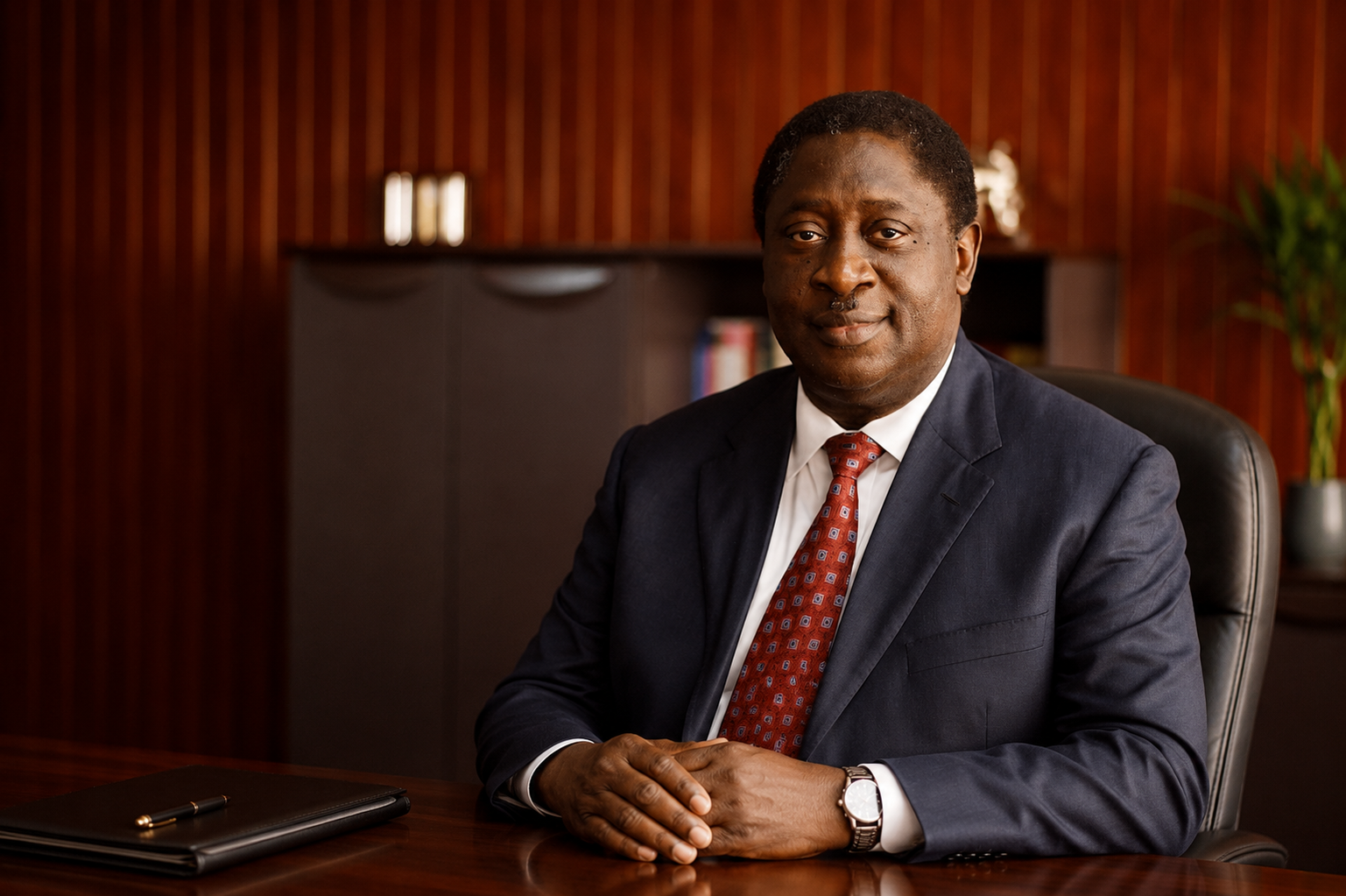
Wale Babalakin, a leading lawyer and entrepreneur, is at the center of Nigeria’s private airport revolution. Eighteen years ago, he built Nigeria’s main domestic airport terminal in Lagos, the country’s commercial capital, where we met for this conversation. He began by explaining how he entered the airport business.
YOU CAN ALSO READ: Beyond Capital: How Mezuo Nwuneli Is Investing in Africa’s Future
The government had advertised a bid, an unusual approach at the time in Nigeria. But the response was not very enthusiastic because Nigerians are used to the government awarding contracts, not inviting investors to fund projects and wait for returns.
We submitted a bid but did not win initially. We came in as reserve bidders. About a year later, the government invited us back because they were not satisfied with the company that had won the contract.
We started from scratch. We even had to demolish what had already been done.
We were initially given a design, but while visiting South Africa, I saw their domestic terminal nearing completion. The difference between theirs and what we had was striking. I felt embarrassed. I returned to the minister and said, “We are not going to proceed with this design. I have found a better one in South Africa.”
The minister, Kema Chikwe, was very supportive. She told us to proceed with our design as long as we completed it on schedule. No extension of time would be granted. We had about three years.
We brought in a South African design team, completely revised the plan, and built the terminal from scratch. It was more expensive and more demanding, but at the end, it was worth it. We delivered on schedule and have been operating for 18 years now.
When asked what makes a successful airport terminal, Babalakin emphasized that good design is often underrated but absolutely essential. An airport must be designed to ensure smooth traffic flow and avoid congestion, especially with heavy passenger volumes.
During the design stage, extensive simulations were carried out to anticipate future traffic growth. Even today, about 40 percent of the terminal’s capacity remains underutilized.
Currently, passenger traffic is estimated at about 10,000 people per day, though the terminal can easily handle up to 40,000. Cargo operations are also expanding, particularly with improved refrigeration and logistics services.
He explained that airports are not just transit points; passengers spend significant time there. As a result, the terminal was designed with extensive amenities, including restaurants, retail outlets, and even supermarket-style shopping areas.
The goal was to create a full experience, almost like a commercial marketplace within an airport. Passengers can dine, shop, and relax before their flights.
When asked when the project became financially viable, he explained that it took time due to policy and structural challenges. Airports are long-term investments and do not yield quick returns. However, with persistence, returns do come.
He noted that future financing models will likely involve equity and bank loans initially, with pension funds eventually buying into the debt, allowing for long-term capital structures. Pension funds, with their long-term horizons, are well suited to infrastructure investment.
He believes this model is the future for Nigeria and similar economies. Governments, with many competing responsibilities, can benefit from private sector participation in building infrastructure such as airports, roads, and hospitals, under clear agreements.
YOU CAN ALSO READ: Alex Spiro: The High-Stakes Lawyer Trusted by Elon Musk, Jay-Z, and Hollywood’s Elite
According to him, the aviation sector is expanding rapidly, and the model he pioneered is becoming more viable. Today, Nigerian banks are stronger and more capable of financing such projects independently, unlike in the past when syndication was required.
Eighteen years ago, he recalls, many people thought they were “crazy” for investing private money in public infrastructure. There was little support or understanding at the time. Today, the environment has improved significantly, and there is far more confidence in such investments.
While acknowledging that political transitions can bring uncertainty, he remains optimistic that improvements will be institutionalized through proper laws and policy frameworks, reducing reliance on individual discretion.
Looking ahead, he believes the key requirement is government support through stable policy and non-interference, rather than direct funding. With that in place, private investors can plan, invest, and sustain long-term capital projects effectively.