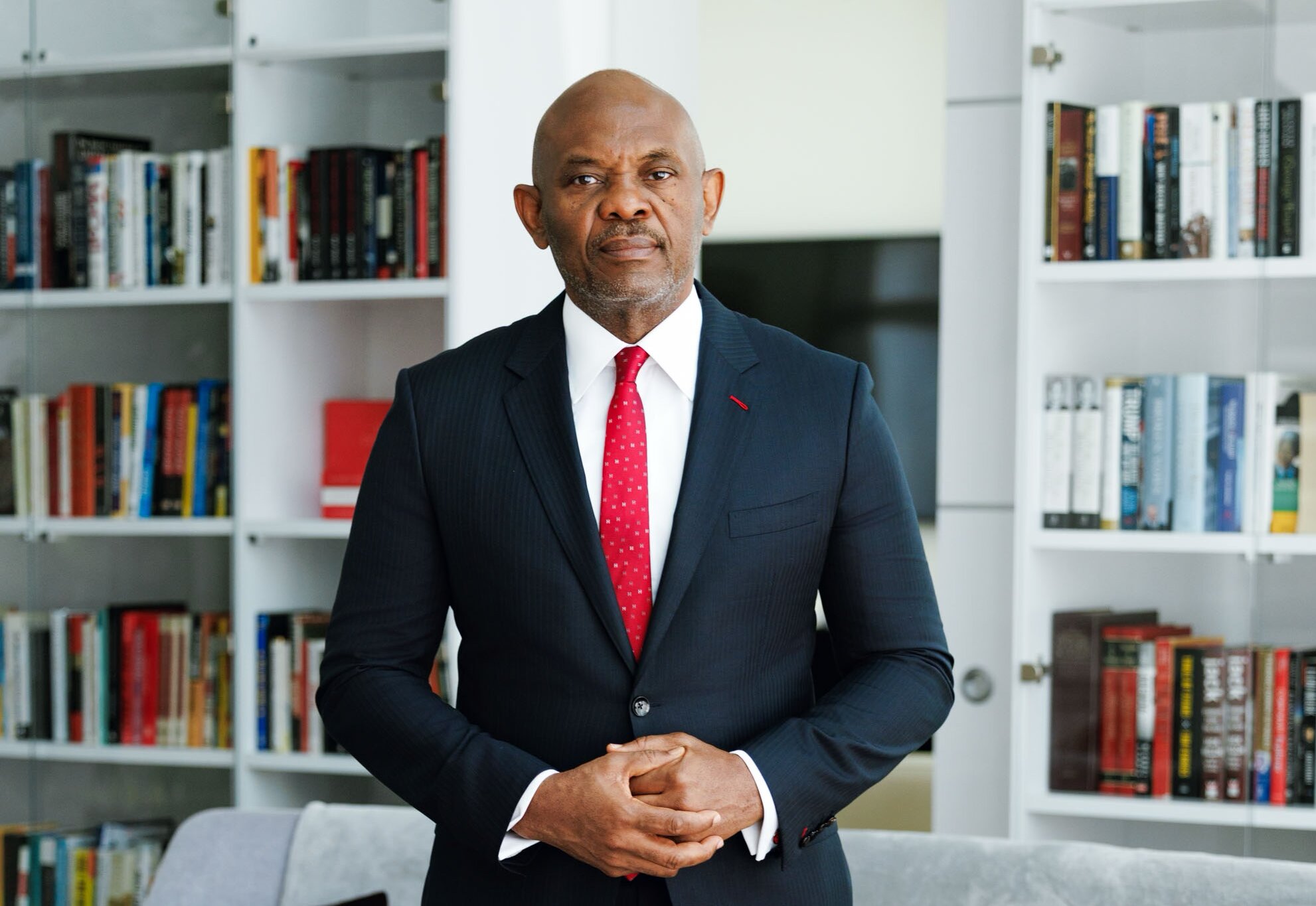
There are moments in corporate history that transcend leadership transitions. They become defining statements about vision, legacy and the future a leader chooses to leave behind. For Tony Elumelu, his farewell as Chairman of the Group Board of United Bank for Africa (UBA) is one of those moments. After twelve years as Chairman and decades of helping shape one of Africa’s most influential financial institutions, Elumelu is not focused on celebrating personal milestones. Instead, he is championing an idea that has become the defining philosophy of his career: institutions matter more than individuals.
“Why create an institution?” he asks. His answer is both simple and profound: “To ensure that an institution can live long, grow ever stronger and deliver a vision.” That belief has guided not only UBA’s remarkable transformation but also Elumelu’s broader mission across Africa. For years, while many investors viewed Africa as fifty-four fragmented markets, Elumelu saw one continent bound by a shared destiny. He believed Africa’s future depended less on geography and more on confidence, investment and enduring institutions.
In his view, Africa has never lacked brilliant people. What it has lacked, he argues, are institutions strong enough to outlive the brilliance of those who build them.
YOU CAN ALSO READ: Can Humanity Stay Wise in a World Governed by Algorithms?
That conviction became the blueprint for UBA’s evolution. Under his leadership, what began as a Nigerian commercial bank became what is now proudly known as Africa’s Global Bank. Today, UBA serves more than 50 million customers, operates in 20 African countries and maintains a presence across four continents. It finances trade, supports governments, empowers entrepreneurs and connects African businesses to global markets while remaining proudly African at its core.
For Elumelu, this was never simply about geographic expansion; it was about proving that an African institution could compete confidently on the world stage without losing its identity. “We took a Nigerian bank and made it an African one,” he reflects. “Africa deserved a world-class financial institution that remained proudly African at its core.”
Behind those achievements lies another leadership lesson. True leadership, Elumelu believes, is measured not by how long someone occupies the boardroom, but by whether the institution is stronger when they leave. “Leadership is not about holding onto a position,” he says. “It is about knowing when an institution is ready for the next chapter.” That philosophy explains why he approaches his departure with optimism rather than nostalgia, crediting generations of employees, executives, directors, regulators, shareholders, customers and partners whose collective efforts transformed a vision into reality.
His confidence extends naturally to his successor. As Emmanuel N. Nnorom prepares to assume the chairmanship of UBA, Elumelu expresses complete faith in his ability to provide continuity and strategic direction. He urges shareholders, customers, partners and the entire UBA family to offer him the same trust and support that sustained his own leadership, confident that the institution is well positioned for its next phase of growth.
Yet stepping away from UBA does not signal retirement. Instead, it marks another chapter in an even larger mission. Sixteen years earlier, after leaving executive management at the bank, Elumelu turned his attention to building businesses through Heirs Holdings and empowering entrepreneurs through the Tony Elumelu Foundation. That commitment has only expanded. Today, his investments span financial services, power, energy, healthcare, hospitality, technology and other strategic sectors, while the Tony Elumelu Foundation continues to empower entrepreneurs across all 54 African countries.
YOU CAN ALSO READ: Aliko Dangote’s Master Plan to Make Africa a Global Industrial Power
At the heart of this work is the philosophy he calls Africapitalism, the belief that Africa’s transformation will not come through charity or aid, but through long-term investment, entrepreneurship and private-sector leadership. “It is not charity,” he says. “It is ownership. Dignity. Enterprise.” Looking back, Elumelu sees UBA as Africapitalism brought to life. Every small business financed, every farmer welcomed into formal banking, every graduate given a first opportunity and every entrepreneur whose ambition found support represents the true return on investment. The financial results matter, but the human impact matters even more.
As he steps down on August 21, 2026, Elumelu does not describe the moment as an ending. He sees it as proof that the institution has become larger than the individual who helped build it. In a continent where succession often tests organisations, UBA offers a different story, one where continuity triumphs over personality and institutions endure beyond their founders.
That may ultimately become Tony Elumelu’s greatest legacy: not simply that he built one of Africa’s largest banks, but that he built an institution designed to outlive him, and, in doing so, offered a blueprint for Africa’s economic future.