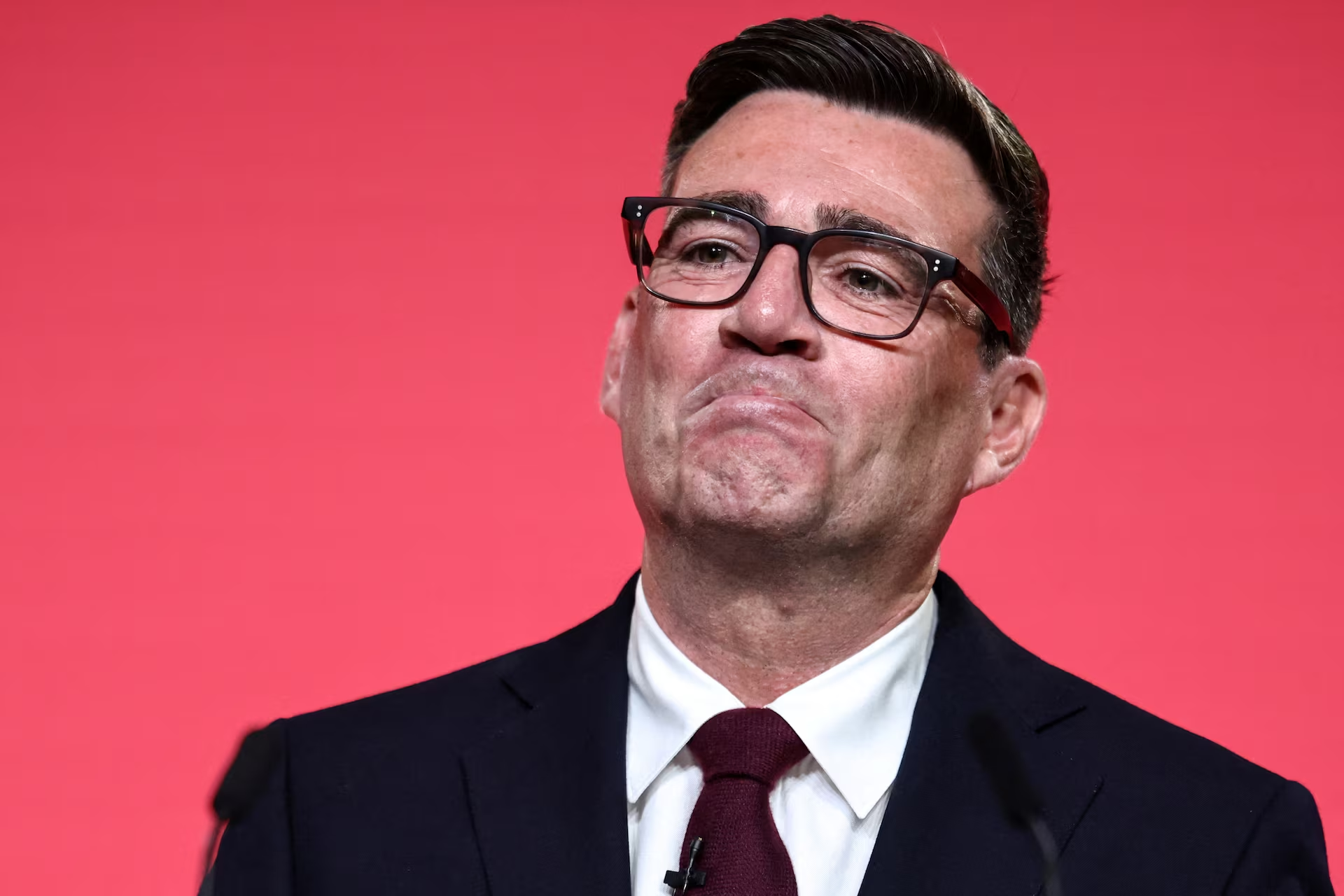
Andy Burnham has officially taken office as the Prime Minister of the United Kingdom, promising to usher in a new era of economic renewal, political stability, and public service reform after succeeding Sir Keir Starmer as leader of the Labour Party and head of government.
Burnham, who previously served as the Mayor of Greater Manchester and held several senior Cabinet positions, was formally appointed by King Charles III following Starmer’s resignation. His elevation to Britain’s highest political office marks a significant leadership transition as the country grapples with sluggish economic growth, rising living costs, mounting pressure on public services, and growing geopolitical uncertainty.
In his first address outside 10 Downing Street, Burnham pledged to rebuild trust in government and place the needs of ordinary citizens at the centre of his administration. He said his government would focus on creating better jobs, improving healthcare, tackling housing shortages, strengthening public transport, and investing in education and innovation.
YOU CAN ALSO READ: Why Jane Egerton-Idehen Left Meta for Nigeria’s Space Mission
“We will build a Britain that works for everyone,” Burnham declared, adding that his administration would be guided by competence, fairness, and long-term thinking rather than short-term political calculations.
One of the new Prime Minister’s immediate priorities is the launch of a comprehensive economic strategy aimed at stimulating investment, boosting productivity, and supporting businesses across the country. The plan, which Burnham described as a blueprint to “rewire Britain,” is expected to focus on infrastructure development, regional economic growth, clean energy, digital innovation, and advanced manufacturing.
His administration has also pledged to address the country’s persistent cost-of-living pressures by implementing targeted measures to support working families while maintaining fiscal responsibility. The government is expected to unveil additional details of its economic programme during the coming parliamentary session.
Burnham wasted little time in reshaping the government, announcing a new Cabinet that reflects his leadership priorities. John Healey was appointed Chancellor, while former Energy Secretary Ed Miliband will serve as Foreign Secretary. The appointments are seen as an attempt to combine experience with a renewed policy direction as Labour seeks to consolidate its position in government.
Political analysts believe Burnham’s leadership style, shaped by years of experience in local government, could bring a stronger emphasis on regional development and devolved decision-making. During his tenure as Mayor of Greater Manchester, he earned widespread recognition for championing transport reform, affordable housing, healthcare integration, and community development, achievements that many expect to influence his national agenda.
However, Burnham assumes office at a time of significant challenges. Britain’s economy continues to face weak growth, inflationary pressures, and demands for increased investment in public services. The National Health Service, housing sector, and local councils remain under considerable strain, while businesses continue to call for greater policy certainty to encourage investment.
On the international stage, the Prime Minister reaffirmed Britain’s commitment to supporting Ukraine, strengthening NATO, and maintaining close relationships with key allies, including the United States and European partners. He also emphasised the importance of expanding trade opportunities and positioning the UK as a global leader in clean energy, technology, and advanced industries.
Burnham’s first day in office also attracted international attention after U.S. President Donald Trump congratulated him while raising concerns about wind turbines near his golf resort in Scotland. Despite their political differences, both leaders expressed a willingness to maintain constructive relations, with Burnham extending an invitation to Trump to visit Manchester during the 2027 G20 Summit.
YOU CAN ALSO READ: How Nigeria’s Economic Stability Can Deliver Shared Prosperity – KPMG Nigeria
The new Prime Minister succeeds Sir Keir Starmer, whose government secured a historic Labour victory in the 2024 general election. In his farewell remarks, Starmer highlighted achievements including expanded workers’ rights, stronger cooperation with European allies, and continued support for Ukraine, while acknowledging the economic headwinds and political challenges that shaped his administration.
As Burnham begins his tenure, expectations remain high. His ability to translate campaign promises into measurable improvements in the economy, healthcare, housing, and public confidence will likely define both his leadership and the future direction of the United Kingdom in the years ahead.