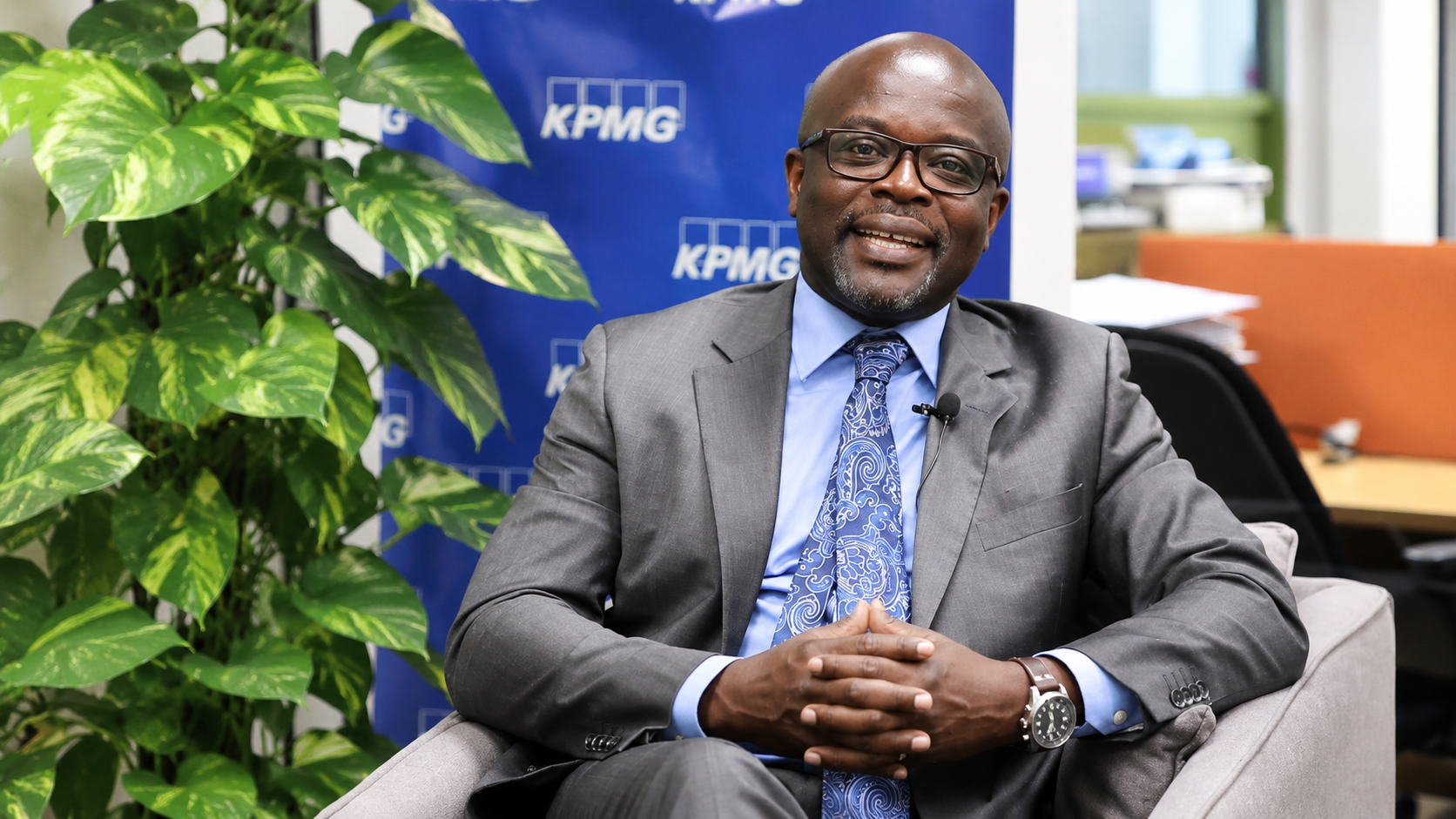
Economic reforms are often judged by policy announcements, market reactions, and macroeconomic indicators. Yet their true measure lies elsewhere, in whether they improve the lives of ordinary people. Stable exchange rates, stronger reserves, and rising GDP are important milestones, but they become meaningful only when they translate into better jobs, higher incomes, improved access to opportunities, and a higher quality of life. That conviction shaped the keynote address delivered by the Chief Executive Officer of KPMG Nigeria, Tola Adeyemi, at the 2026 BusinessDay CEO Forum.
Addressing an audience of business leaders, policymakers, and senior executives, Adeyemi argued that Nigeria had reached a defining moment in its economic journey. Having made considerable progress in restoring macroeconomic stability through a series of reforms, the country’s next challenge was ensuring that stability evolved into shared prosperity. Economic growth, he said, should not be celebrated solely because it appears in statistical reports. It should be judged by whether its benefits are broadly distributed across society.
Congratulating BusinessDay for consistently providing a platform for meaningful conversations on Nigeria’s economy, Adeyemi structured his presentation around six important questions. What is shared prosperity? Why does it matter? How should it be measured? Where does Nigeria currently stand? What more needs to be done? And what role should government, business, and citizens play in achieving it?
YOU CAN ALSO READ: Rewriting Nigeria’s Economic Story: The Taiwo Oyedele Strategy
Before addressing those questions, however, he believed it was important to establish context. According to Adeyemi, conversations about Nigeria’s economy often overlooked how difficult the country’s position had been only a few years earlier. The economy had been weighed down by an unsustainable fuel subsidy regime, multiple exchange-rate windows, accelerating inflation, and significant macroeconomic imbalances. The reforms introduced over the past three years, spanning fiscal policy, monetary policy, financial sector resilience, trade, and structural adjustments, were designed to rebuild economic stability rather than simply improve existing conditions.
Implementing those reforms, he noted, was never going to be straightforward. To illustrate the complexity of the task, Adeyemi shared an aviation analogy that captured the audience’s attention. He described Nigeria’s economic reforms as being like flying an aircraft while simultaneously repairing its engine. Recalling a conversation with an aviation enthusiast, he explained that pilots facing an engine crisis are taught three priorities: aviate, navigate, and communicate. First, keep the aircraft safely in the air. Second, determine the destination and chart the route. Third, communicate clearly with both air traffic control and passengers. For Adeyemi, those same principles applied to national economic management. Governments must first preserve stability, then define a clear direction, and finally communicate consistently enough to maintain confidence throughout the reform process.
Three years into Nigeria’s reform programme, Adeyemi observed that several macroeconomic indicators had begun moving in the right direction. Economic growth had strengthened, external balances had improved, exchange-rate stability had increased, and investor confidence had gradually returned. From KPMG’s engagements with clients and investors, he said there was growing optimism about Nigeria’s economic prospects, reinforced by improving international credit assessments and stronger market sentiment.
Still, he cautioned that macroeconomic stability should never be mistaken for shared prosperity. Stability created the foundation for growth, but it did not guarantee that growth would improve living standards or expand opportunities for the wider population.
Drawing on definitions from institutions including the World Bank, the OECD, and the World Economic Forum, Adeyemi explained that shared prosperity goes beyond measuring national output. It reflects whether economic growth improves living standards, expands access to opportunities, reduces inequality, and ensures that progress reaches those who need it most, particularly lower-income households.
He argued that achieving shared prosperity was critical because it made reforms more sustainable. When a greater proportion of the population benefits from economic growth, public support for reforms strengthens, poverty declines, inequality narrows, and social cohesion improves. Inclusive growth, he suggested, ultimately creates a more stable environment for investment and long-term development.
One of the central contributions of Adeyemi’s presentation was his proposal for an objective framework to measure shared prosperity. Rather than relying on perceptions or political narratives, KPMG developed an illustrative scorecard built around four broad themes: inclusive economic growth, well-being and living standards, equity and inclusion, and access to opportunity. Each category incorporated measurable indicators such as GDP growth, labour productivity, inflation, household disposable income, multidimensional poverty, financial inclusion, electricity access, internet penetration, education, healthcare, and access to credit.
Using comparator economies as benchmarks, KPMG assessed Nigeria’s current performance across these indicators. While some measures showed encouraging progress, many others revealed that significant gaps remained. Poverty levels, educational outcomes, infrastructure access, financial inclusion, and several quality-of-life indicators continued to fall below benchmark levels. For Adeyemi, the findings reinforced an important conclusion: macroeconomic reforms had stabilised the economy, but much more work remained before their benefits could be described as broadly shared.
The next phase of reform, he argued, required greater emphasis on implementation. Nigeria had already introduced numerous policy initiatives capable of supporting inclusive growth. The priority now should be accelerating the implementation of high-impact reforms, particularly in electricity, taxation, trade facilitation, and institutional coordination. He also stressed the importance of reducing administrative bottlenecks and strengthening collaboration across federal, state, and local governments to improve policy execution.
Adeyemi further observed that Nigeria’s limited fiscal resources made prioritisation essential. Public funding, he argued, should increasingly be directed toward programmes capable of delivering the greatest economic and social impact. Effective budgeting and disciplined allocation of scarce resources would determine how quickly reforms translated into improvements in citizens’ daily lives.
Equally important, he said, was accountability. Governments should establish measurable targets for shared prosperity and publish regular performance updates using transparent indicators. An objective national scorecard would enable citizens, businesses, investors, and policymakers to monitor progress, identify gaps, and refine policy interventions where necessary. Measuring outcomes, he argued, creates greater accountability and improves the quality of public decision-making.
YOU CAN ALSO READ: Why Sola Adesakin Says Most People Don’t Have Income Problem
While government remained central to the reform agenda, Adeyemi made it clear that shared prosperity could not be delivered through public policy alone. Businesses, he said, must contribute through sustained investment, job creation, skills development, responsible corporate governance, and stronger collaboration with government. Civil society and citizens likewise had important roles to play in strengthening accountability and supporting reforms that promoted long-term national development.
Ultimately, Adeyemi’s message extended beyond economics. He challenged leaders to redefine success not simply by the strength of financial markets or the pace of economic growth, but by the extent to which growth created opportunities for everyone. Stability, he argued, had laid the foundation. The next chapter would be determined by whether Nigeria could transform that stability into inclusive prosperity that reached households, strengthened communities, expanded opportunity, and improved the lives of millions.
For Adeyemi, that transformation would require more than sound economic policy. It would demand disciplined implementation, measurable accountability, sustained collaboration, and a shared commitment to ensuring that national progress was reflected not only in economic statistics, but in the everyday experiences of Nigerians across the country.