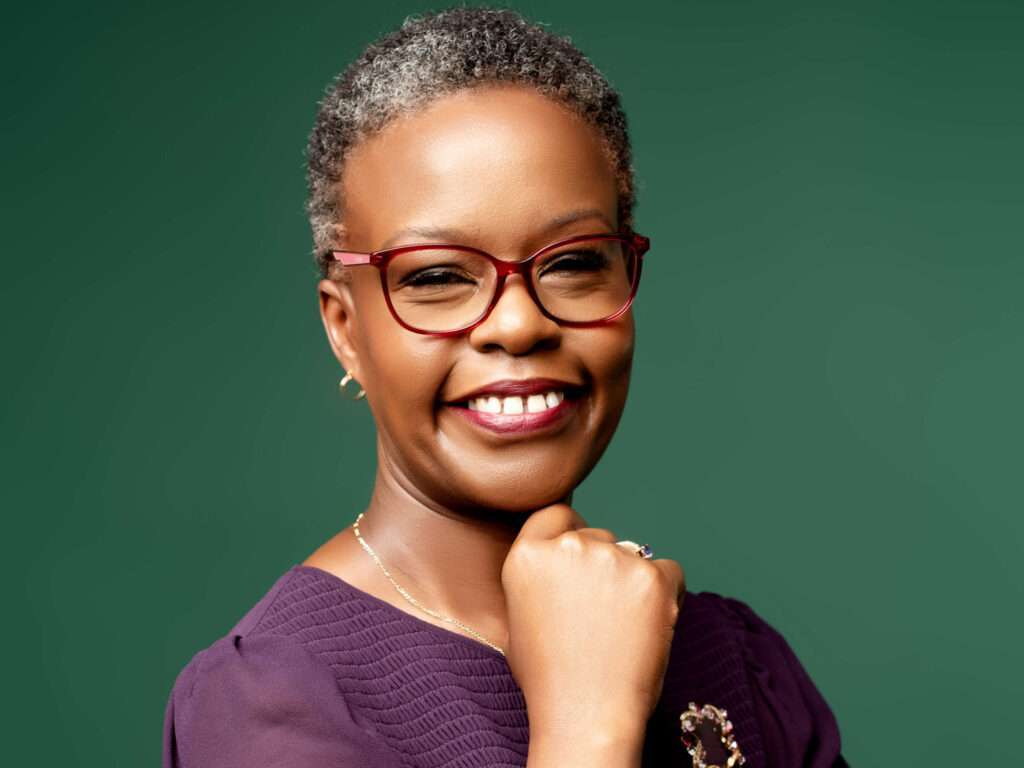
There are leaders who arrive at the top through carefully calculated plans, and then there are leaders like Anne Muraya, who somehow stumble into greatness through curiosity, courage, and an unshakable refusal to be intimidated. Her story is not the polished corporate fairytale often associated with executives who lead global institutions. It is far more human, layered with accidental beginnings, brutal boardrooms, motherhood, fearless ambition, and the quiet determination of a woman who refused to shrink herself to fit expectations.
Today, she leads one of Africa’s most influential professional services firms, but decades earlier, she was simply a university student with “two months to kill,” no accounting background, and absolutely no understanding of debits and credits. “I strayed into Deloitte completely by mistake,” she admitted with laughter. “I did no accounting at all.” That “mistake” would become a remarkable 31-year journey from intern to CEO.
Long before she entered boardrooms, Anne learned something unusual at home: fear was optional. Raised by an army general, she witnessed two different versions of leadership. Outside the home was the intimidating commander whose arrival triggered salutes and silence across military barracks. Inside the home was a relaxed father who joked freely, encouraged questions, and allowed his children to challenge ideas openly. “If I’m not afraid of an army general, who am I afraid of?” she joked. That upbringing shaped one of the defining pillars of her leadership style, curiosity without intimidation.
YOU CAN ALSO READ: Transcorp Reinforces Position as One of Africa’s Leading Conglomerates
Muraya asks questions relentlessly, challenges assumptions, speaks up when things make no sense, and openly admits when she does not know something, a level of vulnerability many executives spend their careers avoiding. “The combination of not being afraid and being curious is what gets me there,” she explained. “When I don’t know, I don’t know. I’ll ask.” In environments where many professionals fear looking incompetent, that mindset became her competitive advantage.
When she joined Deloitte as an intern, Muraya was academically out of place. She had studied mathematics and chemistry, not accounting. People assumed she would naturally understand finance because she was mathematically inclined, but she quickly discovered accounting was a completely different language. “Accounting and maths are logical, but they’re completely different,” she said. Instead of pretending to understand, she asked questions constantly. That willingness to learn transformed her career trajectory. She immersed herself in accounting classes, mastered audit systems, and eventually discovered she learned best by teaching others. That realization changed everything. Muraya moved into training and technical leadership roles, becoming one of the firm’s strongest accounting experts.
Her visibility grew, her confidence deepened, and her reputation expanded. She rose from audit learning leader to partner, then audit leader, and eventually CEO of Deloitte East Africa. The journey was not glamorous. It was built on competence, consistency, and the willingness to tackle difficult assignments others avoided. “Put up your hand to do hard things,” she advised. “That’s where you learn the most.”
Even after proving herself professionally, Muraya still had to navigate the subtle and blatant biases that female executives routinely face. One moment stood out sharply. After becoming a senior manager, she proudly bought her first Mercedes C-Class, a personal symbol of achievement after years of hard work. Instead of congratulations, one male colleague assumed the car had been financed by a wealthy man. “Someone is taking very good care of you,” he remarked. Her response was immediate and unforgettable.
“I told him, ‘You pay me enough to buy this car.’” The room erupted in laughter, but beneath the humour was a painful truth about how women’s success is often interpreted differently. At the time, professional services was overwhelmingly male-dominated. Most senior leaders had stay-at-home spouses and struggled to understand the realities of ambitious professional women balancing careers, motherhood, and leadership. Muraya often found herself not only doing the work, but also educating the people around her.
Perhaps nowhere was that bias more visible than during pregnancy. While expecting her second child, Muraya was asked whether she could still manage a major rights issue transaction, one of the most significant financial assignments at the time. Her response instantly became legendary. “I’m just wide in the middle,” she said. “My brain is intact.” It was witty, sharp, and deeply revealing. For many women in leadership, pregnancy unfairly becomes a question mark over competence. Muraya rejected that narrative completely. She continued handling complex assignments, managing teams, raising children, and climbing the corporate ladder simultaneously. “I love my family and I love my work,” she explained. “I could never be a stay-at-home person.”
Her rise also came with moments of outright condescension. In one early board meeting, she replaced a highly respected senior male partner on an important account, and board members openly questioned whether she was capable. At her first AGM, introductions went around the room: “This is Forest, this is Martin… and that little girl is our auditor.” The youngest director in the room was 68 years old. For many professionals, moments like that can become deeply discouraging, but Muraya approached them differently. She understood that competence eventually silences doubt. “It took me about a year to be accepted,” she recalled. “But after that, they completely trusted me.” Eventually, the same board that doubted her postponed meetings when her child fell ill because they valued her presence so highly. Respect, she proved, can still be earned even in resistant spaces.
As CEO, Muraya has intentionally built a leadership culture that rejects intimidation. She remembers how frightened employees initially were around her despite her openness. To break those barriers, she created “CEO Hours,” where employees could simply ask questions and talk freely. Later, she transformed the sessions into casual breakfasts held outside formal office settings to make conversations feel more human. “It’s just humans talking to other humans,” she said. That philosophy reflects a broader shift in modern leadership where authority no longer comes from distance or fear, but from accessibility, emotional intelligence, and authenticity.
Behind the humour and relatability lies extraordinary discipline. Raising two children only one year and ten months apart while navigating senior corporate leadership required military-level organization. “There’s some five years where I honestly don’t know what was happening,” she laughed. She sacrificed much of her social life, structured every aspect of her routine, challenged rigid systems, and learned how to ask boldly for flexibility when needed. When schools demanded attendance on impossible dates, she negotiated alternatives. When expectations became unreasonable, she pushed back calmly but firmly. That same fearlessness that defined her corporate rise also shaped her parenting and personal life.
YOU CAN ALSO READ: “Calm Down, Drink Cold Water”: Tara Fela-Durotoye Gives Life Advice to Gen Z Entrepreneurs
Away from the office, Muraya discovered another secret weapon: movement. She hikes monthly with a close-knit group, walks several kilometers most mornings, and even completed three half marathons in a single year. “I finished,” she laughed. “That was the point.” For her, hiking is less about fitness and more about mental clarity. “When you’re climbing and thinking about where your foot goes next, all the other rubbish in your head disappears.” That philosophy mirrors her broader approach to life: focus on the next step, not the noise around you.
At a time when leadership conversations are increasingly dominated by titles, valuations, and corporate performance metrics, Anne Muraya offers something far more enduring. Her story reminds young professionals that brilliance does not always begin with certainty. Sometimes it begins with confusion, mistakes, curiosity, and the courage to ask questions. It proves that leadership does not require perfection; it requires growth. It demonstrates that women do not need to shrink their ambition to preserve their femininity, motherhood, or humanity. And perhaps most importantly, it shows that the people who change organizations are often the ones brave enough to say: “I don’t know. Teach me.” From a clueless intern who accidentally walked into Deloitte to the CEO of Deloitte East Africa, Anne Muraya’s journey is not simply a corporate success story. It is a masterclass in fearless authenticity.