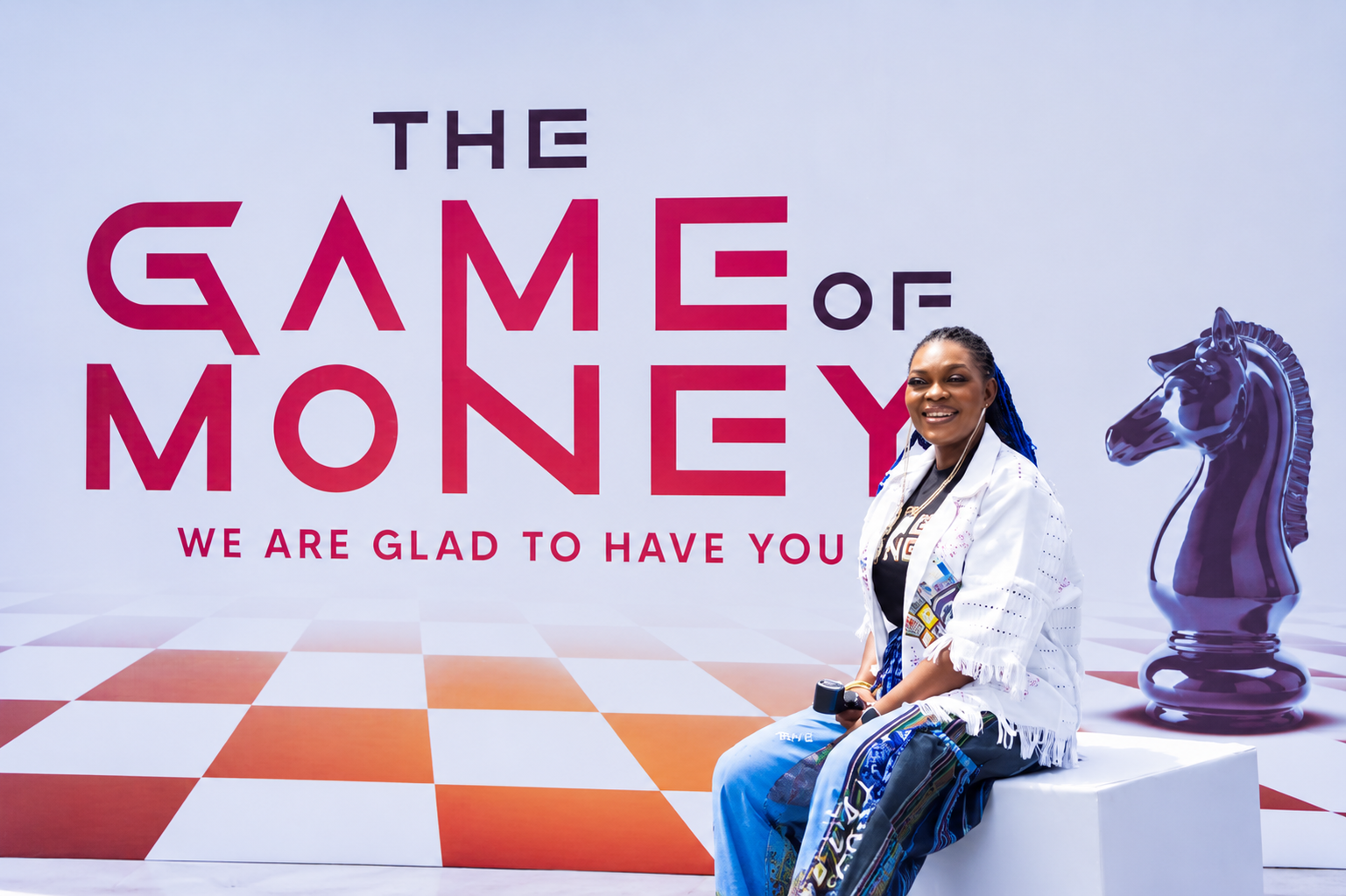
In a financial climate shaped by inflation, shifting job markets, and rising cost of living, The Game of Money Conference 3.0 arrived in Lagos with a bold and counterintuitive message. Salary is not a limitation. It is a financial instrument that, when properly understood and managed, can become the foundation of wealth.
Hosted by Nigerian real estate entrepreneur, television host, and CEO of REB360 Limited Tope Mark-Odigie, the conference gathered a cross section of professionals, entrepreneurs, corporate leaders, and aspiring investors under the theme How to Build Wealth on a Salary. The focus was clear and deliberate. Practical financial education, disciplined money management, and long term investment strategies designed for everyday earners.
Now in its third edition, the conference reflects a deliberate evolution in both philosophy and focus. The first edition introduced participants to the broader principles of mastering money and financial awareness. The second edition narrowed the lens to personal financial transformation and behaviour change. This third edition sharpened the focus further, placing salary earners at the centre of the conversation.
YOU CAN ALSO READ: Uche Ugboh: Banker Who Learned Early That Salary Alone Was Not Enough
The message was intentional. Too many professionals underestimate the financial potential of their income. Many assume wealth is reserved for entrepreneurs or high net worth individuals. This conference challenged that assumption directly.
A defining voice of the event was Head of Treasury Markets Nigeria at Standard Chartered Bank Uche Ugboh, whose session became one of the most reflective and emotionally resonant moments of the conference.
Ugboh delivered far more than a technical explanation of financial markets. He offered a deeply personal account of ambition, discipline, failure, growth, and the realities of building a career in Nigeria’s financial ecosystem. He traced his journey back to 2005 when he began his banking career on a monthly salary of ₦35,235, a figure that immediately drew attention and laughter from the audience.
“How does a salary that cannot even take me to the post office somehow take me home?” he asked with humour, setting a tone that was both relatable and disarming.
Yet behind the humour was a deeper message about financial survival and intentionality. Ugboh explained that early in his career, he quickly realised that salary alone could not define his future. What mattered was how he positioned himself, developed his skills, and built long term value beyond job titles.
He also shared a pivotal moment that reshaped his professional trajectory. At age 29, despite steady promotions and performance, he was told he was “too old for his grade.” Rather than discourage him, the comment became a catalyst for reinvention.
“That moment taught me that potential alone is not enough. You need skill,” he said.
This realization pushed him into a deliberate transition from banking operations into treasury and financial markets, a shift that opened the door to global exposure, currency trading, economic analysis, and complex market operations that now define his role.
Today, his work involves interpreting global financial trends, managing treasury operations, and making decisions that influence institutions across borders. However, he was firm in his assertion that none of this was achieved through formal education alone.
“It comes from your capacity to develop yourself,” he explained. “No employer can truly pay you your worth. What determines your transition is the value you carry.”
Throughout his session, Ugboh repeatedly returned to themes of discipline, patience, and financial structure. He warned against lifestyle inflation, emotional spending, and the pressure to maintain appearances at the expense of financial health.
After you save and invest, whatever remains is what you spend, he stated, a line that resonated strongly with attendees.
He also spoke candidly about early investment mistakes, particularly losses incurred in the capital market. Rather than frame them as setbacks, he described them as some of his most valuable financial lessons.
Never put all your eggs in one basket, he cautioned, emphasising diversification as a core principle of financial survival.
For Ugboh, wealth is not defined by luxury or accumulation but by freedom. The freedom to make choices, the freedom to walk away from limitations, and the freedom to design one’s life without financial fear.
If you want to become wealthy, softness cannot be part of your vocabulary, he stated with conviction.
Another powerful contribution came from financial literacy advocate and entrepreneur Sola Adesakin, who reinforced the importance of systems over hustle culture. She encouraged participants to move beyond motivation and focus on structure, discipline, and financial systems that sustain wealth creation.
Anything you want to do must go beyond passion. You must build systems around it, she said. Hustle is exhausting, but systems are rewarding.
She broke down investing into five major asset classes including cash equivalents such as mutual funds, fixed income instruments like treasury bills and bonds, equities, real estate, and alternative investments. Her emphasis was not complexity, but accessibility.
You can start with as little as 1,000 or 2,000 naira, she noted. What matters is consistency.
She also urged participants to continuously upgrade their skills, particularly in emerging fields such as technology, artificial intelligence, and soft skills, stressing that financial growth is closely tied to relevance in the modern economy.
Complementing these insights was tech, marketing, and management consultant Victor Afolabi, who delivered a grounded perspective on investing and financial behaviour.
He stressed due diligence, warning participants not to assume trustworthiness in business dealings without verification. In his view, financial discipline begins with careful decision making and intentional investment behaviour.
Whether you earn from salary or business, your income should be directed toward investment, he explained.
He also challenged conventional thinking around income as a measure of success. Income, he argued, is fragile and temporary. Jobs can be lost. Businesses can fail. However, wealth built through assets provides stability that salary alone cannot guarantee.
The key is not how much you earn, but how much you invest, he said.
YOU CAN ALSO READ: Transcorp Reinforces Position as One of Africa’s Leading Conglomerates
Across all sessions, a unified philosophy emerged. Wealth is not accidental. It is engineered through discipline, delayed gratification, continuous learning, and strategic financial planning.
Ugboh’s narrative gave the philosophy emotional weight. Adesakin’s insights provided structure. Afolabi’s perspective grounded it in discipline. Together, they formed a cohesive message about modern financial survival and growth.
The conference also positioned itself as more than an event. It is a long term learning journey. Organizers highlighted tools such as a wealth blueprint workbook, designed to translate knowledge into action, and a podcast series aimed at reinforcing financial principles beyond the conference room.
The ambition is not short term inspiration, but sustained transformation over years.
As the conference drew to a close, one message stood above the rest. Salary is not the end of wealth creation. It is the beginning of a process that, when approached with discipline and intention, can redefine financial futures.
In Lagos, The Game of Money Conference 3.0 did not just talk about wealth. It challenged how it is understood, pursued, and ultimately built.