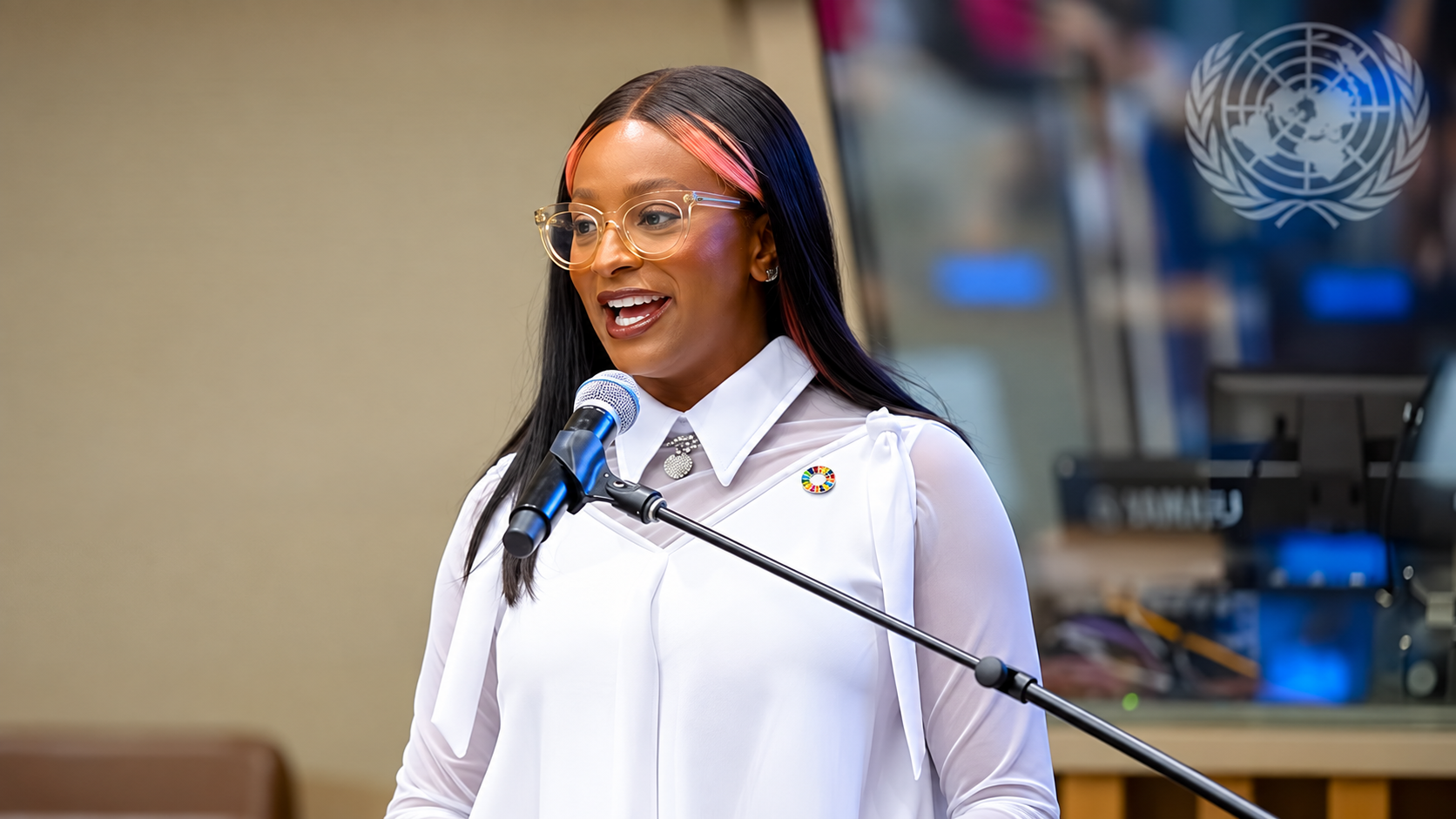
There are people who build businesses, and then there are people who build worlds. Adaora Lumina Mbelu belongs to the latter category. Across Africa’s rapidly expanding creator economy, she has emerged not simply as a founder or strategist but as a force shaping how creators think, build, connect, and evolve. A storyteller, ecosystem architect, and creative visionary, Adaora has dedicated her work to helping people move from potential into realization. Through Lumination and platforms such as Crea8torium, SwitchOnAtWork, and ZLead, she is creating spaces where ideas become movements and creators become culture shapers.
In a deeply reflective and wide ranging conversation on Peace Itimi’s Founders Connect podcast, Adaora opened up about purpose, leadership, spirituality, creativity, and the realities of building a meaningful life. The discussion offered more than stories about entrepreneurship. It revealed the philosophy of a woman whose work sits at the intersection of impact and imagination.
The conversation began with uncertainty, a subject many founders quietly wrestle with. Adaora explained that entrepreneurship demands an unusual relationship with unpredictability. There are no guarantees and very few straight lines. Building anything meaningful often requires moving forward without complete clarity. While uncertainty creates anxiety for many people, she has learned to embrace it. To her, uncertainty is not something to eliminate. It is part of the journey itself.
YOU CAN ALSO READ: Push for Tax Harmonisation and Fiscal Transparency in Nigeria
That philosophy became even more striking when Peace asked about failure. Her response initially sounded surprising. She admitted that she did not think she had failed many times. Not because everything had worked perfectly, but because she fundamentally rejects conventional definitions of failure. Projects do not always unfold as expected. Plans can miss their mark. Outcomes can look different from what was imagined. Yet Adaora rarely interprets those moments as defeat. Instead, she sees lessons, redirections, and opportunities to evolve.
She argued that people often impose their own definitions of success and contentment onto others. Society may call someone a failed musician, but if that person is happily playing guitar on a beach and enjoying life, who truly decides what failure means? Success, in her view, is deeply personal. The way people see life often shapes their reality more than outcomes themselves.
That same thinking extends into leadership. Adaora drew a distinction between failure and mistakes. Mistakes, she explained, require accountability. Leaders cannot hide from them because growth depends on ownership. Sometimes leadership means experimenting and trying things despite experts advising otherwise. Those experiments may not always work, but she believes there is beauty in having tried. She would rather make mistakes than avoid action entirely.
The discussion later shifted toward her identity as a multi potentialite, someone with many interests, passions, and expressions. In a culture that constantly celebrates focus as the ultimate path to success, Adaora offered a different perspective. Focus, she argued, is not about limiting expression. Focus is about mission.
She explained that her mission is singular. It is to elevate human consciousness and help people become the best versions of themselves. Every project she builds, whether through festivals, communities, leadership initiatives, or creator platforms, serves that larger purpose. To outsiders, her work may appear diverse and scattered. To her, it is all deeply connected. She sees herself not simply as a founder but as an ecosystem builder capable of seeing patterns and weaving them together.
There was also a refreshing honesty in the way she spoke about identity. She admitted that earlier in life she often downplayed her abilities because she did not want to appear egotistical. But age and experience brought greater self awareness. Laughing during the conversation, she acknowledged something she once avoided saying. She called herself a superhero. Not from arrogance, but from recognition that growth, discipline, and intentionality had shaped who she had become.
Spirituality also emerged as one of the most personal parts of the conversation. Rather than frequently announcing faith publicly, Adaora explained that she wants her life itself to become evidence of what she believes. She wants people to encounter love, compassion, and integrity through her actions.
She described her relationship with God not only through the traditional framing of God as Father but also through friendship. That perspective, she said, creates room for honesty, questions, vulnerability, and intimacy. It allows her to speak openly with God during moments of joy and frustration alike. Spirituality for her is not performance. It is relationship.
She also reflected on how years under the leadership teachings of Sam Adeyemi at Daystar Christian Centre shaped her worldview. Leadership, systems thinking, discipline, and intentional living became foundational principles that continue to influence both her life and work.
The conversation eventually moved to Crea8torium, one of Adaora’s most ambitious projects. She explained that Africa has spent far too long being described through the language of potential. Potential, promise, possibility. Those words have become repetitive. She is no longer interested in conversations about what Africa could become. She wants realization.
YOU CAN ALSO READ: Why Structured Wealth May Be Nigeria’s Missing Financial Solution
Through Crea8torium, she hopes to bridge the gap between creator potential and creator realization. While platforms and monetization tools continue to emerge, she believes one of the continent’s biggest gaps remains education. Creators often lack sustainable frameworks, visibility strategies, understanding of intellectual property, and practical pathways to growth.
Community, she said, is central to solving that problem. People create their best work together, not alone. Isolation magnifies doubt. Community shortens learning curves, accelerates growth, and creates belonging.
By the end of the conversation, one idea quietly connected everything Adaora shared. Permission. Permission to evolve. Permission to build differently. Permission to challenge traditional definitions of success and purpose.
In a world obsessed with certainty and labels, Adaora Lumina Mbelu offered something much more powerful. The reminder that people were never meant to fit neatly into boxes. They were meant to grow, create, connect, and become.