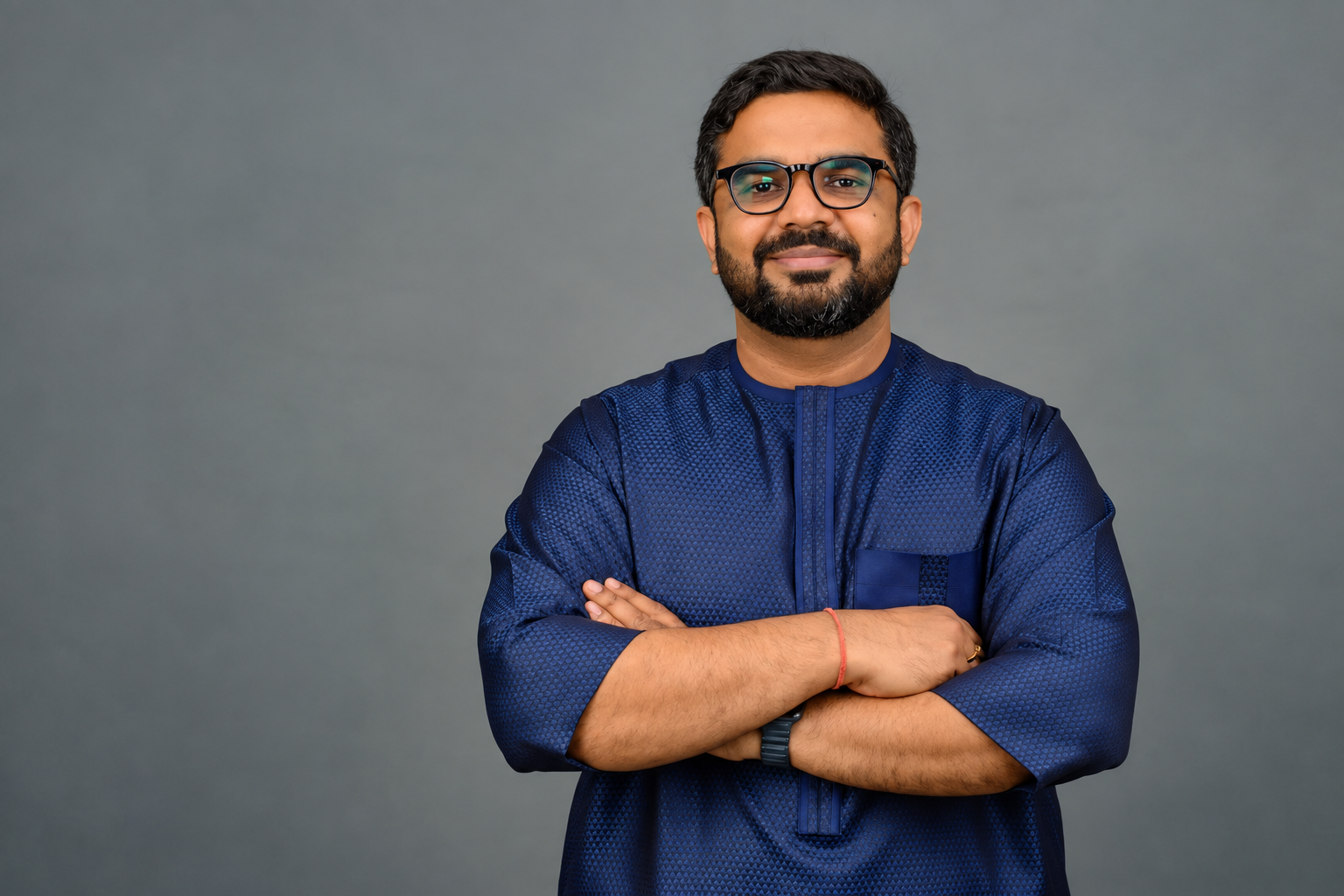
The stories of Africa’s startup ecosystem had often been told through the faces of founders, the dreamers and operators who built products, raised funding rounds, and created billion-dollar possibilities. The public celebrated unicorn valuations, exits, and headline-making investments. But every thriving ecosystem also had another category of builders: people working quietly behind the scenes, writing early cheques, opening doors, and spotting potential before the rest of the market caught on. Few people embodied that role more profoundly than Olumide Soyombo.
Entrepreneur, angel investor, and founder of Bluechip Technologies, Soyombo had become one of the most influential figures in Africa’s startup ecosystem not because he chased the spotlight, but because he helped create it. Since 2016, he had invested in more than 106 companies, backing founders at their earliest and most uncertain stages. His philosophy had remained simple yet powerful: “I don’t usually call out a specific company. My theory, which is very well known in the ecosystem, is founder-first. I invest in the person first. I invest in the founder who is going to build the product and take it to market. So, I invest in you.” That mindset had shaped one of Africa’s most remarkable investing journeys.
YOU CAN ALSO READ: The Business Mind in Politics: Akin Alabi’s Journey From Enterprise to Parliament
Long before venture capital entered the conversation, Soyombo had said he already knew he wanted an entrepreneurial life. Growing up in a household where entrepreneurship was not merely discussed but actively lived, he watched his father build businesses across manufacturing, communications, food, insurance, and security. He saw companies rise, fail, restart, and evolve. But one moment permanently changed his trajectory: a Windows 95 computer entering the family home in 1995. Until then, he had imagined becoming a doctor.
Technology changed everything. In the days of dial-up internet, when connecting online meant plugging phone lines into computers and waiting through long modem sounds, he saw opportunity where others saw novelty. By age 12, he had already launched his first venture, charging relatives to create email addresses. “Everybody wanted email addresses because they were cool back then,” he recalled, laughing about charging around ₦150. It was a small hustle, but it revealed a larger instinct that would later define his investment career: recognizing shifts in behavior before everyone else noticed them.
Over the years, Soyombo said he had observed patterns that separated inexperienced founders from seasoned operators. One of his simplest observations also happened to be one of his sharpest: “First-time founders focus on product. Second-time founders focus on distribution.”
First-time entrepreneurs, he explained, often became obsessed with features, technology, and innovation, constantly asking what a product could do. Experienced founders asked a different question entirely: who was paying? Products did not survive on excitement; markets rewarded distribution. A startup could build exceptional technology, but without customers, adoption, and systems that drove demand, innovation alone became irrelevant. For founders building their second or third ventures, painful lessons often taught them that distribution was not secondary to product; distribution itself became part of the product.
One of Soyombo’s most celebrated decisions involved backing the team that eventually built PiggyVest. Before PiggyVest became one of Africa’s most admired fintech brands, the founders had been building PushCV. Soyombo remembered that early pitch vividly. While many startup teams showed up with one or two people, PushCV arrived with a complete team. Everyone had clear responsibilities across operations, partnerships, finance, and marketing. But structure alone was not what impressed him. “I saw how complementary they were. More importantly, I saw how they approached problem-solving.” Over time, the team experimented relentlessly through PushCV, 500 Dishes, 99 Startups, and several other initiatives.
Soyombo said he saw something investors often struggled to measure: founder chemistry and an unusual ability to build. Even when early ideas struggled, he continued backing them not because the first concept guaranteed success, but because the people behind it possessed the ability to eventually find it. Today, PiggyVest’s culture reflected what he saw years earlier. “If someone tweets a complaint about PiggyVest, another user often explains the solution before the company responds.” Products could be copied; communities could not.
Soyombo also offered a far less glamorous view of entrepreneurship than the one commonly portrayed online. “Beside entrepreneurship, the next word should probably be sacrifice,” he had said. His views on delayed gratification were blunt. Before founders raised capital, they often operated with discipline, stretched resources carefully, and prioritized survival. But once investment arrived, priorities sometimes shifted. Expenses expanded. Lifestyles improved. Spending increased. Soyombo believed founders first needed to ask themselves what kind of business they were trying to build because taking outside capital changed everything.
“The moment you take investors’ money, things change.” Capital created responsibility. Founders stopped being just dreamers and became stewards. He argued that people usually knew when they crossed a line. “There’s usually an inner voice telling you when something isn’t right.” His conclusion remained sharp and memorable: “You cannot eat seed-time money and expect harvest.”
Startup failure, according to Soyombo, had also been widely misunderstood. In Africa’s ecosystem, failed companies often became cautionary tales, and public opinion frequently rushed toward assumptions of fraud or misconduct. Soyombo rejected that simplistic narrative. “People often assume companies fail because of fraud or founder misconduct.”
While bad behavior certainly existed, businesses also collapsed because of market timing, strategy, competition, execution challenges, or weak product adoption. Venture investing itself, he argued, was fundamentally a game of scale and risk. Scale required bold decisions, and bold decisions sometimes failed. Raising millions of dollars did not guarantee survival. Failure, he argued, should not automatically have been interpreted as wrongdoing. Sometimes companies simply lost.
If Soyombo sounded optimistic about Africa, it was because he believed the continent’s defining era had not yet arrived. Asked why global investors should pay attention, his response had been immediate: “Buy Africa.” For him, the story was bigger than demographics; it was about behavior. Africa was producing a generation raised on the internet and another generation that would grow up with artificial intelligence from childhood.
YOU CAN ALSO READ: ‘There Are Thousands of Burna Boys in Lagos Waiting to Be Discovered’ – Sanwo-Olu
“The average CEO of a bank today probably used the internet for the first time when they were around 30. Now think about someone born today. In 20 years, they’ll grow up using AI from childhood.” He believed the infrastructure being built today, payments, logistics, healthcare, commerce, and talent platforms , would become tomorrow’s giants. “There will be billion-dollar companies built in Nigeria.” To him, this was not optimism; it was inevitability. The future belonged to those willing to take positions early.
Perhaps one of Soyombo’s most revealing beliefs had nothing to do with startups or venture capital. It concerned relationships. He once challenged the common phrase: “It’s business, not personal.” He disagreed completely. “People who say ‘it’s business, not personal’ fail to realize that business runs on relationships, and the best relationships are personal.” Founders did not merely invest in products. Investors did not simply back pitch decks.
People trusted people. Partnerships emerged from relationships, and ecosystems grew when trust compounded. For a man who built an investing philosophy around people first, perhaps nothing captured Olumide Soyombo more accurately than that idea. Business, after all, had always been personal. And for Africa’s next generation of founders, that may have been one of the most valuable lessons of all.