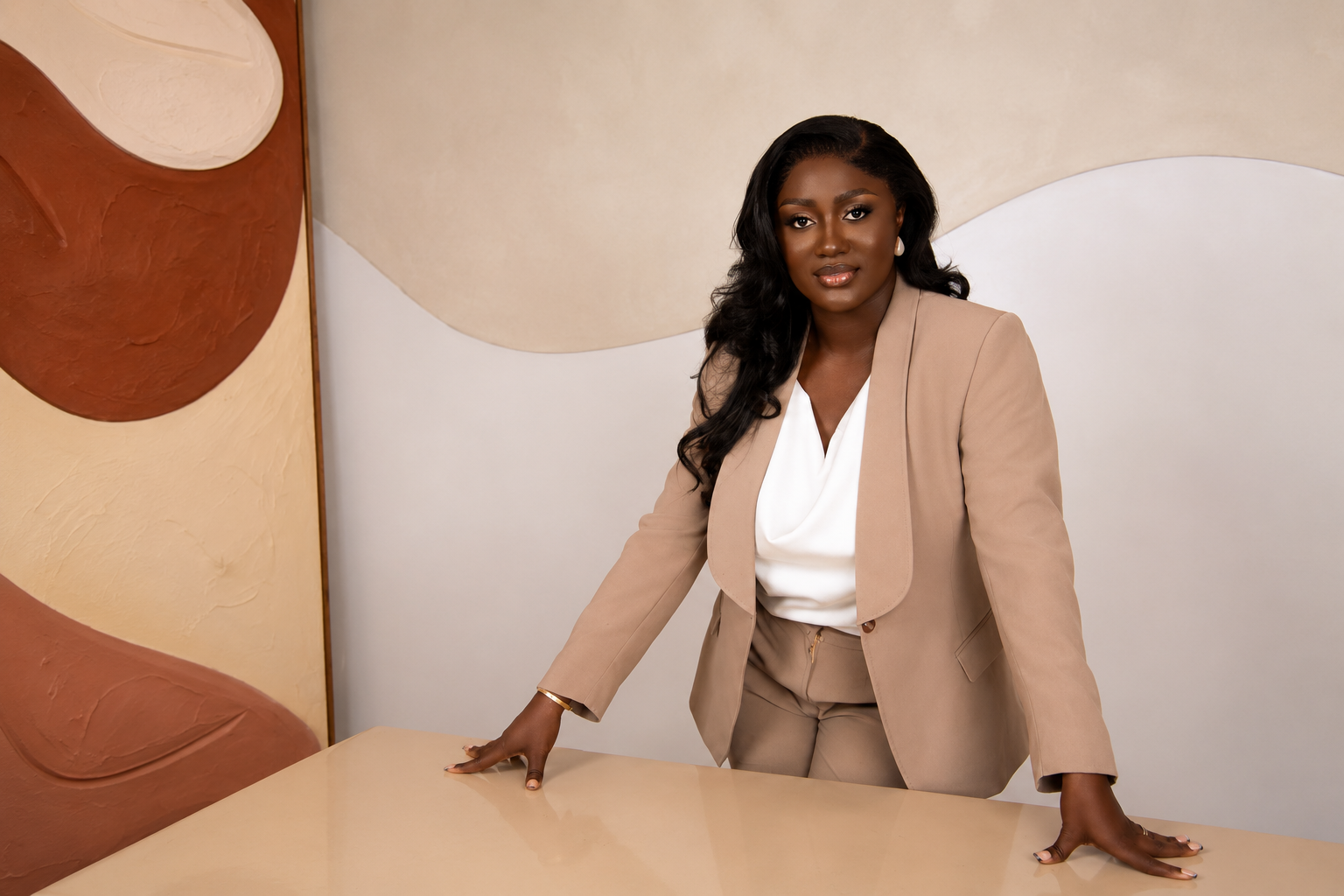
For many designers, fashion began with inspiration boards, seasonal trends, or the pursuit of visual spectacle. For Oreoluwa Adekoya, however, design began somewhere more intimate, with feeling. Not simply the feeling of admiration that came from seeing a beautiful garment, but the deeply personal sensation of wearing one. It was that almost unspoken experience of stepping into a piece that fit exactly as it should, a garment that settled naturally on the body, adjusted posture almost instinctively, and quietly transformed the way a woman occupied space.
It was this understanding of fashion as an emotional and physical experience, rather than merely an aesthetic statement, that became the foundation of Adekoya’s creative world. Across her two fashion labels, Tinnuqués and Vienna RTW, structure and elegance were not simply design choices; they became instruments for confidence.
Long before she built brands, Adekoya had been drawn to the silent language of craftsmanship itself. “I’ve always been drawn to beautiful fabrics, structure, and the artistry behind well-made garments,” she said.
What began as fascination gradually evolved into something more deliberate. Over time, that instinct matured into a design philosophy and eventually found expression in Tinnuqués, her couture and bridal label created for women navigating some of life’s most meaningful milestones.
YOU CAN ALSO READ: Folake Akindele Leads 4,000-Job Manufacturing Revolution in Nigerian Fashion
“I wanted to create pieces that make women feel confident, elegant, and truly special, especially during some of the most meaningful moments of their lives,” she said.
The philosophy revealed itself in every design. Rather than relying on excess or spectacle, Adekoya’s garments communicated through precision. Sculpted bodices, structured forms, refined waistlines, and meticulous detailing created silhouettes that appeared intentional from every angle.
There was architecture in her approach. Every seam felt purposeful. Every contour appeared calculated. Every structure contributed not only to appearance, but to presence itself. Her garments did not merely adorn the body; they framed it.
Yet creative expression, by nature, often refused to remain confined to a single language. As her journey evolved, another side of her imagination began seeking room to breathe, one less rooted in ceremony and grandeur, and more connected to everyday movement. “At a point, I realized I also wanted to explore another side of my creativity,” she explained.
That realization gave rise to Vienna RTW, her ready to wear label and perhaps the quieter counterpart to Tinnuqués. If Tinnuqués spoke in dramatic flourishes and celebratory elegance, Vienna RTW spoke in subtle confidence. Its language was restraint.
There, embellishment gave way to simplicity. Lines became cleaner. Structure softened into ease. Precision remained, but existed in a more understated form. The result was clothing designed for movement and daily life without sacrificing identity.
“It reflected the everyday confident woman who appreciated simplicity, elegance, and strong silhouettes,” she said.
Rather than existing as competing identities, both labels operated as complementary expressions of the same creative philosophy. One embraced ceremonial moments while the other followed the rhythm of everyday life. Together, they formed a complete portrait of Adekoya’s vision, fashion that served women at different points of their lives while remaining rooted in the same values of intention and structure.
But building within Nigeria’s increasingly dynamic fashion industry required more than creativity alone. Like many entrepreneurs navigating the realities of an evolving ecosystem, Adekoya discovered early that talent and vision, though important, were only part of the equation. Recognition did not arrive automatically. “One of the biggest hurdles was building trust,” she recalled.
Without an established name or institutional advantage, every garment became an audition. Every client interaction became an opportunity to prove credibility.
The realities of entrepreneurship quickly became evident. “Designing beautiful clothes is one thing, but building a sustainable brand requires organization, financial discipline, and strong systems behind the scenes,” she said.
For many creatives, this remained one of the industry’s least glamorous truths. Behind every collection presentation and carefully photographed campaign sat the invisible architecture of operations, systems, processes, and discipline. Adekoya understood that creativity alone could not sustain growth. Consistency could.
Over time, a relentless commitment to refinement and quality gradually became its own form of communication. “I focused on improving my work and delivering the best possible results for every client. That consistency helped build trust,” she said.
That trust extended beyond craftsmanship into cultural storytelling. Her work frequently drew inspiration from African heritage, not through direct replication but through thoughtful reinterpretation.
One of her most notable examples emerged in an Edo inspired bridal creation where velvet, beadwork, cowries, and coral elements were transformed into a modern silhouette that felt simultaneously historical and contemporary.
“Cowries and coral symbolize wealth, beauty, and status in many African traditions,” she explained. “I wanted to reinterpret these elements in a way that feels artistic and elegant.”
The distinction mattered. Rather than treating heritage as costume or nostalgia, Adekoya approached culture as living material, something capable of evolution.
“I draw a lot of inspiration from traditional African textiles and craftsmanship, but I enjoy reinterpreting them through contemporary silhouettes. It’s about preserving tradition while allowing it to evolve,” she said.
This philosophy of translation rather than imitation increasingly became a defining trait among a new generation of African designers, creators determined to honor the past without becoming confined by it.
YOU CAN ALSO READ: BUA CEO Bags Africa CEO of the Year Honour
Yet beneath fabrics, craftsmanship, silhouettes, and cultural references lay a question that remained central to Adekoya’s work: How did a woman feel in what she wore?
For her, confidence was not something clothing created from nothing. It was something clothing revealed. “When a woman wears something that fits beautifully and reflects who she is, it can completely transform her confidence,” she noted.
As conversations around identity, self expression, and individuality continued reshaping global fashion narratives, style increasingly functioned as something more profound than appearance. It became language. A declaration. A reflection of self. Looking ahead, Adekoya’s ambitions extended far beyond local recognition.
“In the next five years, I see Tinnuqués and Vienna RTW becoming globally recognized brands representing creativity, craftsmanship, and modern African fashion,” she said.
It was a vision that stretched confidently toward the future, yet remained grounded in the principles that shaped her journey from the beginning: structure, intention, craft, and the belief that style was never only seen. Sometimes, its greatest power was simply felt.