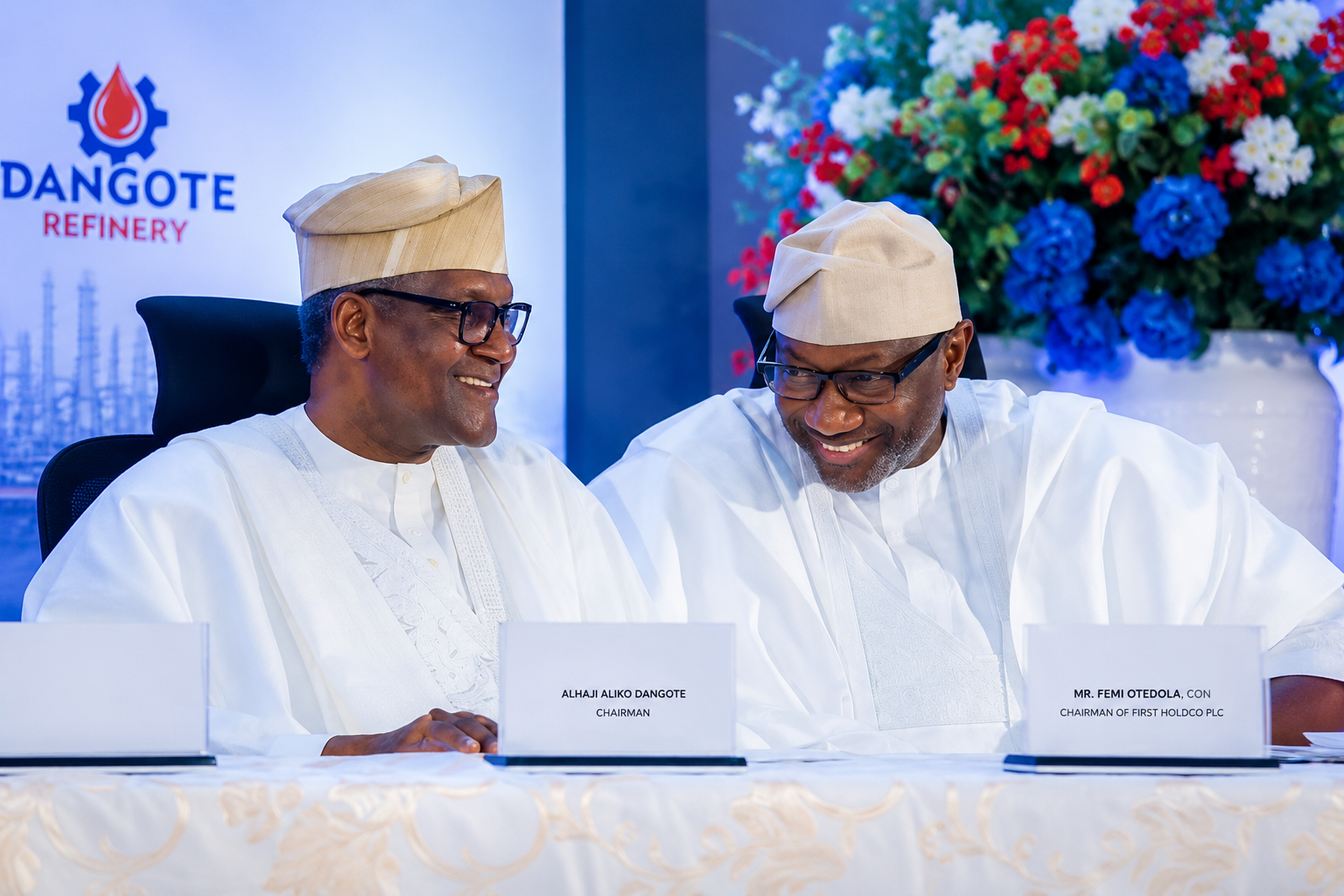
In the architecture of Africa’s largest industrial ambitions, moments of validation often arrive not with headlines, but with capital. This week, one of Nigeria’s most influential businessmen made a statement that echoed far beyond boardrooms and stock exchanges. Billionaire investor and chairman of First HoldCo, Femi Otedola, announced a $100 million investment commitment into the colossal Dangote Oil Refinery, a move many observers are already calling one of the most symbolic endorsements of African private-sector confidence in recent years.
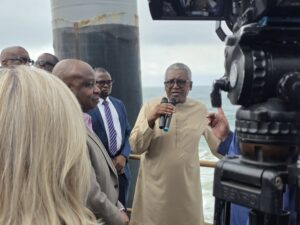
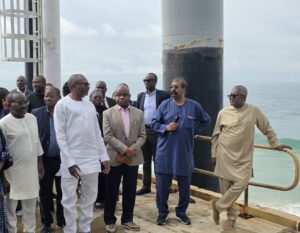
The announcement came after Otedola toured the sprawling refinery complex in Lagos’ Lekki Free Zone alongside senior executives from First HoldCo. The visit was more than ceremonial. It marked the entry of one of Nigeria’s most strategic investors into a project increasingly viewed as a defining economic asset not only for Nigeria but for the continent itself.
YOU CAN ALSO READ: The Future Arrived Faster Than Expected: Jensen Huang on AI’s New Computing Explosion
At a time when the refinery is transitioning from a privately held mega-project into a publicly traded enterprise, Otedola’s investment arrives with unmistakable significance. The refinery, developed by Africa’s richest man, Aliko Dangote, was built at an estimated cost of $23 billion and stands today as one of the largest single industrial investments ever undertaken in Africa. But beyond its sheer scale lies a deeper story.
For decades, Nigeria carried the paradox of being one of Africa’s largest crude oil producers while remaining heavily dependent on imported refined petroleum products. Chronic fuel shortages, abandoned state-owned refineries, and persistent pressure on foreign exchange reserves defined an era of structural inefficiency. The Dangote Refinery was conceived as an answer to that contradiction, a bold attempt to rewrite the economics of energy on the continent. Now that vision is rapidly becoming reality.
The refinery currently processes over 500,000 barrels of crude daily and is expected to reach its full 650,000 barrel-per-day capacity before year-end. Its output has already begun reshaping trade patterns across regions, reducing Europe’s gasoline exports into West Africa while positioning Nigeria as a significant exporter of jet fuel and naphtha. The impact has been immediate, but the future ambitions are even larger.
As the refinery prepares for a historic initial public offering expected as early as mid-2026, market analysts estimate a valuation between $40 billion and $50 billion. The proposed sale of a 10 percent stake could raise as much as $5 billion, potentially making it the largest public offering in African capital market history. Against that backdrop, Otedola’s entry carries weight beyond the numbers. Analysts view the investment as a powerful signal from Nigeria’s corporate elite, an endorsement that domestic capital remains willing to stand behind transformational African infrastructure.
His role may now evolve into something even more strategic: a private anchor investor helping stabilize ownership ahead of broader institutional participation. Pension funds, retail investors, and regional asset managers are already paying close attention, while conversations around possible international listings on the Johannesburg Stock Exchange and the London Stock Exchange suggest an ambition that extends well beyond Nigeria’s borders.
Perhaps one of the most intriguing features of the upcoming public offering lies in its proposed dividend model. The Dangote Group is reportedly considering a structure that allows local investors to purchase shares in naira while receiving dividends in U.S. dollars. Supported by projected annual petrochemical export revenues of $6.4 billion, the framework presents a rare institutional hedge against currency volatility, an innovation that could fundamentally alter how African retail investors think about long-term wealth preservation.
Growth at this scale rarely unfolds without tension. The refinery’s journey has also included legal disputes with fuel marketers, policy debates over import licensing, and regulatory complexities tied to public listing requirements and secondary international offerings. Advisers have reportedly explored alternative structures including depository receipts to navigate evolving market realities.
YOU CAN ALSO READ: Why Nigeria’s Central Bank Believes the Economy Can Withstand Global Shocks
Yet even amid these challenges, Otedola’s commitment sends a message difficult to ignore: local capital remains central to Africa’s industrial future. Long before international funds position themselves for ownership, before prospectuses are filed and global markets place their valuations, some of Nigeria’s most influential business leaders are making their bets early. Increasingly, they are betting not merely on companies, but on the possibility of Africa building, financing, and owning its next chapter of economic transformation itself.