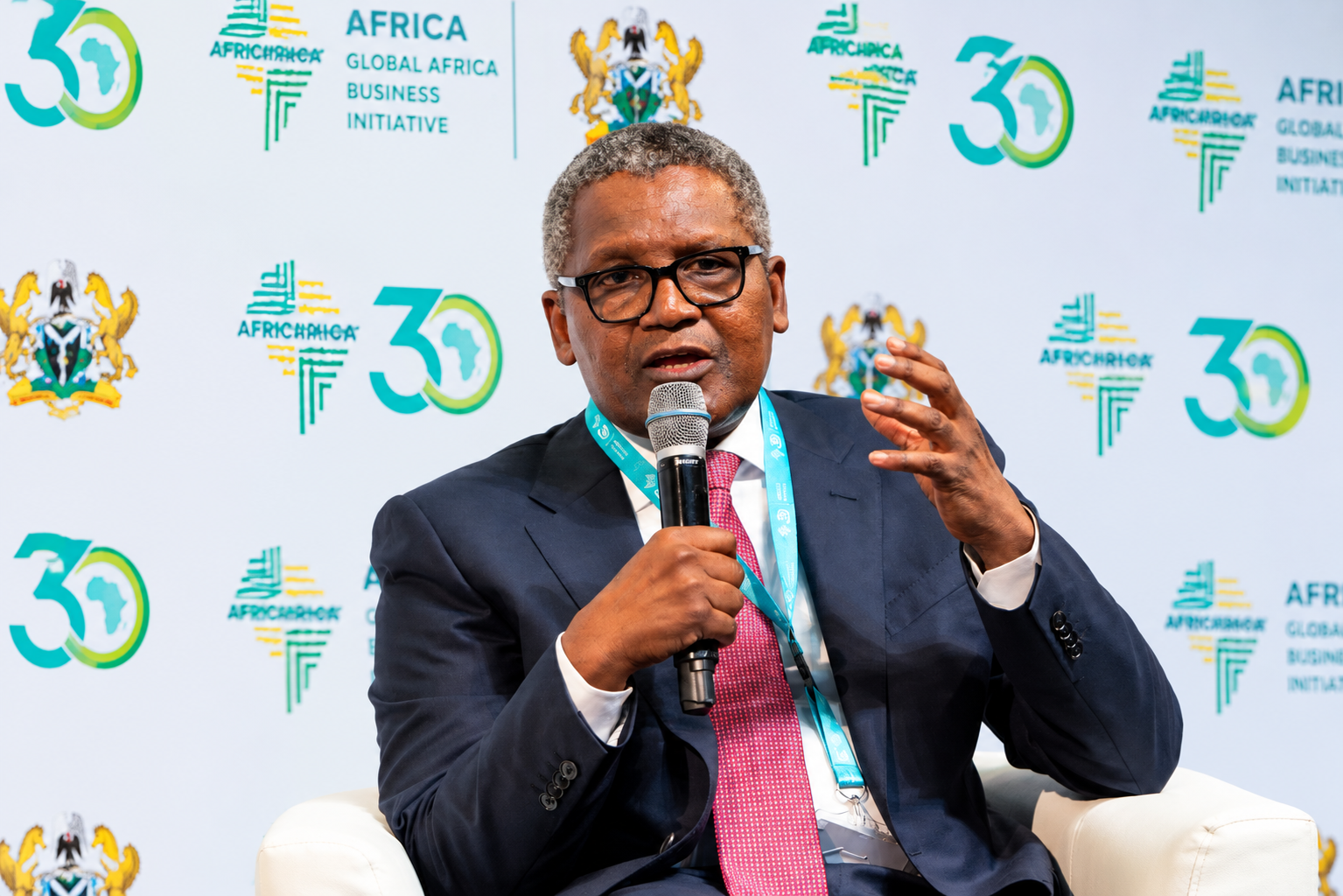
There are billionaires who build wealth, and then there are visionaries who build nations. Aliko Dangote belongs unmistakably to the latter category.
For decades, the President and Chief Executive of the Dangote Group has stood at the forefront of Africa’s industrial revolution, transforming sectors once dominated by imports into engines of local production, job creation and economic independence. Today, his name is synonymous with ambition, resilience and the extraordinary possibilities that exist within Africa.
Yet, behind the staggering numbers and towering industrial complexes lies a remarkably simple philosophy: solve big problems, and prosperity will follow.
YOU CAN ALSO READ: Leading the Shift: Abosede George-Ogan’s Vision to Transform Leadership Across Nigeria and Beyond
Long before he became Africa’s richest man, Dangote displayed an entrepreneurial instinct that would eventually redefine an entire continent. As a child, he demonstrated a natural inclination for business, famously buying sweets in bulk and selling them to his classmates for profit. What appeared to be a simple childhood activity would later become an early glimpse into a mind that understood commerce, value creation and market demand.
That entrepreneurial spark would eventually evolve into one of Africa’s largest conglomerates.
Unlike many modern entrepreneurs who pursue fast-moving trends, Dangote chose an entirely different path. He invested in industries that many considered ordinary, even unglamorous. Cement. Flour. Sugar. Salt. Rice. Fertiliser. Products that people consume every day, yet sectors that were once heavily dependent on foreign imports.
His genius lay in seeing opportunity where others saw routine.
At the core of his business strategy is a philosophy he describes as backward integration: producing locally what nations previously imported from abroad. It is a strategy that has not only transformed his business empire but has significantly contributed to Nigeria’s economic development.
For Dangote, industrialisation is more than a business model; it is a pathway to national prosperity.
That vision has now expanded into one of the most ambitious industrial projects on the continent, with significant investments in oil and gas, where scale and long-term impact are immense.
What makes Dangote particularly fascinating is that despite his immense wealth and global recognition, humility remains one of his most frequently praised qualities. Those who have encountered him often describe him as approachable, grounded and remarkably focused.
Perhaps this humility stems from his understanding that wealth is a responsibility rather than a destination.
While global rankings continue to place him among the world’s wealthiest individuals, Dangote rarely frames success in terms of personal fortune. Instead, he consistently redirects the conversation toward value creation, industrial capacity and Africa’s future.
His unwavering belief in the continent’s potential has also positioned him as one of Africa’s strongest advocates on the global stage.
For years, he has encouraged international investors to reconsider their perception of Africa, arguing that the continent represents one of the world’s greatest untapped economic frontiers. With its youthful population, abundant natural resources and expanding consumer markets, Africa, in his view, offers extraordinary opportunities for long-term growth.
His message is simple but powerful: Africa is not a continent of limitations; it is a continent of possibilities.
This conviction has shaped every major decision throughout his career.
While many entrepreneurs chase temporary market trends, Dangote focuses on fundamentals. He studies essential human needs and builds businesses that can endure for generations. His strategy demonstrates a rare discipline that prioritises long-term impact over short-term excitement.
For aspiring entrepreneurs, his journey offers valuable lessons in sales, negotiation and leadership.
He believes success begins with understanding demand, creating value and remaining patient enough to build sustainable systems. Great businesses, according to his philosophy, are not built overnight. They are constructed deliberately, one strategic decision at a time.
Beyond business, Dangote openly acknowledges the role of faith in his life. He has consistently expressed his belief in God, often pointing to his own journey as evidence of divine guidance and purpose.
YOU CAN ALSO READ: Why Keji Giwa Believes Reality, Not Optimism, Is Nigeria’s Greatest Business Advantage
For him, faith and enterprise are not opposing forces; they are complementary pillars that have shaped his worldview and strengthened his resolve through both opportunities and challenges.
Ultimately, Aliko Dangote’s story is not merely a story about becoming wealthy. It is the story of a man who saw possibility where others saw obstacles, who transformed dependency into productivity, and who continues to challenge Africa to believe in its own capacity.
His legacy is still unfolding, but one thing is already certain: Aliko Dangote did not simply build companies.