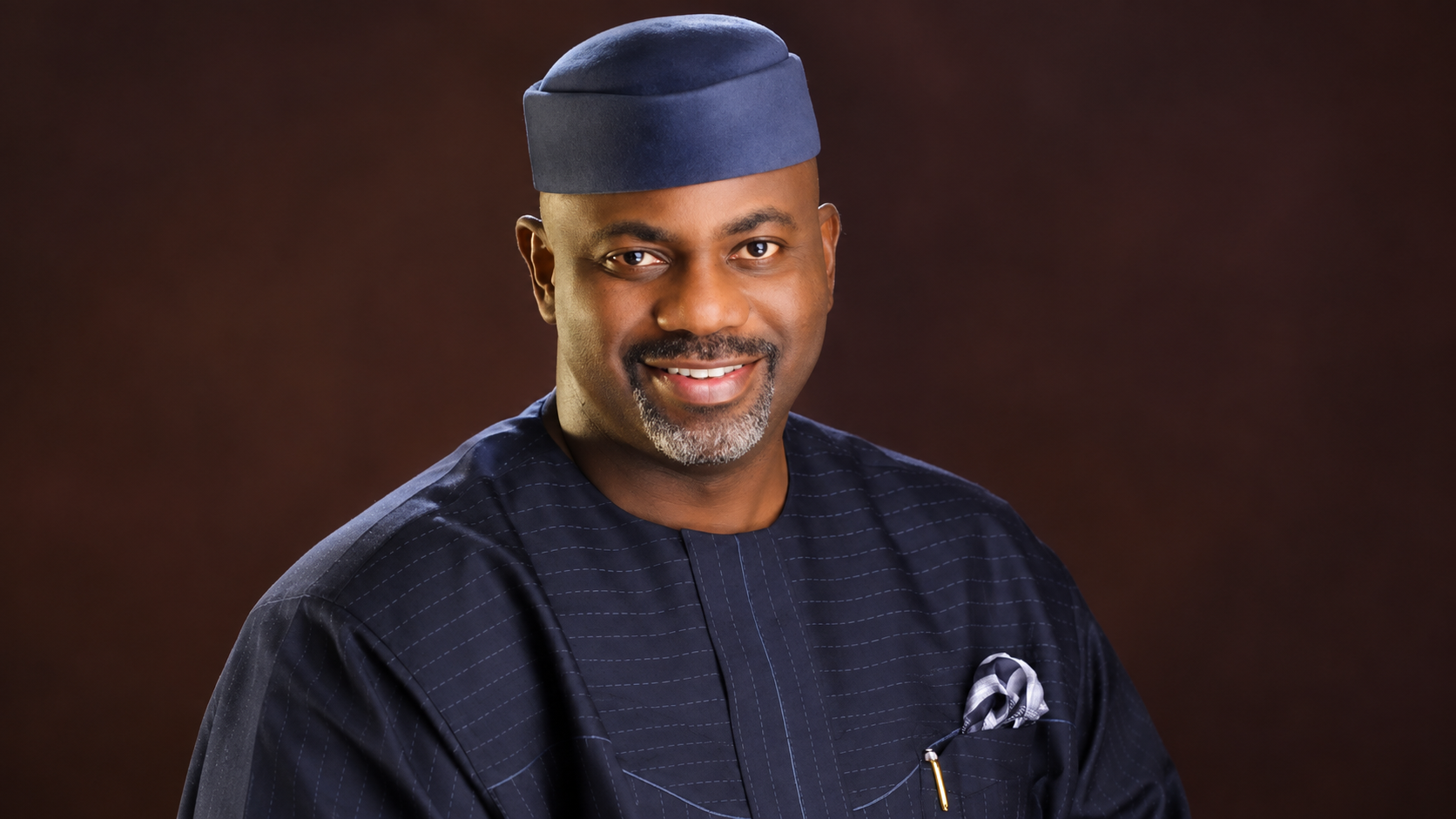
There are entrepreneurs who build companies, investors who build wealth and speakers who build audiences. Then there are rare individuals who build conversations that transcend borders and generations. For much of Africa, that person has become Vusi Thembekwayo. Over the past decade, the South African entrepreneur, investor and global speaker has evolved into something far greater than a business icon.
He has become one of Africa’s most influential public thinkers, a man whose voice increasingly shapes how the continent sees itself. Yet Vusi rejects labels. In fact, he believes labels are among the greatest threats to progress, and that Africa’s future may depend less on economics and politics and more on its ability to revive a dying art: dialogue.
In a candid and deeply introspective conversation, Vusi offered a compelling argument that Africa must learn to choose understanding over division. “We can do one of two things today,” he said. “We can label or we can dialogue. We can’t do both.” The statement may seem simple, but it strikes at the heart of one of the continent’s most pressing challenges. Across Africa, social tensions, tribal divisions and cross-border disputes increasingly dominate public discourse. For Vusi, the danger lies not in disagreement itself but in reducing entire people and nations to singular narratives.
“The danger of labels is they rob us of the opportunity to dialogue. Once you label someone, you no longer feel compelled to understand them.”
YOU CAN ALSO READ: The Woman Teaching the World That Hope Is a Choice
His philosophy is rooted in an insatiable curiosity about perspectives that differ from his own. “I seek out people I don’t agree with,” he explained. “If you and I agree, I don’t find you fascinating. I find you lovable and interesting, but I am fascinated by people who don’t agree with me.” That willingness to interrogate opposing viewpoints has become one of the defining traits of his leadership style. At a time when social media algorithms reward outrage and cancel culture discourages nuanced conversations, Vusi believes society is losing its capacity to engage constructively. “That skill is a lost skill,” he said. “The danger of cancel culture is that it robs us of the opportunity to dialogue.”
His thoughts were particularly poignant as he addressed the emotional debates surrounding migration, nationalism and xenophobia in Africa. While acknowledging legitimate grievances and societal tensions, he warned against reducing entire nations to damaging labels. “You can’t call people to higher standards the moment you’ve labelled them something,” he argued. “When you label, dialogue leaves the conversation.” Instead, he advocates for a deeper understanding of how societies arrive at their present realities. “News reports what happened, but not how we got there. If you cannot have the conversation about how we got here, you’re simply papering over the issue.”
At the core of his worldview is a belief that empathy is an essential leadership skill. He encourages Africans to spend time “on the ground” and understand how ordinary people experience their realities. “We’ve got to plug gaps for each other,” he said. “You’ve got to actually spend time with people and see how they see things.” That perspective also informs his understanding of hospitality and belonging. Using a family analogy, he described how entering another person’s space requires humility and respect. “There is an etiquette,” he explained. “Not because we are weak, but because we respect our hosts.”
Perhaps what makes Vusi’s words resonate so widely across the continent is that his insights are rooted not only in success but also in profound personal loss. Long before he became a globally recognised speaker, he experienced unimaginable tragedy. At the age of 13, he lost his father, who was murdered. “My father was gunned down. He was shot nine times,” he revealed. The trauma, he says, never completely disappears. “I don’t know that you ever heal from it. I think you attempt to do the work, but the work is never fully done.”
That experience profoundly shaped his understanding of masculinity. Rather than embracing performative strength, he has come to admire a different kind of man. “The man I look up to now is the sturdy, calm, quiet hand. The dependable hand. Society is profiling the big man, but the man who keeps society together is often the elder who speaks rarely, but when he does, his wisdom has been seasoned through time.” His vulnerability offers a refreshing counterpoint to many traditional expectations placed on African men. “There is a part of me that will always long for my father’s approval and love,” he admitted. “I don’t think that will ever go away.”
YOU CAN ALSO READ: Leading the Shift: Abosede George-Ogan’s Vision to Transform Leadership Across Nigeria and Beyond
Yet perhaps the most remarkable aspect of Vusi’s journey is that none of it was meticulously planned. When asked how he became one of the continent’s most recognisable voices, he dismissed the idea of a grand strategy. “There wasn’t a strategy or a 25-slide presentation,” he said. Instead, he credits one simple force: “A genuine love for my people and a curiosity for their story.” That love extends beyond modern borders and contemporary politics. He dreams of creating a documentary that tells Africa’s complete story, not one that begins with slavery or ends with colonialism, but one that explores the ancient kingdoms, institutions and intellectual traditions that long predated them. “I want to tell the full story of our people,” he said. “I want to go where the Kingdom of Mapungubwe was, where the original Kingdom of Zimbabwe was, and to Timbuktu, the first university in the world.”
It is this commitment to reclaiming Africa’s narrative that may explain why his influence now transcends business. Increasingly, Vusi Thembekwayo is becoming something rarer and perhaps more necessary: a bridge builder. At a time when division often appears easier than understanding, his message is a timely reminder that Africa’s future may depend on a simple but difficult choice. Not labels. Not outrage. But dialogue. Because before a continent can move forward together, it must first learn to see one another in full colour.