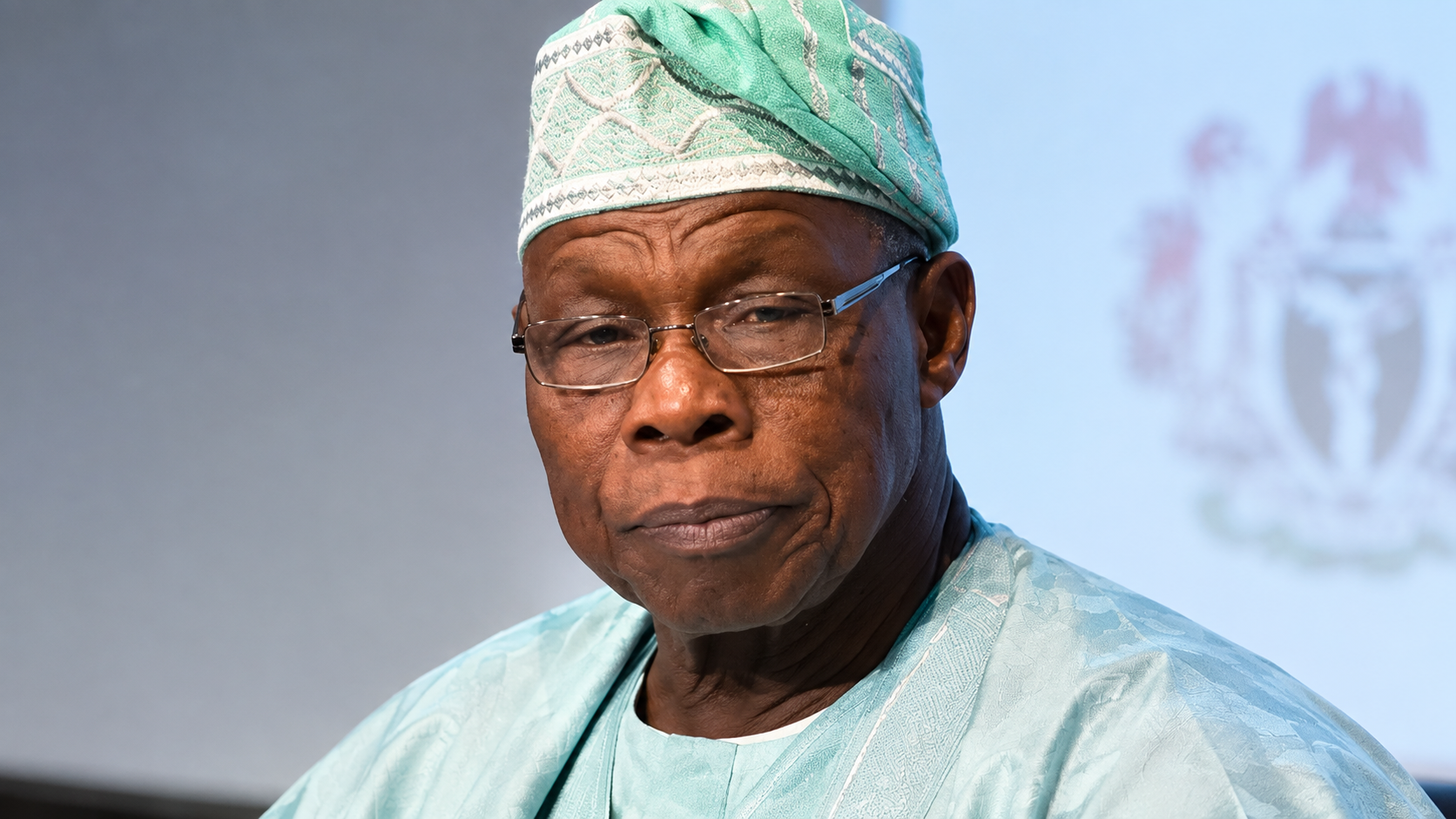
Nigeria may be one of Africa’s most resource-rich and culturally influential nations, but renowned brand strategist and critical thinker Leke Alder believes the country faces a deeper challenge: a crisis of national identity, perception and strategic direction.
Speaking on Culture Republic with Folabi Nuel, Alder argued that Nigeria’s branding problem goes beyond how the country is marketed internationally. It is rooted in the systems, policies, institutions and narratives that shape how Nigeria is experienced and perceived.
“We do have a branding problem,” Alder said, pointing to the consequences Nigerians face when the country’s reputation becomes a barrier to international mobility, business and opportunity.
For Alder, national branding has tangible economic consequences. A weak country brand can affect international trust, access to credit and the ease with which citizens conduct business across borders. Younger Nigerians are particularly vulnerable because they are inheriting a reputation that can constrain their opportunities before they even get the chance to prove themselves.
Alder believes one of Nigeria’s greatest failures is the absence of sustained strategic thinking. He recalled a period when the country operated with long-term economic plans and argued that Nigeria has gradually lost the capacity to think beyond immediate problems.
“We’re fixing the now,” he observed, warning that the country has become preoccupied with managing today’s challenges without adequately defining what Nigeria should become in the next 10, 20 or 30 years.
The consequences are visible across education, infrastructure, economic development and governance. Rather than anticipating population growth and planning ahead, Nigeria has often waited for problems to become crises before responding.
Alder illustrated this with the expansion of educational institutions, arguing that governments should have projected future student populations and expanded capacity accordingly. Instead, “the problem of yesterday” continues to roll into today, while a growing population puts additional pressure on inadequate systems.
For him, the central question is straightforward: What should Nigeria become in 20 years, and what must be put in place today to get there?
Perhaps the strongest message from Alder’s conversation was directed at young Nigerians. He challenged the frustration of young people who feel excluded from political and economic power, arguing that no generation simply hands over power to the next.
“Every generation fights its own fight,” he said, drawing from his own experience of growing up during military rule and participating in efforts against successive military regimes.
His generation fought its battles; younger Nigerians must now organise themselves and fight theirs. Alder recalled that Yakubu Gowon became Nigeria’s head of state at just 31, contrasting that with today’s political leadership. “You’ve got to fight for it,” he said. “Nobody is going to hand over power to you.”
But his prescription is not simply political confrontation. Alder believes young Nigerians possess two powerful assets: technology and creativity. “If you deploy those two things, you will go further,” he argued. For Alder, technology should not merely be viewed as a tool for entertainment or convenience. It can become an instrument for restructuring systems that no longer serve Nigerians.
He questioned why Nigeria cannot explore more efficient technological approaches to elections and governance, arguing that young people must demand institutional and electoral reforms rather than simply complain about the existing system.
His broader argument is that Nigeria cannot solve 21st-century problems using systems designed for another era. The country needs new thinking, new institutions and, importantly, new people participating in the process of designing its future.
Alder also warned that artificial intelligence will dramatically reshape the labour market. “It’s going to be brutal,” he said, predicting that some existing jobs will disappear as AI automates tasks currently performed by humans.
But he does not see technological disruption purely as a threat. Every technological revolution, he argued, destroys some jobs while creating new opportunities and increasing productivity. The real question is whether Nigeria will position itself to capture those opportunities.
Nigeria possesses enormous natural resources, but Alder identified another resource as even more important: its people. Particularly important, he said, are young Nigerians—the generation with the energy, creativity and technological capability to transform the country.
This makes the migration of Nigerian talent particularly concerning. Alder acknowledged that Nigerians abroad have access to opportunities and that mobility is a legitimate individual choice. However, he argued that the scale of Nigerian talent contributing to economies outside the country should force the nation to ask what would happen if more of that talent were deployed to build Nigeria.
He pointed to Nigerians working at major global technology companies as evidence that the country’s human capital is not the problem. The challenge is creating an environment capable of harnessing it.
One of Alder’s most striking arguments is that young Nigerians should not wait for the existing system to become perfect before creating their own opportunities. “You’ve got to find a system to bypass the system,” he said.
He used his own career as an example. When he graduated from university, the profession he eventually built did not exist in the form he envisioned it. Rather than waiting for an established career path, he combined his analytical and creative abilities to create a new form of consultancy. What initially appeared unconventional eventually became an industry.
For Alder, that experience demonstrates a broader principle: young Nigerians must be willing to imagine possibilities that do not yet exist. Structural limitations should not become an excuse for abandoning ambition.
Alder also challenged the idea that Nigerians can achieve individual prosperity while ignoring the conditions surrounding them. He offered a simple analogy: imagine building the most beautiful house on a street surrounded by poverty and deprivation. Who, he asked, is really the poorest person on that street?
The answer, he suggested, is the person living in the beautiful house because everyone else will eventually come to their doorstep. His argument is that individual prosperity cannot be completely separated from societal prosperity.
Despite his criticisms, Alder does not believe Nigeria is without opportunity. In fact, he sees the country’s underdevelopment as evidence of the enormous possibilities still available.
Nigeria’s economy remains relatively young and underdeveloped across numerous sectors. Technologies and business models that have become commonplace in developed economies are still emerging in Nigeria, creating opportunities for entrepreneurs, innovators and young professionals to solve problems that remain largely unaddressed. The challenge, however, is resilience.
“It is a steep curve,” Alder acknowledged, but argued that persistence eventually creates momentum. His own journey, he suggested, is evidence that staying the course can produce results that are impossible to see at the beginning.
Alder is particularly critical of young Nigerians who reject politics altogether. He argues that large-scale social and economic transformation ultimately requires policy. He cited China’s reduction of poverty as an example of what deliberate policy can accomplish and maintained that Nigeria cannot address mass poverty simply through individual entrepreneurship.
Policy matters. Institutions matter. Leadership matters. And if young Nigerians refuse to participate in politics, they effectively surrender the responsibility of defining their future to an older generation.
For Alder, this is unacceptable. Young people must move beyond criticism and begin developing the policies, institutions and political structures they want to see.
Alder’s own experience provides perhaps the strongest evidence for his argument. Years ago, he and his team recognised Nigeria’s branding challenge and developed what he described as an image programme for the country.
They spent years working on a blueprint and financed initiatives themselves, organising seminars in Lagos, London and Abidjan without sponsorship. At the time, Alder was barely in his early thirties.
His motivation was not financial reward but conviction. That experience remains central to his philosophy: meaningful change requires people willing to invest their time, resources and intellectual energy in a future they may not personally benefit from.
It is also why he believes mentoring is critical. Older Nigerians possess experience and institutional knowledge. Younger Nigerians possess energy, creativity and technological fluency. The future depends on connecting the two. Ultimately, Alder’s argument about Nigeria’s branding problem goes far beyond logos, advertising campaigns or public relations.
A country cannot sustainably brand itself as excellent if its institutions do not consistently deliver excellence. It cannot market opportunity if its systems systematically frustrate opportunity. It cannot promote innovation while maintaining structures that discourage innovators. And it cannot build a compelling international reputation without first building a country that its citizens can believe in.
National branding, therefore, becomes a reflection of national performance. The task before Nigeria is not simply to change the story the world tells about it, but to change the reality that produces that story.
For Alder, that transformation begins with strategic thinking, courageous leadership, technological innovation, creativity, political participation and a willingness to imagine a future beyond today’s problems.
His message to young Nigerians is ultimately simple but demanding: do not allow someone else to waste your future.
“Create the future that you want,” he urged. Even if today’s generation cannot fully realise that future, it can build something strong enough for the next generation to inherit and expand.
That, perhaps, is the real challenge of rebuilding Nigeria’s brand, not merely convincing the world that Nigeria is great, but creating a Nigeria that makes greatness impossible to ignore.