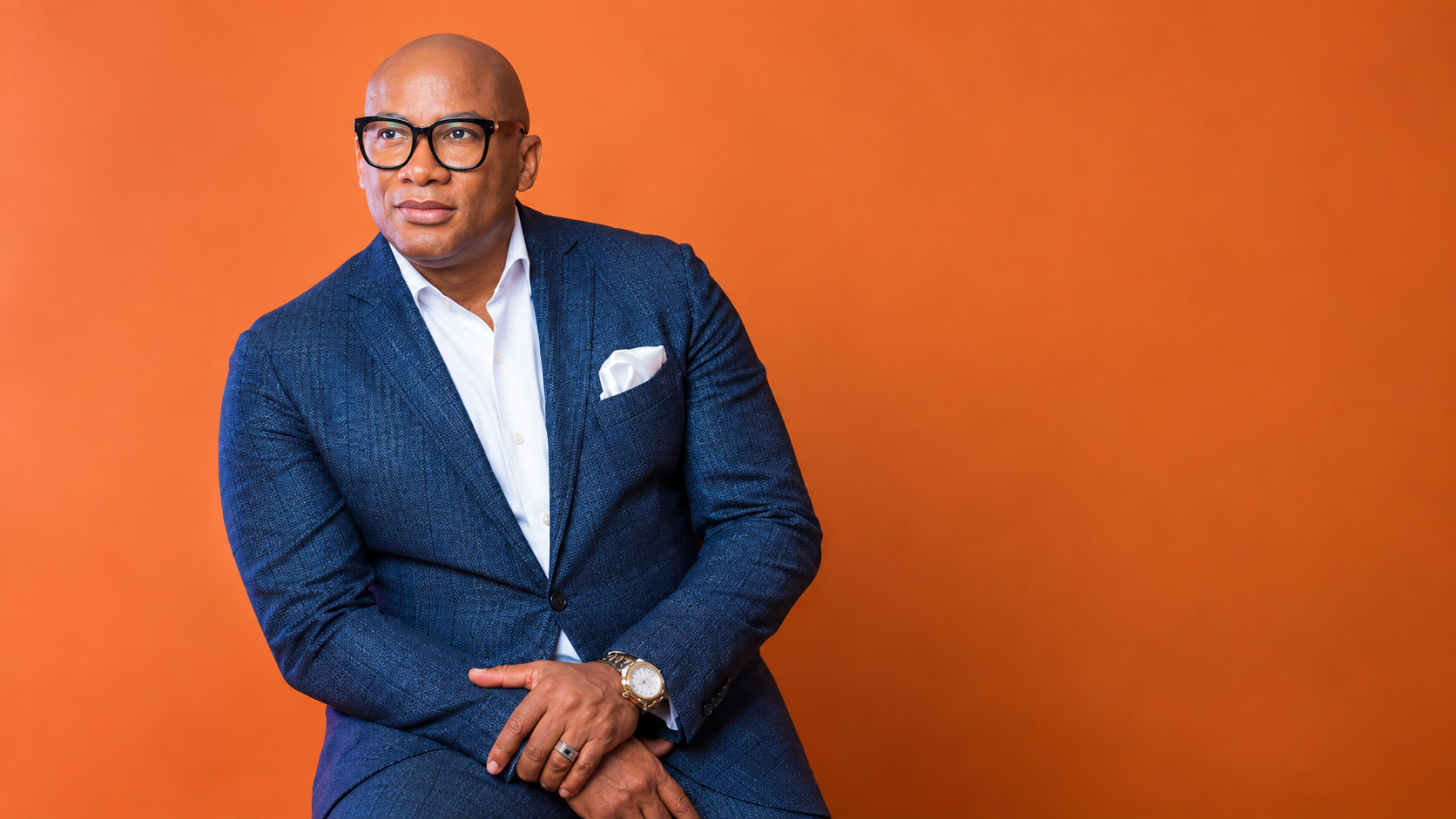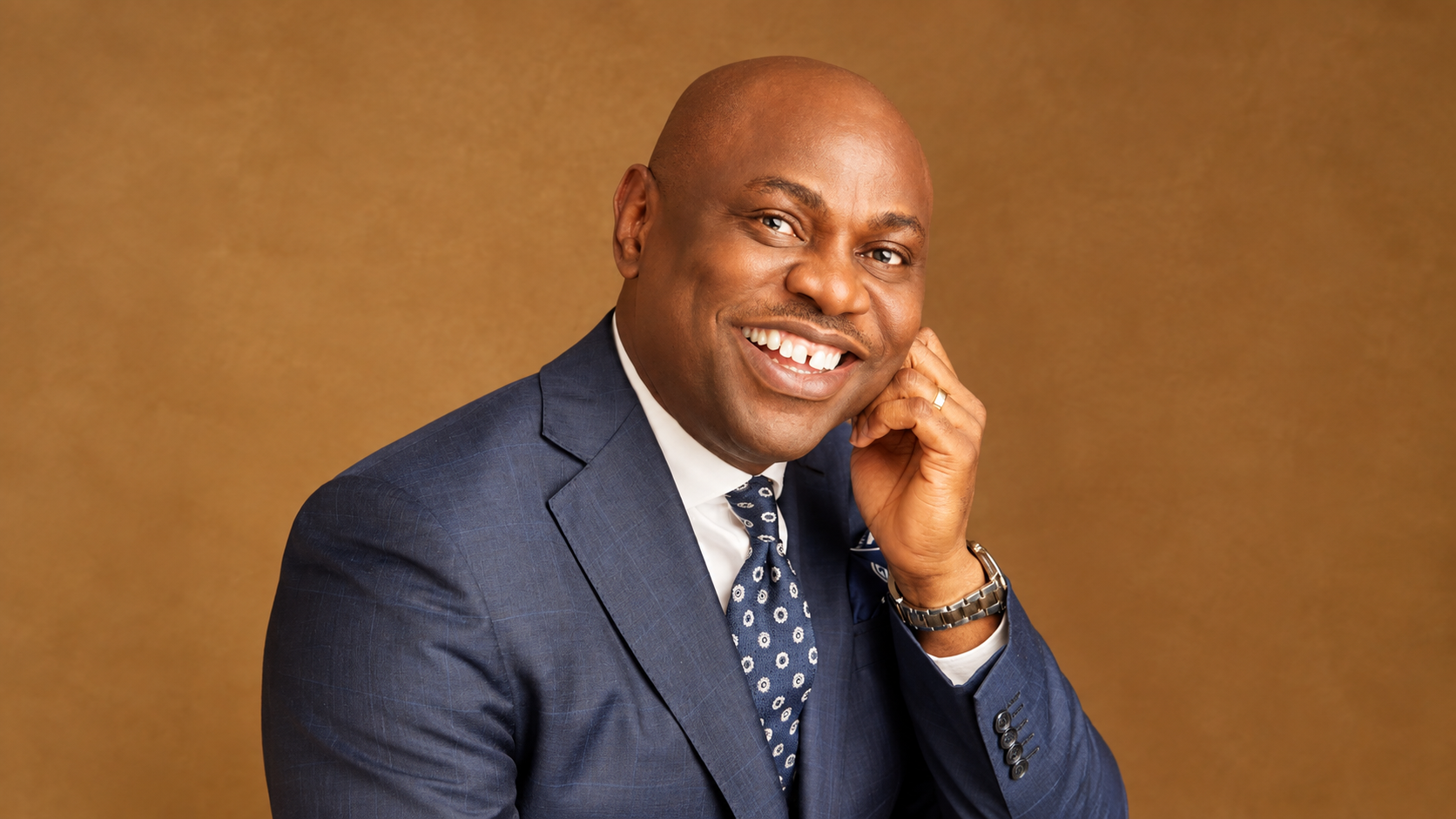
For more than a decade, Femi Adeyemo has been pursuing a deceptively simple idea: that reliable electricity should not be a luxury, and that African businesses should not have to build their future around the persistent hum of diesel generators.
That conviction became the foundation for Arnergy, the Nigerian distributed energy company Adeyemo founded in 2013 after a career in telecommunications and international consulting. What began from a living room in Lagos has grown into a technology-driven energy business with more than 130 employees, thousands of customers and solar systems deployed across all 36 states of Nigeria, with its reach extending into neighbouring African markets.
Adeyemo’s journey into energy was shaped by a problem he had experienced long before he became an entrepreneur. As a university student in Nigeria, he recalls studying with candles and lanterns when grid electricity was unavailable or too weak to be useful. Years later, after experiencing what solar technology could deliver abroad, he returned to Nigeria convinced that the country’s energy crisis represented not only a national challenge but also an opportunity to build something consequential.
He describes Arnergy’s early years as both premature and advantageous. The company entered a market that was not yet fully prepared for the scale of distributed solar solutions it envisioned. But that early entry gave it something increasingly valuable: years of experience solving the practical realities of powering Nigerian homes and businesses.
YOU CAN ALSO READ: “AI Could Transform Africa, Only If the World Closes the Language Gap” – Bill Gates
The company initially assembled systems using components sourced from different international suppliers. But by 2015, Adeyemo says it had become clear that importing and integrating existing products would not be enough. The systems available in the market were not necessarily designed for the realities of Nigeria, where customers often required much larger installations and where reliability, servicing and technical support were critical to the value proposition. That realisation pushed Arnergy toward building its own products.
Today, its facility combines hardware engineering, software development, embedded systems, research and development, assembly and testing. Before systems are dispatched, they undergo testing to ensure that their hardware and remote-monitoring capabilities are functioning properly. The company’s technology architecture allows it to monitor energy systems remotely while its technical teams can diagnose and repair components rather than simply discard faulty equipment.
This combination of hardware and software has become central to Arnergy’s proposition. Its systems are designed primarily for productive use, with installations beginning around 5kW and serving residential customers as well as businesses in sectors including healthcare, hospitality, quick-service restaurants and telecommunications. The company says it has deployed more than 10MW of capacity.
The scale of the business reflects how dramatically the company has evolved. In its early years, customers could wait three to four weeks for a system to be delivered, while installation could take several days. Adeyemo says that process has now been compressed dramatically, with some installations completed within a few hours.
Behind that operational evolution is a deliberate investment in capital and capability.
Arnergy has raised approximately $27 million in equity and more than $30 million when debt financing is included, according to Adeyemo. The capital has supported research and development, product development and the company’s expansion of its energy infrastructure. More importantly, Adeyemo frames the significance of the funding not simply in terms of how much money was raised, but in what that capital enabled the company to build.
One of the company’s most notable investors has been the investment arm associated with Bill Gates. According to Adeyemo, the investment was commercial rather than philanthropic. The organisation led Arnergy’s Series A round in 2019 with a $3 million investment as part of a $9 million round, before investing an additional $2 million in a subsequent round.
For Adeyemo, that backing represented more than capital. It was validation that a company built to address one of Africa’s most persistent infrastructure challenges could attract serious global investment.
But Arnergy’s growth has not been built solely on fundraising.
Adeyemo points to capital efficiency as one of the reasons investors continued to back the company. He says the business stretched its first major equity round for roughly five years before returning to the market, giving investors evidence that it had been disciplined with the resources entrusted to it.
That discipline is particularly important in an energy market where the economics of electricity continue to shift. Adeyemo notes that when Arnergy raised its first major round in 2019, electricity tariffs in parts of Lagos were around ₦19 per kilowatt-hour. He says tariffs in those areas are now above ₦200, dramatically changing the economic argument for alternative energy systems.
Arnergy’s answer is therefore not simply to sell solar panels. It is to build an alternative energy infrastructure around reliability, financing, technology and service.
For businesses that cannot afford the upfront cost of an energy system, the company offers financing arrangements that can spread payments over as much as five years. Customers can make a relatively small initial payment and pay for the system over time, transforming energy infrastructure from a large capital expenditure into a more manageable operating commitment.
The company’s service model is equally important. Arnergy operates a 24-hour customer experience and technical support structure, allowing customers to reach the company when problems arise, including outside conventional working hours. Adeyemo sees this service capability as one of the critical differentiators in a hardware-intensive business where even highly reliable equipment can eventually require maintenance.
The company’s evolution can also be traced through some of the projects that validated its model.
In 2016, General Electric approached Arnergy in connection with a project involving Shell after the economics of bringing international engineers and equipment into Nigeria became unattractive. The introduction to a local Nigerian solar company gave Arnergy an opportunity to demonstrate that locally developed expertise could handle complex energy requirements. For Adeyemo, the engagement became an important validation of what the company was building.
Another defining moment came when representatives of Bill Gates’ investment interests visited Africa to explore potential energy investments. Arnergy became one of the companies selected for investment, reinforcing the company’s position as a serious player in Africa’s emerging distributed energy ecosystem.
Yet perhaps the most revealing aspect of Adeyemo’s leadership is the emphasis he places on people.
Arnergy has developed a graduate training programme designed to bring young Nigerians into the energy industry and expose them to intensive technical and professional development. The programme includes several weeks of structured training, while the company also works with technical colleges and universities to develop early-career talent.
Some of those employees have gone on to build careers across global technology, engineering and academic institutions. Adeyemo initially found it difficult to watch trained employees leave, but he now regards their success as evidence of the capability Arnergy helped develop. Some former employees have become senior executives at competing companies, something he describes not as a threat but as validation of the organisation’s talent culture.
That philosophy reflects a broader view of entrepreneurship that Adeyemo has developed over more than a decade.
Before Arnergy, he had built an impressive international career in telecommunications and consulting. He had worked across Europe, South America and the Middle East and was earning significantly more than he would eventually make as an entrepreneur. Yet the financial success of that career did not provide the fulfilment he was seeking.
Starting Arnergy meant accepting what he describes as roughly a 90 per cent pay cut. The reward, however, was the opportunity to build something he believed mattered.
Today, Adeyemo is less interested in the question of when he might exit than in how much more value Arnergy can create.
He says the company has received interest from potential acquirers and family offices, but believes there is still considerable value to be unlocked over the next three to five years. His ambition is not simply to build a company that can be sold; it is to build an enduring energy institution.
That long-term perspective is also evident in his view of Nigeria’s energy future.
Adeyemo does not necessarily envision a single solution replacing the country’s entire electricity system. Instead, he advocates for what he calls the right energy mix: maximising Nigeria’s gas resources for industrial development while accelerating distributed solar adoption for small businesses, hospitals, hotels and residential users.
For him, the opportunity remains enormous. Looking across Nigeria’s cities and seeing how few rooftops have solar installations reinforces his belief that the market is still in its early stages.
And that may ultimately be the most compelling part of the Arnergy story.
YOU CAN ALSO READ: Shuttlers’ Damilola Olokesusi Pushes New Approach to Urban Transportation
What began as an entrepreneur’s response to an everyday frustration has evolved into a sophisticated energy business operating at the intersection of infrastructure, technology, finance and climate-conscious innovation. The company is not merely attempting to provide an alternative to the generator economy; it is building the systems, talent and financing structures required for a different energy future.
Adeyemo’s own philosophy is similarly long-term. Entrepreneurship, he argues, is a marathon rather than a sprint. Founders need to begin with the end in mind, understand where they want the business to be in five or ten years, and resist confusing relentless activity with meaningful progress. Cash matters, but so does clarity about the destination.
More than 13 years after Arnergy began in a Lagos living room, the question Adeyemo set out to answer remains one of Nigeria’s most consequential: how can reliable power become accessible enough to support businesses, homes and industries at scale?
His answer is taking shape in solar panels, batteries, software, engineers, financing models and thousands of systems deployed across Nigeria.
But beyond the technology lies a bigger ambition, to prove that African companies can build sophisticated infrastructure around African realities, attract global capital, develop world-class talent and create businesses designed not merely to survive the continent’s challenges, but to transform them into opportunities.
For Adeyemo, the journey is far from over. The company he started because he believed Nigeria could do better with energy is now positioned to help define what that better future could look like.