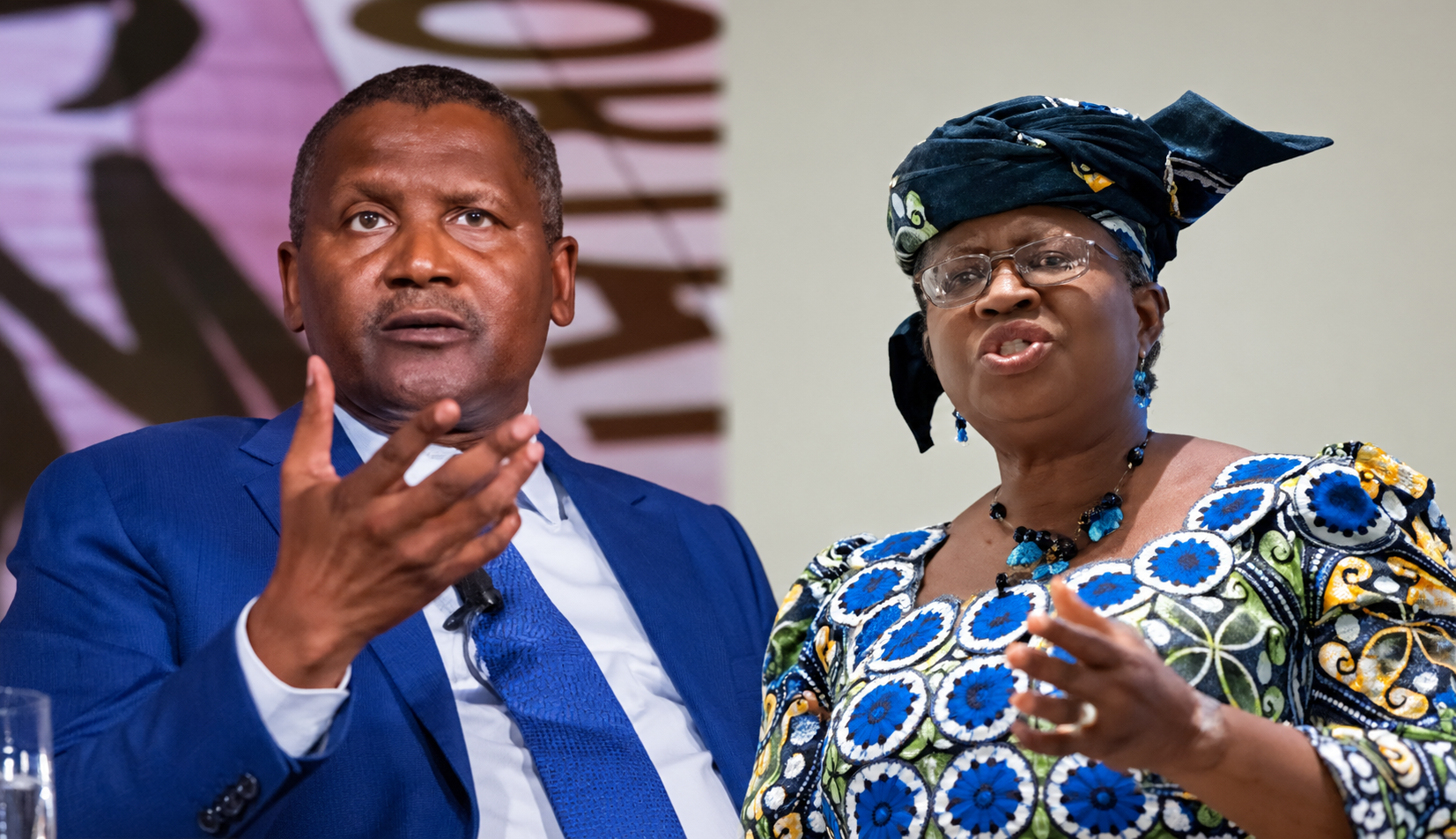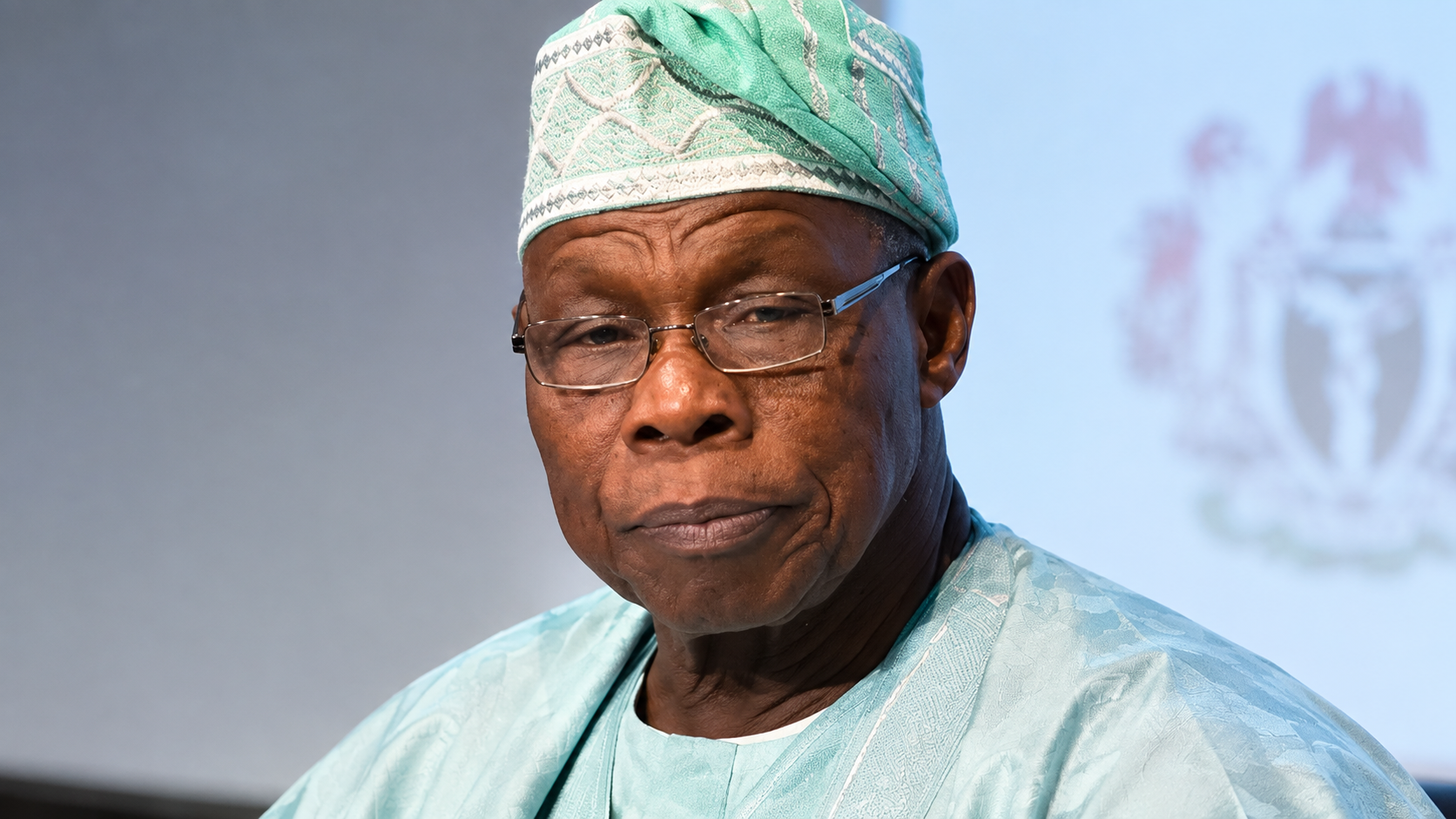
At the groundbreaking ceremony of the proposed Dangote East Africa Petroleum Refinery in Lamu, Kenya, former Nigerian President Olusegun Obasanjo delivered a speech that was as much a reflection on Africa’s industrial journey as it was a tribute to one of the continent’s most prominent entrepreneurs, Aliko Dangote. In a remarkable recollection, Obasanjo took the audience back more than two decades to a defining conversation that, in his telling, helped change the trajectory of Dangote’s business from cement importation to large-scale manufacturing and eventually into a continental industrial enterprise.
The occasion in Lamu carried significant symbolism. A Nigerian business group was unveiling an ambitious industrial project in East Africa, reinforcing the increasingly interconnected nature of African capital, enterprise and investment. For Obasanjo, however, the significance went beyond the refinery itself. It represented another chapter in a much longer story about what can happen when visionary leadership, purposeful public policy, entrepreneurial courage and long-term investment come together.
Obasanjo began by expressing his appreciation for what he described as a moment in which Africans were taking continental integration seriously. He pointed to the growing relationship between East and West Africa and credited political leadership, private enterprise and the determination of individuals willing to pursue ambitious projects despite significant challenges.
YOU CAN ALSO READ: Tizel Global Honoured with Government Cybersecurity Solutions Award
With the warmth and familiarity of someone recounting a personal chapter of history, Obasanjo recalled how his relationship with Dangote evolved around Nigeria’s struggle with cement imports. The story began in 2003, when Nigeria had already been producing cement for decades but continued to import significant quantities to meet domestic demand. Dangote was then among the businessmen importing cement into the country.
For Obasanjo, the contradiction was difficult to ignore. Nigeria had the natural resources required to produce cement, including extensive deposits of limestone, yet the country continued to spend valuable foreign exchange importing a product it could potentially manufacture locally.
According to Obasanjo, the issue troubled him so much that he made an early-morning telephone call to Dangote. It was around 5 a.m. The former president was in Abuja while Dangote was in Lagos. Obasanjo asked to see him that morning. Dangote, understandably surprised by the timing, explained that meeting at 7 a.m. would be impossible because the first flight from Lagos to Abuja was scheduled for that time. They eventually agreed to meet at 9 a.m.
When Dangote arrived, Obasanjo went directly to the issue. Why, he asked, was Dangote importing cement instead of producing it when Nigeria possessed the raw materials needed for manufacturing?
Dangote’s answer, as Obasanjo recalled it, was straightforward. Importing cement and selling it was more profitable than producing cement locally.
Rather than dismissing the response, Obasanjo saw an opportunity to understand the economic calculation behind the business decision. He asked Dangote what government could do to make local manufacturing sufficiently attractive for him to invest in production.
Dangote’s response became the basis of a new approach. If the government wanted importers to manufacture cement locally, he suggested, access to cement importation should be connected to demonstrable investment in domestic production.
Obasanjo understood the proposition. The government would create an incentive for companies benefiting from imports to build manufacturing capacity. In effect, the policy sought to shift the economic logic from simply bringing finished products into Nigeria to producing them within the country.
Dangote subsequently presented a plan to build a cement manufacturing facility capable of producing five million metric tonnes. At the time, Obasanjo recalled, Nigeria had struggled for decades to produce even a comparable volume domestically. The proposal therefore appeared ambitious, and not everyone within government was convinced.
Some officials reportedly warned the president that Dangote was simply seeking import licences and would not follow through with the promised manufacturing investment. Obasanjo, however, decided to give the businessman the opportunity to prove the plan.
He did more than that. He monitored the progress of the project closely.
Obasanjo humorously recalled that he had people monitoring activity at Dangote’s project site and would sometimes call the businessman when construction work had not taken place. The unusual level of presidential interest eventually became a source of amusement for Dangote, who reportedly told Obasanjo that he was worried because the president seemed to know more about the privately owned project than he did.
Obasanjo’s response revealed how he viewed the relationship between private investment and national development. Although the project was privately owned, he considered its success important to Nigeria. In his view, an industrial project capable of transforming domestic production was not merely a private commercial undertaking; it also had national economic consequences.
The project was eventually completed, and Nigeria commissioned the first five-million-tonne cement manufacturing facility before Obasanjo left office. But the story did not end there.
The company added more production capacity in Nigeria before extending its operations into other African markets. Investments and projects followed in countries including Tanzania, Ethiopia and Senegal. What had begun as a Nigerian effort to reduce dependence on imported cement gradually became a continental industrial strategy.
That transformation is central to the story Obasanjo told in Lamu. He was not simply recounting how one businessman became successful. He was illustrating how an industrial ambition can evolve when the right combination of policy, capital, execution and persistence is sustained over time.
The journey was not without obstacles. Obasanjo recalled Dangote’s experience in Senegal, where the company faced a prolonged dispute over the land on which its cement facility had been constructed. The difficulties reportedly delayed operations even after the plant had been completed. Yet Dangote persisted, and the company continued expanding its cement operations across the continent.
Obasanjo used the experience to highlight another dimension of African industrialisation: building productive capacity often requires navigating regulatory, political, commercial and infrastructural challenges that can extend far beyond the construction of a factory.
The results, however, transformed the scale of Dangote’s ambitions. The entrepreneur who had once imported cement had become one of Africa’s major cement manufacturers. The company was no longer focused solely on Nigeria. It had developed a continental footprint and was exporting Nigerian industrial capacity, capital and expertise into other African markets.
That experience, Obasanjo suggested, also provided an important foundation for Dangote’s subsequent entry into other strategic sectors.
Obasanjo recalled visiting the Dangote refinery in Nigeria and being struck by the scale of what had been constructed. He also recounted an emotional moment in which Dangote gathered his workers and credited Obasanjo with helping create the conditions that enabled his journey into cement manufacturing.
For Dangote, the transition from cement importer to cement manufacturer had created the confidence, experience and inspiration required to pursue an even larger industrial ambition.
Obasanjo responded with characteristic humility. While acknowledging the role of government policy, he recognised that policies alone cannot build factories, develop markets or create industrial enterprises. Entrepreneurs must be willing to commit capital, take risks, solve problems and persist when circumstances become difficult.
That is why, in one of the most memorable moments of the speech, Obasanjo described Dangote as his “boss.”
The statement was delivered with humour, but it also carried a deeper meaning. Government can create an enabling environment, establish incentives and provide policy direction, but the private sector ultimately has to convert those opportunities into productive enterprises. In that sense, Obasanjo was celebrating not only the policies of his administration but also the entrepreneurial execution that followed.
The Lamu project represents another evolution of that journey.
Dangote’s proposed East African refinery places a Nigerian industrial group at the centre of another major African market and demonstrates the increasing movement of African capital across national and regional boundaries. The project also aligns with Kenya’s wider ambitions to expand its industrial base, strengthen energy security and stimulate economic activity around the Lamu corridor.
For Obasanjo, this is precisely the kind of development that gives African integration practical meaning. Integration is not only about political agreements or diplomatic meetings. It is also about African businesses investing across borders, creating productive capacity, transferring knowledge, developing supply chains and connecting markets.
The story that began with a 5 a.m. telephone call about imported cement has therefore developed into something far larger.
It is a story about the power of a policy intervention to change commercial incentives. It is a story about an entrepreneur responding to those incentives with investment and execution. It is a story about manufacturing replacing dependence on imports, and about a domestic business expanding into a continental enterprise.
But perhaps most importantly, it is a story about the possibilities available to Africa when its leaders and businesses begin to think beyond immediate commercial returns and national boundaries.
The transformation from cement imports to cement manufacturing was not the final destination. It became a platform for something much bigger: an industrial group operating across sectors and countries, with ambitions spanning cement, fertiliser, energy and refining.
That is the larger significance of Obasanjo’s recollection in Lamu. His story places Dangote’s rise within a broader African development narrative in which government policy and private enterprise can reinforce one another. When governments create conditions that reward productive investment, entrepreneurs can respond with capital and ambition. When businesses succeed, they can create jobs, develop skills, deepen supply chains and stimulate further investment. The Lamu refinery now becomes another chapter in that unfolding story.
YOU CAN ALSO READ: q
Its ultimate significance will not be measured only by the volume of crude oil it processes or the financial value of the investment. Its broader impact will depend on the industrial ecosystem that develops around it, the opportunities it creates, the skills it transfers and its contribution to deeper economic relationships between East and West Africa.
For Obasanjo, the lesson is ultimately about Africa’s capacity to build for itself. The continent possesses enormous natural resources, growing markets and a new generation of entrepreneurs capable of operating at international scale. What remains critical is the alignment of policy, investment, leadership and execution.
More than two decades after that early-morning conversation, the symbolism is striking. A businessman once known principally as a cement importer was challenged to manufacture what Nigeria had been importing. He accepted the challenge, built factories, expanded across Africa and eventually entered some of the continent’s most strategically important industrial sectors.
Now, standing in Lamu as Africa’s industrial story continues to unfold, Obasanjo’s recollection serves as a reminder that transformative enterprises often begin with something remarkably simple: a difficult question, an honest answer and the willingness to act on it.
The story of Dangote’s industrial rise, as retold by Obasanjo, is therefore not merely a story of one entrepreneur’s success. It is a story of what can happen when African policy and African enterprise meet with ambition, persistence and a determination to build beyond the limitations of the present.