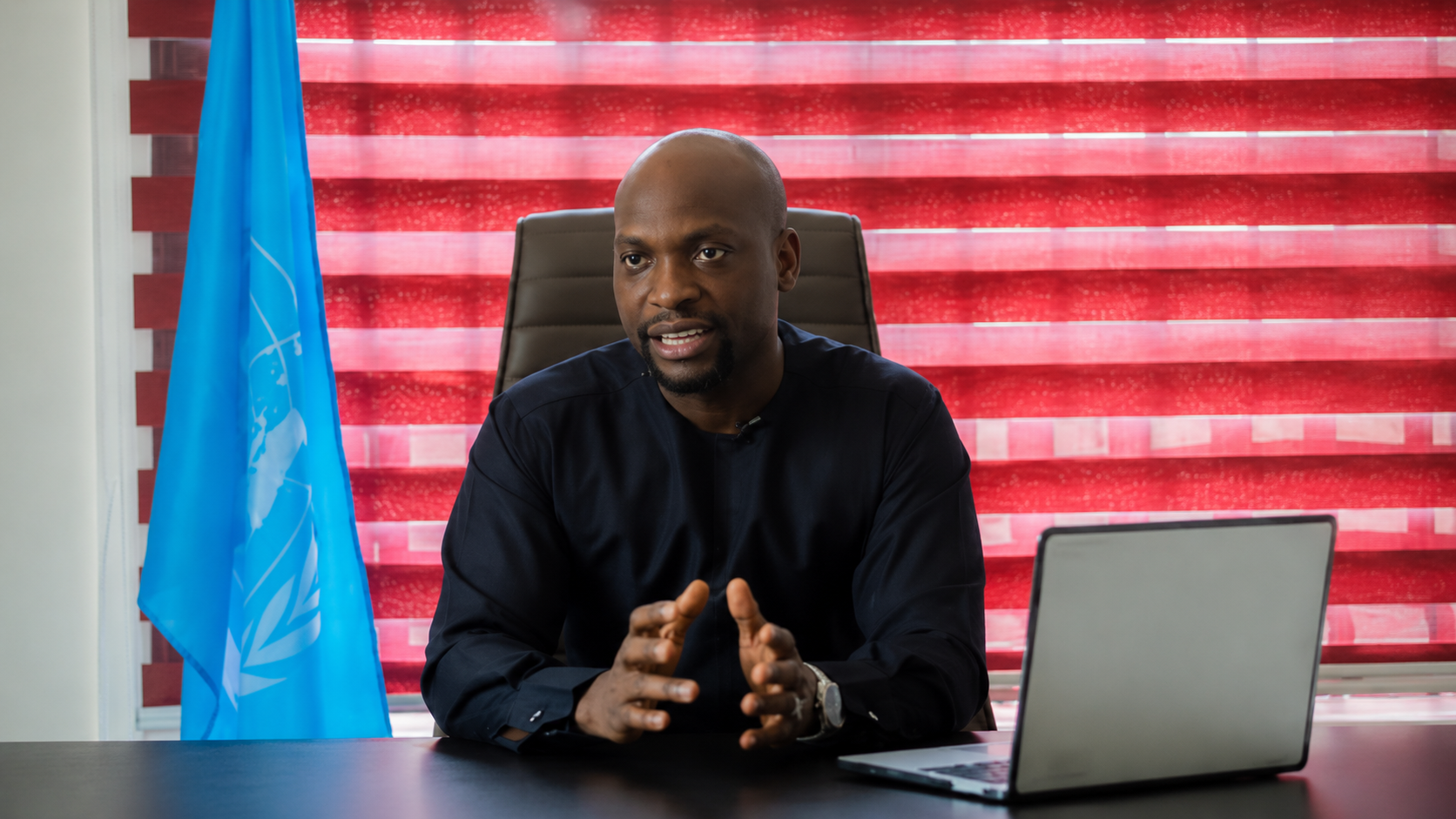
At a time when Nigeria’s economic realities continue to pressure entrepreneurs and small business owners, brand and marketing strategist Oluwatimilehin Akinwande is urging founders to stop treating instability as a temporary disruption and start building businesses designed to survive uncertainty. Speaking during an insightful television interview on the changing realities shaping entrepreneurship, she delivered a sobering but practical assessment of why so many businesses struggle to survive and what founders must do differently if they hope to build lasting companies in today’s volatile environment.
Drawing from both global and local business realities, Akinwande pointed to alarming statistics that continue to define the startup ecosystem worldwide. Around 22 percent of businesses fail within their first year, 32 percent collapse before their second year, while nearly half disappear before reaching their fifth anniversary. For Nigeria’s fast-growing entrepreneurial ecosystem, these figures are painfully familiar. Across Lagos, Abuja, Kano, Port Harcourt, and other commercial hubs, thousands of MSMEs emerge every year, yet many remain vulnerable to inflation, currency volatility, shrinking consumer spending, policy uncertainty, and rapidly changing market conditions.
YOU CAN ALSO READ: Nigeria Does Not Need More Farmers, We Need More Agripreneurs – Xtralarge GMD
According to her, the pattern of failure is rarely accidental. She believes many entrepreneurs enter business without adequate preparation, proper market understanding, or a willingness to study historical business cycles. One of the most common mistakes founders make, she explained, is creating products nobody actually needs. Referencing global startup research, she noted that 42 percent of startup failures occur because businesses build solutions without first validating genuine market demand. For Akinwande, this is where strategy becomes critical rather than optional.
She emphasized that today’s entrepreneurs have access to more consumer behavior data, analytics tools, and market insights than any previous generation of founders. Unlike earlier business owners who relied heavily on assumptions and word-of-mouth feedback, modern entrepreneurs can now study purchasing behavior, customer needs, and market gaps before investing heavily in production. Yet despite these advantages, she believes many founders still approach strategy far too late in the process.
According to her, many entrepreneurs focus on creating products first and only begin seeking branding or marketing expertise after launch. By that stage, correcting structural weaknesses becomes significantly more difficult and expensive. She argued that strategy should never be treated as a luxury reserved for large corporations or established companies. Instead, it should exist alongside the business from inception. In her view, product development and brand building must evolve together rather than independently.
Beyond product-market fit, Akinwande also addressed the wider economic challenges confronting Nigerian businesses today. From rising fuel prices and naira depreciation to declining purchasing power and increasing production costs, she described the current economic climate as part of a recurring historical cycle rather than an entirely new crisis. Drawing comparisons to Nigeria’s Structural Adjustment Program era of the 1980s, she explained that businesses which survived previous economic shocks often did so because they adapted quickly, localized operations, reduced dependence on imports, and built systems capable of functioning during uncertainty.
For her, history remains one of the most underrated business teachers. She stressed that many Nigerian entrepreneurs make the mistake of building businesses for stability in an environment that has historically been unstable. According to her, instability is not an exception within Nigeria’s business climate. It is the operating condition itself. That shift in mindset, she explained, is essential for long-term survival and sustainability.
Rather than waiting endlessly for perfect economic conditions, she advised founders to design business structures flexible enough to withstand inflation, currency fluctuations, supply chain disruptions, and policy shifts. Businesses that endure, she argued, are often not the loudest or most visible. They are the ones built with resilience, adaptability, and systems capable of responding quickly to changing realities.
The conversation also explored the growing influence of technology and artificial intelligence on modern business operations. Referencing recent statistics, Akinwande highlighted how businesses adopting AI-driven tools have recorded stronger operational efficiency, improved decision-making processes, and better internal optimization. However, she warned entrepreneurs against blindly chasing trends without establishing a clear strategic direction first.
According to her, many founders have become overly consumed with social media virality, skit culture, and temporary online trends while neglecting the foundational systems necessary for sustainable growth. She described trends as temporary waves that eventually fade, insisting that businesses with strong strategic foundations are far less vulnerable to distractions or sudden market shifts.
Akinwande also shared practical insights for entrepreneurs looking to build within the FMCG sector. She noted that many founders focus excessively on online visibility while ignoring the importance of distribution systems, sales structures, and product accessibility. For FMCG businesses especially, she argued that distribution remains the true engine of growth. Social media may amplify visibility, but visibility alone cannot sustain a business if products are unavailable where consumers need them.
YOU CAN ALSO READ: Cardri, Chisco Transport Sign Landmark Deal to Eliminate Currency Friction for African Travelers
Throughout the conversation, her message remained consistent and uncompromising: sustainable businesses are built deliberately, not accidentally. In a business environment where many entrepreneurs continue searching for shortcuts to success, Oluwatimilehin Akinwande’s perspective serves as a powerful reminder that longevity is rarely the product of luck. It is built through strategy, research, adaptability, disciplined execution, and the willingness to prepare for realities many others choose to ignore.