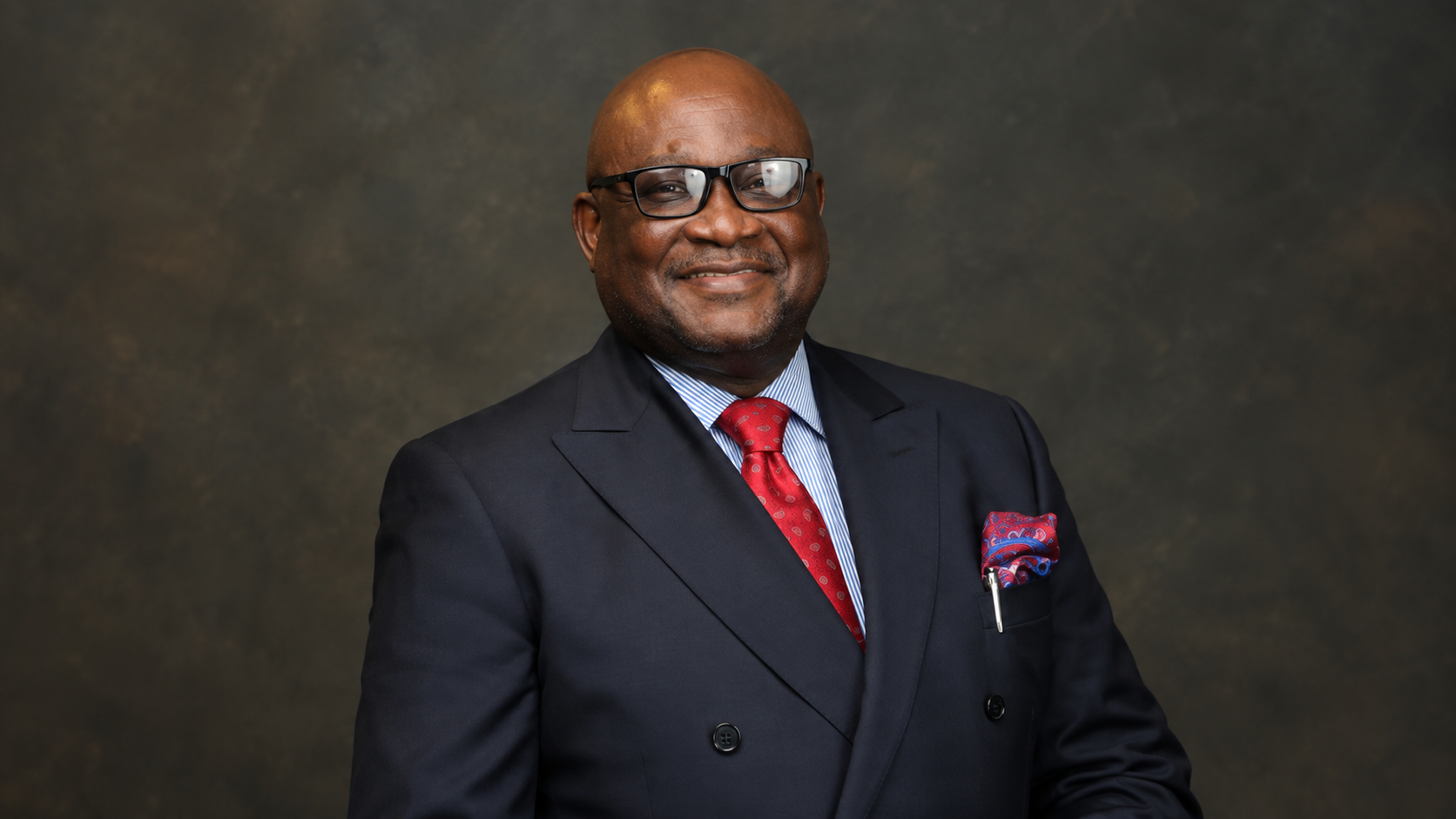
In an era where entrepreneurship was increasingly measured by billion-dollar valuations and the coveted “unicorn” label, entrepreneur and founder of Miva Open University, Sim Shagaya, offered a refreshing counter-narrative. For him, true success was never defined by arbitrary benchmarks but by the enduring value businesses created and the transformative impact they left behind.
Shagaya argued that Africa had long produced extraordinary enterprises that deserved far greater recognition than the startup ecosystem often afforded them. He questioned why established giants such as Guaranty Trust Bank, Dangote Group, Market Square and Medplus were rarely celebrated with the same enthusiasm reserved for technology startups.
To him, the obsession with “unicorns” often obscured a more important truth: building a sustainable company worth $100 million was already an extraordinary accomplishment capable of creating generational wealth and transforming societies.
At the core of Shagaya’s entrepreneurial philosophy was a deep-rooted sense of discipline forged through an unusual upbringing steeped in military tradition. Raised in a family where service was a way of life, his father, uncles and older brother all served in the Nigerian military. That environment instilled in him the values of persistence, endurance and resilience from an early age.
YOU CAN ALSO READ: David Oyelowo Reveals the Life-Changing Lesson That Transformed His Journey
His journey began at the Nigerian Military School in Zaria, where he learned structure and accountability long before many of his peers. As a teenager, he spent nearly two years serving as a private soldier in Lagos while awaiting university admission. At just 15 and 16 years old, he was already wearing military uniforms, handling administrative responsibilities and earning a monthly salary of ₦860, a considerable sum at the time.
Those formative experiences would later become the foundation upon which he built his entrepreneurial empire.
Although Shagaya spent twelve years in the United States studying Electrical Engineering and later earning an MBA, remaining abroad was never part of his long-term vision. From the outset, he was determined to return home.
He saw Nigeria’s return to democratic governance as the beginning of an economic renaissance and believed the continent was approaching a defining moment in its development journey. While many of his contemporaries eventually chose to leave again, his conviction remained unwavering.
Despite acknowledging persistent challenges such as electricity shortages and insecurity, Shagaya remained one of Nigeria’s most optimistic voices. He saw a nation endowed with all the ingredients necessary for prosperity.
Its fertile land, intelligent population, abundant water resources, vast mineral deposits and hydrocarbon wealth, he argued, provided a powerful foundation for economic transformation. What remained was the ability to effectively connect these assets to opportunities that would unlock their full potential.
His entrepreneurial instincts emerged from a desire for independence. After returning to Africa, he worked at Rand Merchant Bank in South Africa before joining Google, where he enjoyed a successful corporate career. Yet, the desire to control his own destiny proved irresistible.
For Shagaya, entrepreneurship was never simply about making money. It was about building systems, solving problems and participating in the technological revolution reshaping the world.
As the internet transformed global economies and artificial intelligence began adding another layer of disruption, he recognised that he needed to become a creator rather than a spectator.
That vision gave birth to E-Motion, his digital advertising company that rapidly generated significant cash flow and expanded from Abuja to Lagos. The venture opened doors to multiple opportunities, including digital signage networks and cinema businesses.
The experience eventually led to the creation of DealDey, Nigeria’s pioneering online deals platform, which was later acquired by a Swedish company. More importantly, DealDey became the laboratory that birthed one of Africa’s most ambitious e-commerce ventures: Konga.
For Shagaya, Konga was never merely an online marketplace. He envisioned a vast digital ecosystem capable of expanding into payments, banking, lending, insurance and entertainment, mirroring the evolution of global technology giants.
However, the journey was not without setbacks. By the time Konga was sold, the company had raised approximately $80 million, but severe currency devaluation significantly affected its valuation. He revealed that the decision to sell was not entirely his own, as board dynamics and investor priorities ultimately dictated the outcome.
Yet, he refused to dwell on regret. Instead, he embraced every experience as a lesson that informed future ventures.
One of those lessons revolved around investor alignment. Shagaya advised entrepreneurs to look beyond term sheets and valuation figures. He believed founders had to carefully evaluate the people they chose to partner with, speaking to other companies within an investor’s portfolio and understanding their long-term philosophy.
For him, successful partnerships were built on mutual respect, trust and shared vision.
Interestingly, education had always occupied a place in his entrepreneurial ambitions long before Miva Open University existed. Years before Konga was launched, he had already incorporated a company dedicated to educational innovation.
After exiting e-commerce, he returned to that original dream.
Today, Miva Open University has expanded rapidly, attracting thousands of students, with enrolment projected to reach 27,000. Shagaya described tertiary education as one of Nigeria’s greatest untapped opportunities because millions of qualified Nigerians remained unable to access university education.
He maintained that the problem was not a shortage of talent but a failure of systems to meet demand.
This observation extended beyond education into multiple sectors. According to him, many of Nigeria’s biggest challenges were not caused by a lack of resources but by an inability to connect existing demand with available supply.
Medical education particularly concerned him. He noted that while both Nigeria and the global economy suffered from a shortage of doctors, thousands of qualified Nigerians who aspired to study medicine were unable to secure admission each year. Instead, many were redirected into programmes that neither aligned with their ambitions nor satisfied market demands.
He saw this disconnect as emblematic of a broader national challenge.
Yet, he also pointed to examples of successful transformation. Industries such as cement manufacturing demonstrated what was possible when strategic investments aligned resources with demand. Companies like Dangote Group and BUA Group had proven that Nigeria could become self-sufficient when the right systems were established.
He believed similar opportunities existed in agriculture, healthcare, energy and education.
His optimism also extended to the insurance industry, which he described as one of Nigeria’s most underserved sectors. He estimated that Nigerian vehicles were collectively worth nearly ₦50 trillion, while smartphones, perhaps the country’s second-most important productivity asset, were valued at between ₦20 trillion and ₦25 trillion.
Yet, most remained uninsured.
Shagaya insisted that the issue was not ignorance but infrastructure. Nigeria already possessed insurance providers, retailers and repair centres. What was missing was a technological platform capable of orchestrating seamless interactions among all participants.
Rather than competing for existing markets, he advocated expanding them.
This philosophy influenced how he evaluated opportunities. He examined whether markets were sufficiently large, whether similar models had succeeded in countries such as India, Indonesia and Brazil, whether technology could transform them, and whether regulatory environments were becoming more progressive.
Above all, he sought opportunities that created entirely new value rather than simply redistributing existing wealth.
One of his most compelling insights concerned Nigeria’s relatively slow pace of economic development. Instead of viewing this as a disadvantage, he saw it as an opportunity for entrepreneurs to build multiple ventures simultaneously.
He compared the process to farming. Just as farmers planted maize between young palm trees while waiting years for the palms to mature, entrepreneurs could pursue several opportunities while larger ambitions gradually unfolded.
Perhaps his most ambitious vision lay in reforming Nigeria’s basic education system. He argued that traditional brick-and-mortar schools alone would never solve the country’s out-of-school children crisis because the economics were unsustainable.
His solution was a network of micro-schools that utilised existing community assets such as churches, mosques and public spaces. Artificial intelligence would deliver personalised learning experiences, while trained adults within communities would supervise and mentor students.
He believed such a model could reduce educational costs by as much as 70 per cent while dramatically expanding access.
Throughout his reflections, one message remained constant: Nigeria’s future belonged to builders.
YOU CAN ALSO READ: Plug In and Prosper: Dangote Unveils a Game-Changing Industrial City in Ondo State
He urged entrepreneurs to stop importing foreign solutions without adapting them to local realities and instead focus on solving uniquely Nigerian challenges with patience, infrastructure and long-term thinking.
Despite all the obstacles, his optimism remained contagious. He believed cities such as Lagos and Abuja were already experiencing growth trajectories comparable to some of Asia’s fastest-growing urban centres.
For Shagaya, Nigeria did not suffer from a shortage of talent, ideas or resources. What the nation needed was smarter coordination, stronger systems and a generation of committed builders willing to undertake the long journey of creating sustainable solutions.
In his view, the opportunities were vast, the future was bright and the responsibility was clear.
Nigeria’s next chapter, he concluded, would not be written by spectators. It would be built by those courageous enough to imagine, innovate and keep building.