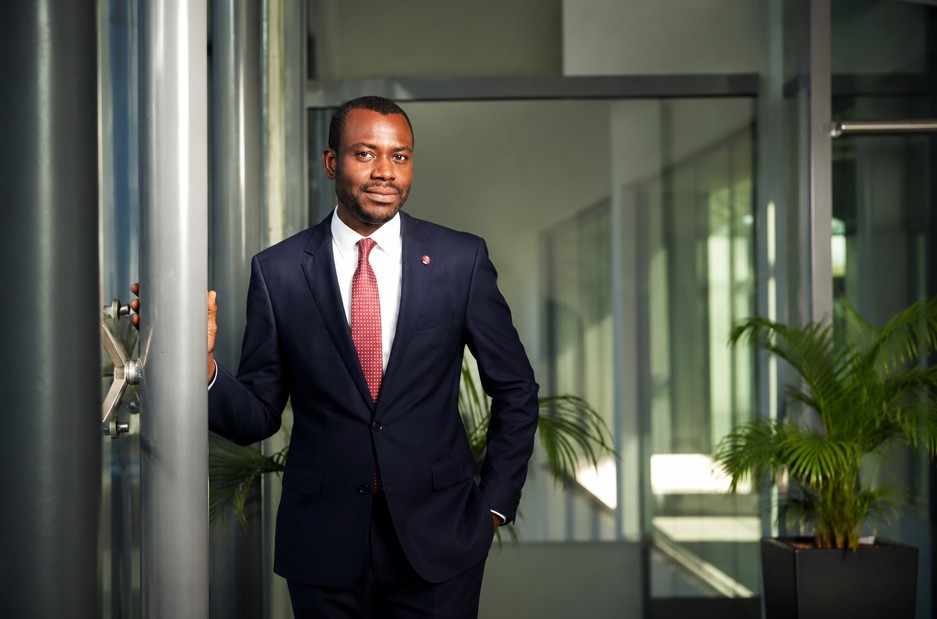
In an era where banking success is often measured by quarterly earnings, market capitalization, and shareholder returns, Abubakar Suleiman has consistently chosen a different path, one that sees finance not merely as a business of money, but as an instrument for solving national problems. Reserved in demeanor yet bold in vision, the Managing Director and Chief Executive Officer of Sterling Bank has quietly become one of Nigeria’s most consequential banking executives.
While many corporate leaders compete for headlines, Suleiman has spent more than two decades building an institution whose ambitions stretch far beyond conventional banking. His story is not simply one of corporate ascent but of a leader who transformed a career into a mission of nation building.
When Suleiman joined Sterling Bank in 2003 as Group Treasurer after a successful career at Citibank Nigeria, he could easily have continued climbing the corporate ladder within one of the world’s most prestigious financial institutions. Instead, he chose a path defined by purpose rather than prestige. His decision was driven by a desire to solve problems rooted in the Nigerian economy. Looking back, he describes the move not as a job change but as a project. He wanted to build an institution capable of responding directly to Nigeria’s realities rather than merely replicating global banking models. More than two decades later, that conviction continues to shape Sterling Bank’s identity.
YOU CAN ALSO READ: Nigeria’s Maritime Industry Urged to Invest in Talent, Training and Technical Excellence
Under his leadership, Sterling abandoned the temptation of competing head-to-head with larger and better-capitalized banks. Instead, the institution embraced a strategy built around sectors capable of transforming the Nigerian economy. The result was the now well-known HEART strategy, focusing on Health, Education, Agriculture, Renewable Energy, and Transportation. At a time when many financial institutions concentrated on traditional banking products, Sterling deliberately positioned itself within sectors where capital could produce measurable economic and social impact. It was an unconventional decision that has since become one of the most distinctive strategic models in Nigeria’s financial services industry.
Suleiman believes disruption rarely comes from imitation. Faced with competitors possessing greater resources, stronger brands, and larger balance sheets, Sterling sought opportunities where innovation mattered more than scale. Agriculture quickly emerged as one of the bank’s strongest success stories, with the institution becoming one of Nigeria’s leading financiers of the sector. Healthcare proved more difficult, but years before the COVID-19 pandemic exposed weaknesses in Nigeria’s healthcare system, Sterling had already begun investing in solutions designed to strengthen local capacity. The global health crisis eventually validated the bank’s long-held belief that resilient economies depend on strong domestic institutions.
His leadership philosophy reflects an understanding that banking should extend beyond financial transactions. Profitability remains important, but Suleiman consistently frames banking as a platform for improving productivity, expanding opportunity, and solving systemic challenges. This thinking has guided Sterling’s investments in renewable energy, electric mobility, healthcare financing, educational infrastructure, and transportation projects, including participation in financing the Lagos Blue Rail Line. Under his watch, Sterling’s headquarters itself became a demonstration of that philosophy. The bank transformed its iconic headquarters into one of Africa’s most sustainable commercial buildings through extensive solar integration, proving that environmental responsibility can coexist with commercial performance. Rather than persuading through words alone, Suleiman prefers to lead through practical examples.
One area that particularly reflects his thinking is the development of small and medium-sized enterprises. While entrepreneurs often complain about limited access to finance, Suleiman argues that the greater challenge lies in helping businesses become investment-ready. Sustainable growth, he believes, begins with formal record keeping, sound financial management, productivity, and technology adoption. Capital alone cannot build resilient enterprises without these foundations. He sees technology, particularly artificial intelligence and digital platforms, as powerful equalizers capable of giving even the smallest businesses access to tools that were once available only to large corporations. In his view, empowering entrepreneurs requires building capability before extending credit.
Away from banking, Suleiman reveals an entirely different dimension of leadership. Long before economics became his profession, literature was his first passion. He once considered studying literature before practical realities redirected him toward economics and eventually banking. Yet his love for poetry, reading, and the arts never disappeared. Although he modestly refuses to describe himself as a poet, his reflections reveal a deeply thoughtful individual who approaches leadership with unusual emotional intelligence. Every commercial decision, he says, is ultimately a human decision. That philosophy explains why Sterling’s corporate strategy consistently balances financial returns with measurable social impact.
YOU CAN ALSO READ: “The Challenge Is Not Competence”: NBA President-Elect Calls for More Female Leadership
Despite leading one of Nigeria’s most innovative financial institutions, Suleiman remains remarkably understated. He openly admits that Sterling has often struggled to communicate the full scale of its achievements, preferring substance over publicity. It is an unusual characteristic in an era where executive visibility often rivals corporate performance, yet it reflects the authenticity that has become synonymous with his leadership. Rather than pursuing recognition, he appears more focused on building institutions capable of creating lasting value.
Abubakar Suleiman represents a new generation of African business leaders redefining executive leadership. His legacy may ultimately be measured not only by balance sheets or shareholder value but by healthier hospitals, more productive farms, cleaner energy systems, stronger transport infrastructure, empowered entrepreneurs, and institutions capable of driving national development. At a time when many leaders chase short-term gains, Suleiman continues to invest in long-term possibilities. His career demonstrates that banking can be more than a financial enterprise; it can become a catalyst for economic transformation. In quietly redefining what a commercial bank can achieve, Abubakar Suleiman is proving that the most enduring business leaders are not those who simply build successful companies, but those who help build stronger nations.